Rare species of Massachusetts · Amphibians
Jefferson Salamander (complex)
Status Special Concern · Group Amphibians · Recorded in 69 towns, 56 since 2001 · State sightings records: most recent 2025
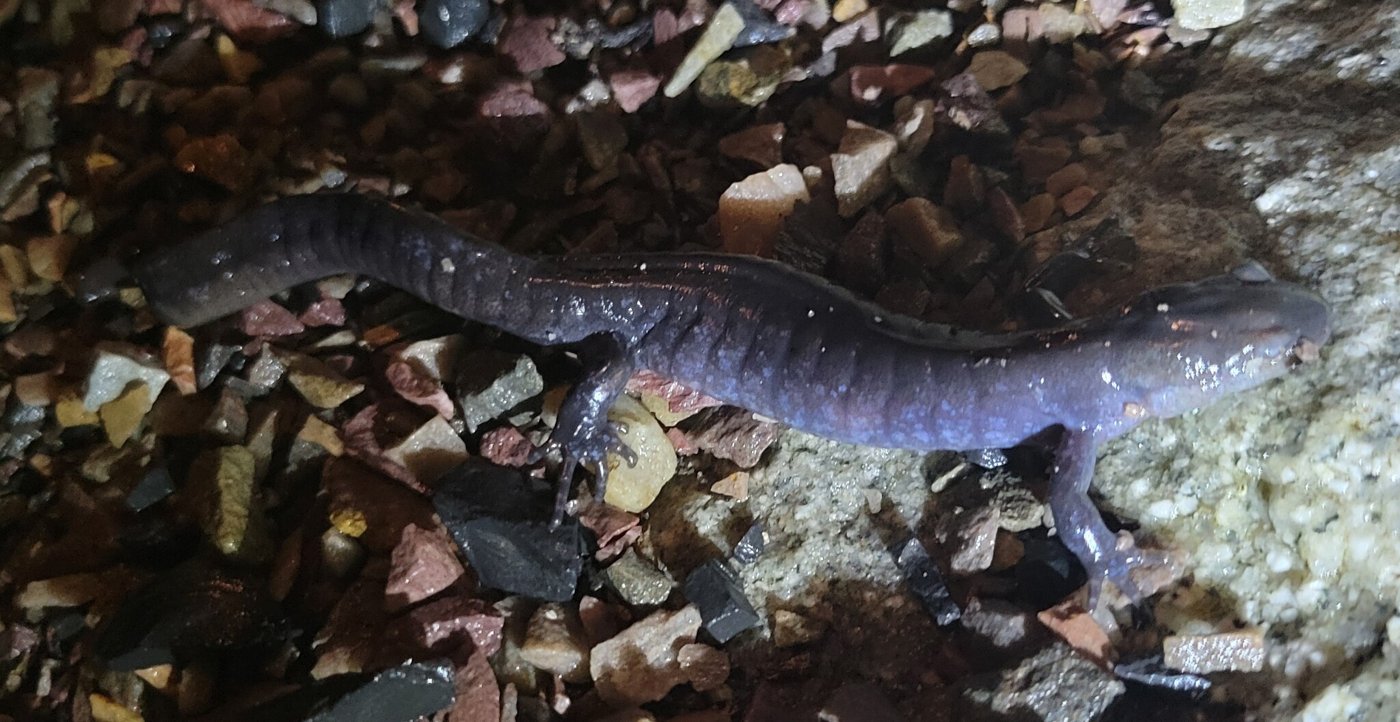
The Jefferson salamander (Ambystoma jeffersonianum) is a mole salamander native to the northeastern United States, southern and central Ontario, and southwestern Quebec. It was named after Jefferson College in Pennsylvania. It is typically dark gray, brown, or black on its dorsal surface, but a lighter shade on its anterior.
Description: Wikipedia (CC BY-SA 4.0).
Complex consisting of the genetically pure lineage and its associated unisexual forms (statewide).
Where NHESP has recorded it
last recorded since 2001 last recorded earlier
- Hawley 2025
- Monterey 2024
- Hatfield 2023
- Holyoke 2023
- Leyden 2023
- Southwick 2023
- Plainfield 2022
- Worthington 2022
- Gill 2021
- Middlefield 2021
- Richmond 2021
- Whately 2021
- Williamsburg 2021
- Westfield 2019
- Chester 2017
- Colrain 2017
- Egremont 2017
- Sheffield 2017
- Wendell 2017
- West Springfield 2017
- Adams 2016
- Ashfield 2016
- Granby 2016
- Montague 2016
- Northfield 2016
- Palmer 2016
- Royalston 2016
- Sunderland 2016
- Warwick 2016
- Belchertown 2015
- Brimfield 2015
- Cheshire 2013
- Granville 2013
- Great Barrington 2013
- Hancock 2013
- Lanesborough 2013
- Lee 2013
- Lenox 2013
- Montgomery 2013
- Mount Washington 2013
- New Ashford 2013
- Northampton 2013
- Pittsfield 2013
- Savoy 2013
- Shelburne 2013
- Stockbridge 2013
- Wales 2013
- Williamstown 2013
- Blandford 2012
- Conway 2012
- Heath 2012
- West Stockbridge 2010
- New Salem 2009
- Alford 2008
- New Marlborough 2008
- Southampton 2003
- Washington 2000
- Huntington 1999
- South Hadley 1998
- Charlemont 1995
- Westhampton 1994
- Goshen 1993
- Windsor 1993
- Buckland 1989
- Attleboro 1983
- Leverett 1967
- Ipswich 1921
- Essex 1916
- Sherborn 1800s
Town-level documented observations from NHESP’s Rare Species Viewer, read 4 November 2026; the year is the last documented record, as NHESP prints it, not evidence of absence. NHESP does not publish locations.
More about this species
Population
Heritage program data for 2000 through 2024 show roughly 125 distinct occurrences spanning 57 towns. Field surveys and informal accounts point to falling numbers at certain sites and apparent local extirpations during the last few decades.
2000-2024 records. Source: Massachusetts state rare-species fact sheet, Jefferson Salamander (complex) (published March 2025).
In Massachusetts
Distribution is limited to western Massachusetts: the four westernmost counties (Berkshire, Franklin, Hampden, Hampshire) plus a narrow strip at the western margin of Worcester County.
Source: Massachusetts state rare-species fact sheet, Jefferson Salamander (complex) (published March 2025).
Threats
Habitat destruction, degradation, and isolation are the leading pressures. Climate change, direct human impacts, and pathogens — among them chytrid fungus, ranaviruses, and the fungal salamander pathogen Bsal, which has not yet reached Massachusetts — also pose risks.
Source: Massachusetts state rare-species fact sheet, Jefferson Salamander (complex) (published March 2025).
Protections
The complex carries Special Concern status under state wildlife law. Formal certification of a vernal pool provides certain statutory habitat protections that benefit breeding salamanders.
Source: Massachusetts state rare-species fact sheet, Jefferson Salamander (complex) (published March 2025).
One fact
The complex contains unisexual lineages that require sperm from related salamander species to trigger egg development; the male's genetic contribution activates cell division.
Source: Massachusetts state rare-species fact sheet, Jefferson Salamander (complex) (published March 2025).
Related species
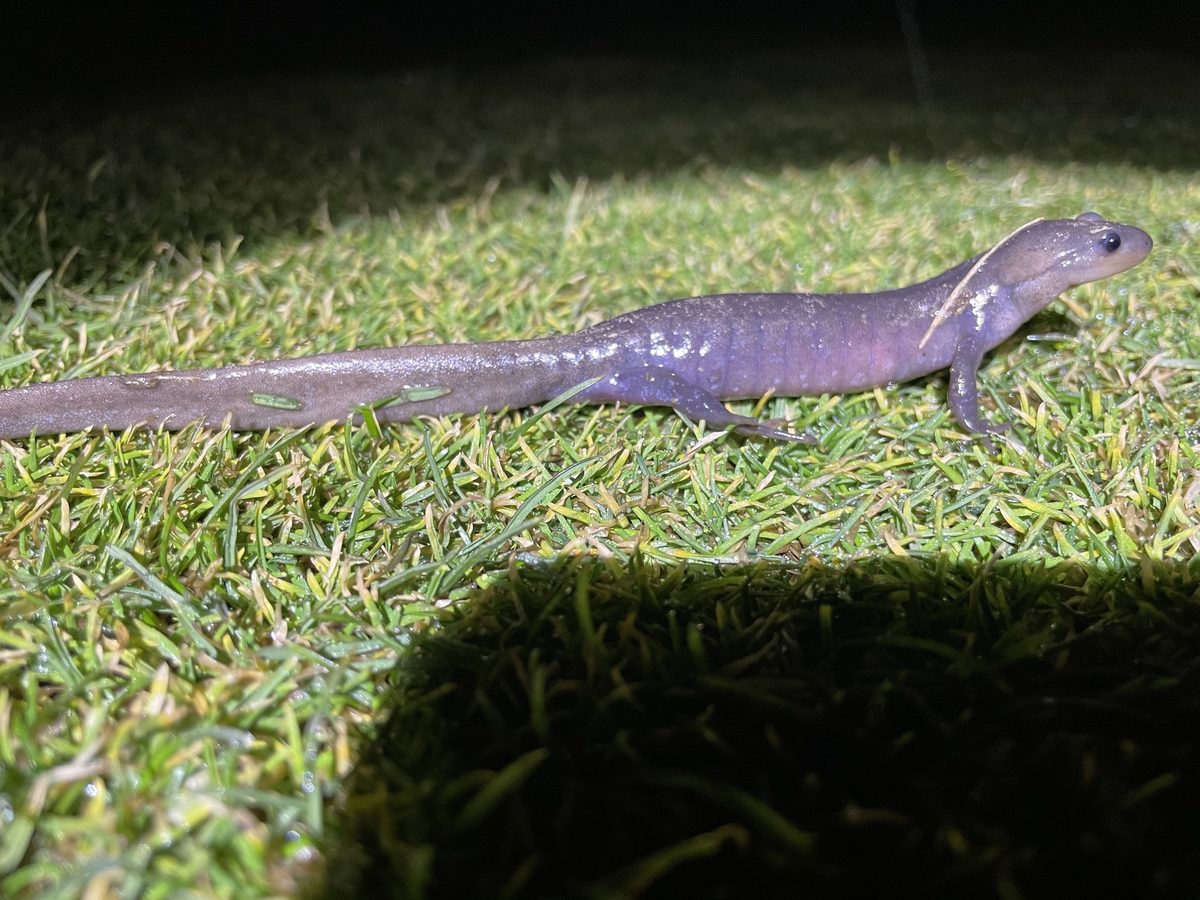
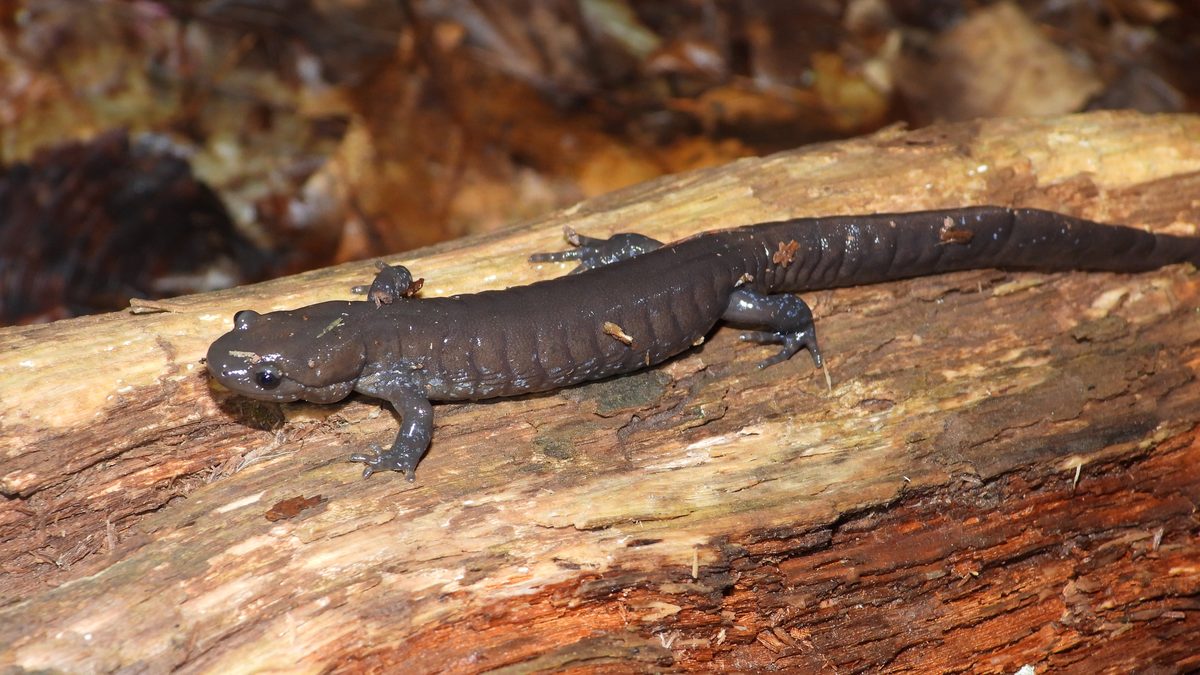
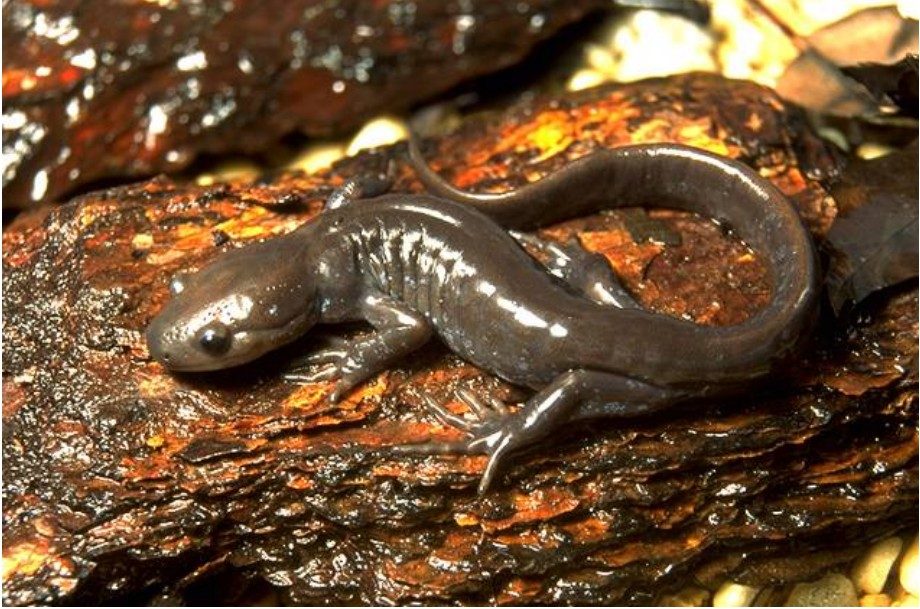
Mole salamanders on the state list:
State list: 321 CMR 10.90, as of 16 August 2024. Rare species of Massachusetts · Trees of Massachusetts