Rare species of Massachusetts · Amphibians
Blue-spotted Salamander
Status Threatened · Group Amphibians · Recorded in 14 towns, 13 since 2001 · State sightings records: most recent 2025
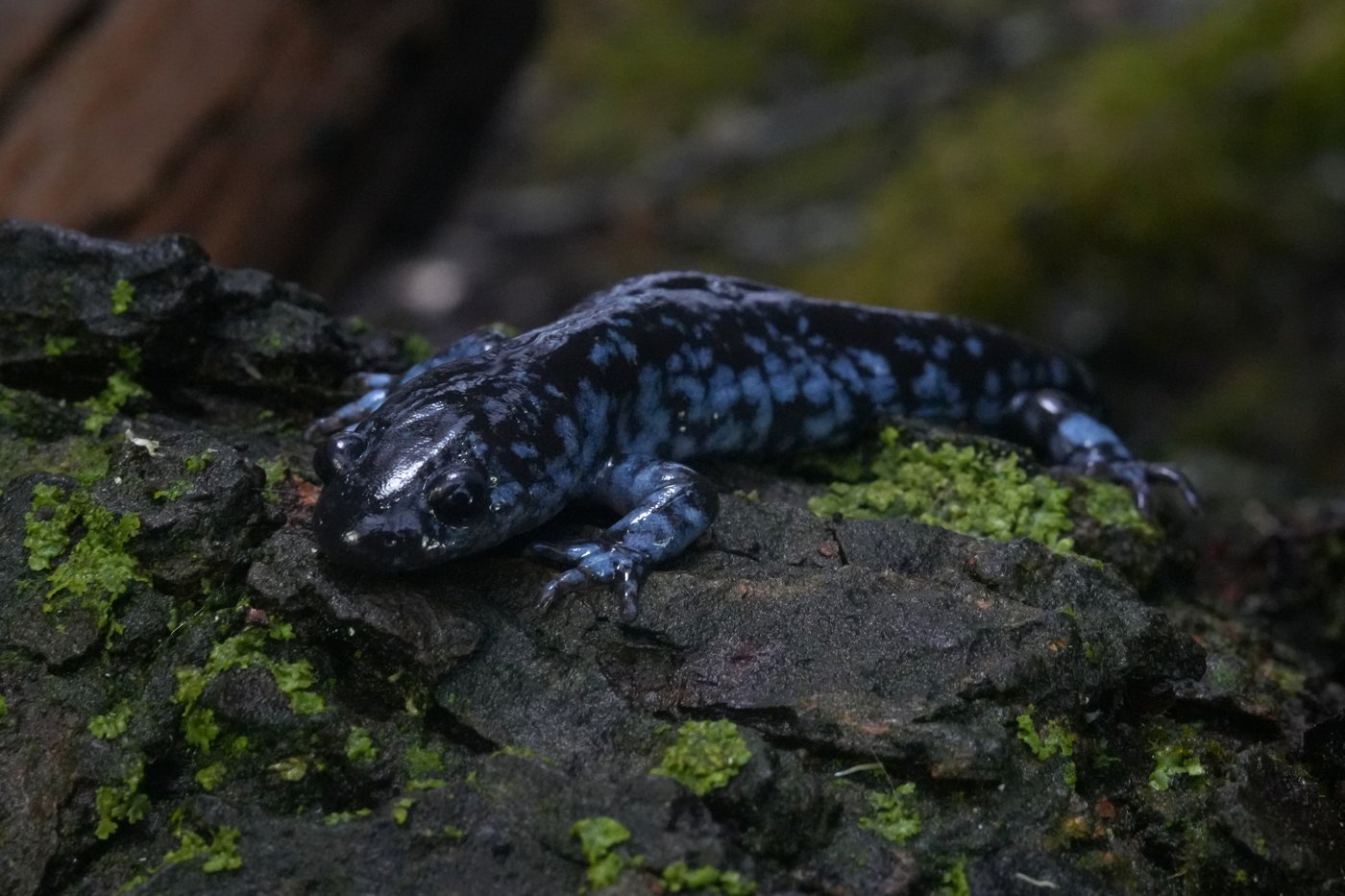
The blue-spotted salamander (Ambystoma laterale) is a mole salamander native to the Great Lakes states and northeastern United States, and parts of Ontario and Quebec in Canada. Their range is known to extend to James Bay to the north, and southeastern Manitoba to the west. Blue-spotted salamanders include unisexual lineages that can reproduce without fertilization (gynogenesis).
Description: Wikipedia (CC BY-SA 4.0).
Consists of the genetically pure lineage (Bristol and Plymouth Counties only).
Threatened in Bristol and Plymouth Counties only. The Blue-spotted Salamander is counted once on the list, but it is Threatened in Bristol and Plymouth Counties and Special Concern in the rest of the state; the dashboard shows it as two, so the total displays as 454.
Where NHESP has recorded it
last recorded since 2001 last recorded earlier
- Wilmington 2025
- Attleboro 2024
- Norton 2024
- Rehoboth 2024
- Seekonk 2023
- Halifax 2022
- Plympton 2022
- Easton 2021
- Raynham 2021
- Mansfield 2020
- Taunton 2018
- West Bridgewater 2018
- Middleborough 2017
- North Attleborough 1994
Town-level documented observations from NHESP’s Rare Species Viewer, read 4 November 2026; the year is the last documented record, as NHESP prints it, not evidence of absence. NHESP does not publish locations.
More about this species
Population
Heritage records for 2000 through 2024 document at least 15 occurrences in those two southeastern counties that appear to consist entirely of the diploid sexual form. Statewide, surveys and informal reports point to a contraction in numbers since the 1990s.
2000-2024 records. Source: Massachusetts state rare-species fact sheet, Blue-spotted Salamander (undated).
In Massachusetts
The diploid-only occurrences are limited to two southeastern counties. The species as a whole is distributed mainly through Essex, Middlesex, and the eastern tier of Worcester County.
Source: Massachusetts state rare-species fact sheet, Blue-spotted Salamander (undated).
Threats
Loss, fragmentation, and deterioration of habitat are the primary pressures, joined by climate change, direct human impacts, and disease pathogens.
Source: Massachusetts state rare-species fact sheet, Blue-spotted Salamander (undated).
Protections
These two-county occurrences are classified as Threatened under state wildlife law. Vernal pools that have been formally certified receive statutory habitat protections.
Source: Massachusetts state rare-species fact sheet, Blue-spotted Salamander (undated).
One fact
A group composed entirely of the genetically pure diploid form represents a very rare configuration anywhere along the Atlantic seaboard.
Source: Massachusetts state rare-species fact sheet, Blue-spotted Salamander (undated).
Related species
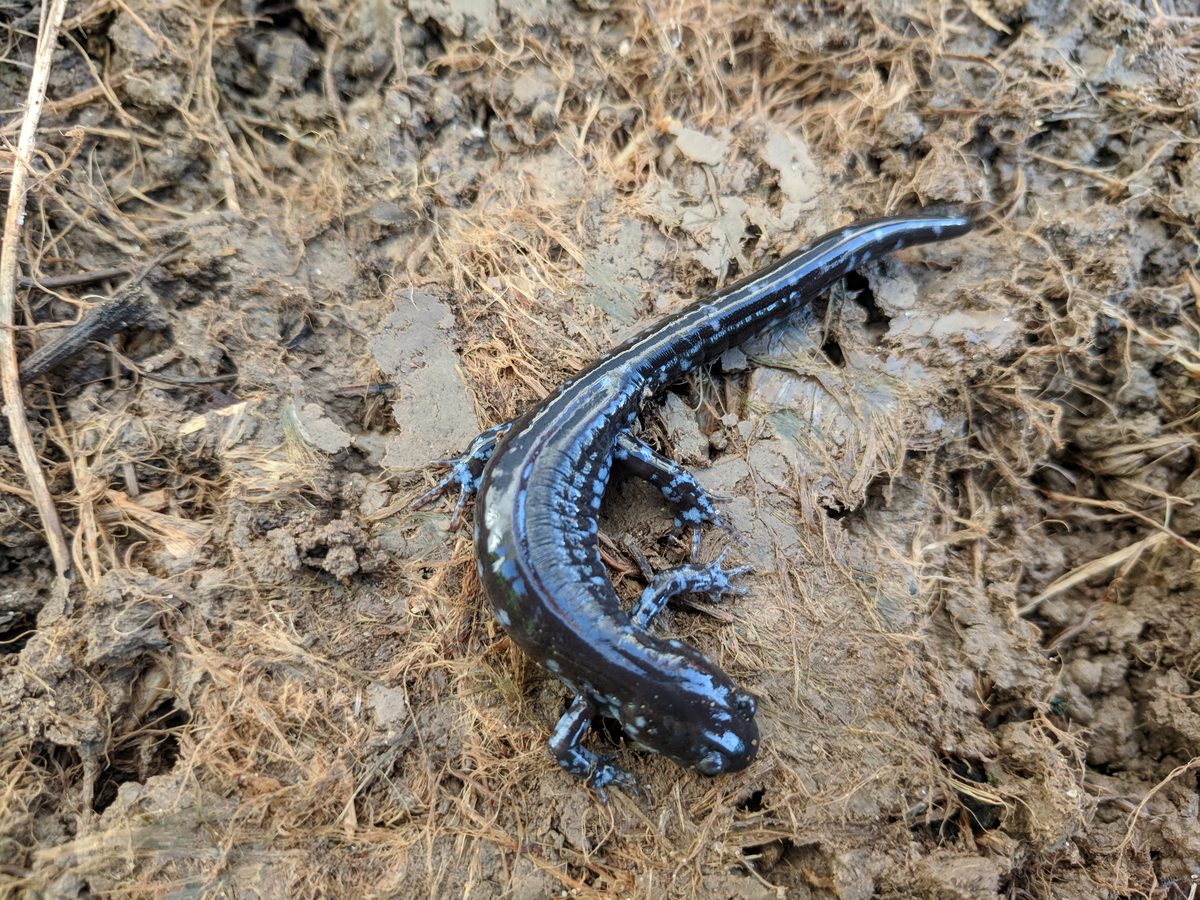
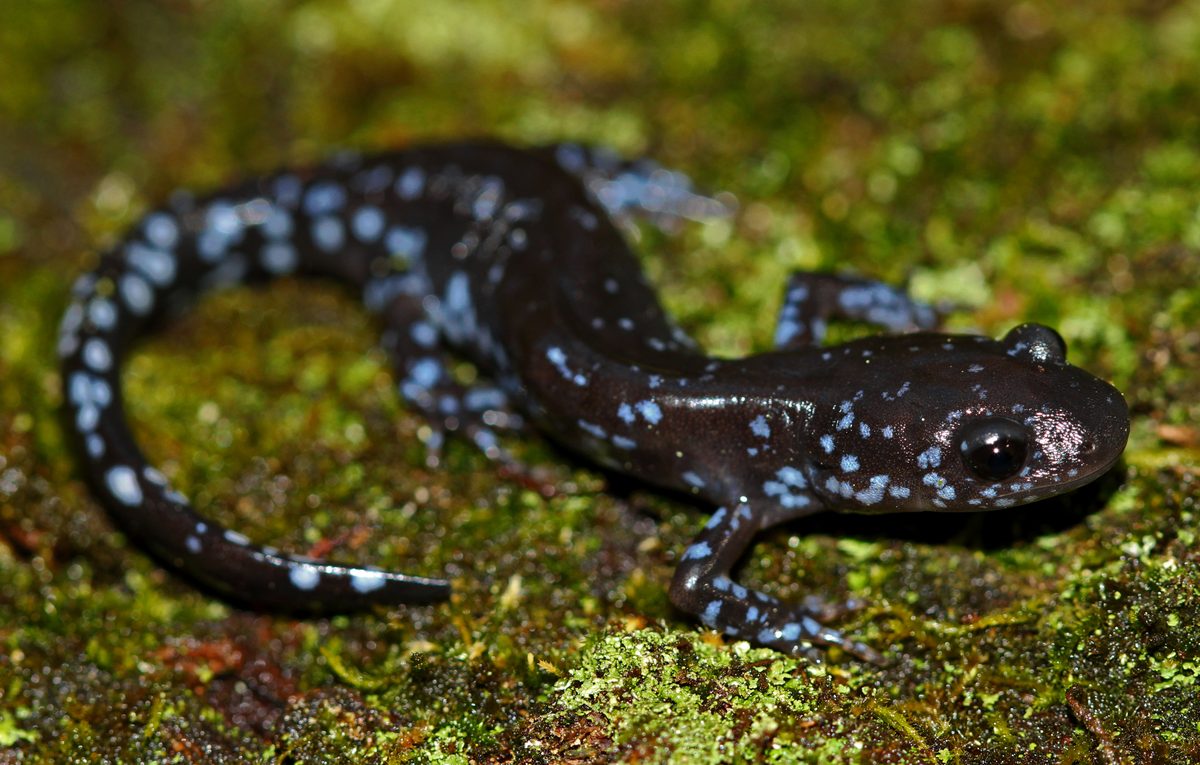
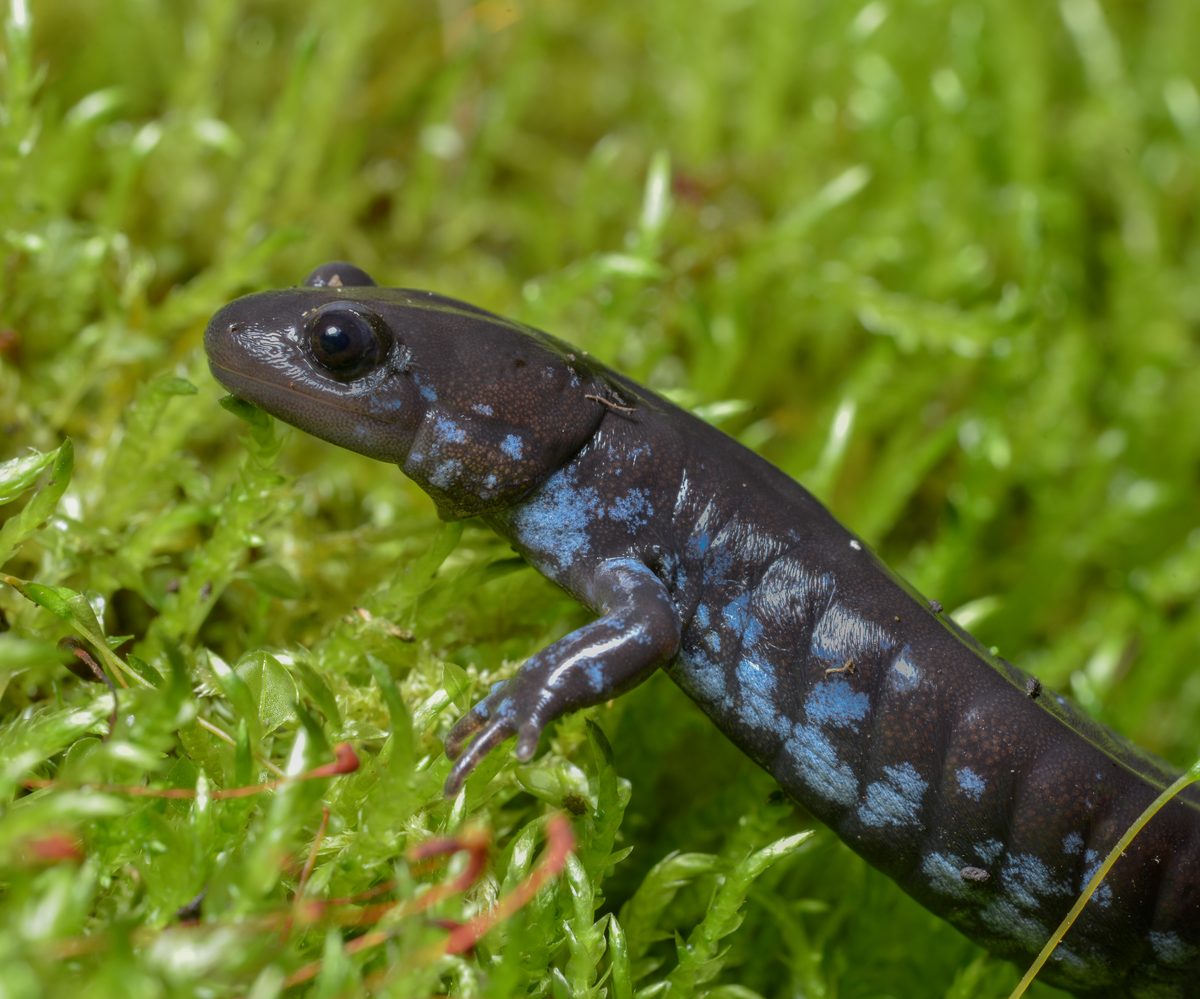
Mole salamanders on the state list:
State list: 321 CMR 10.90, as of 16 August 2024. Rare species of Massachusetts · Trees of Massachusetts