Rare species of Massachusetts · Amphibians
Blue-spotted Salamander (complex)
Status Special Concern · Group Amphibians · Recorded in 88 towns, 74 since 2001 · State sightings records: most recent 2026
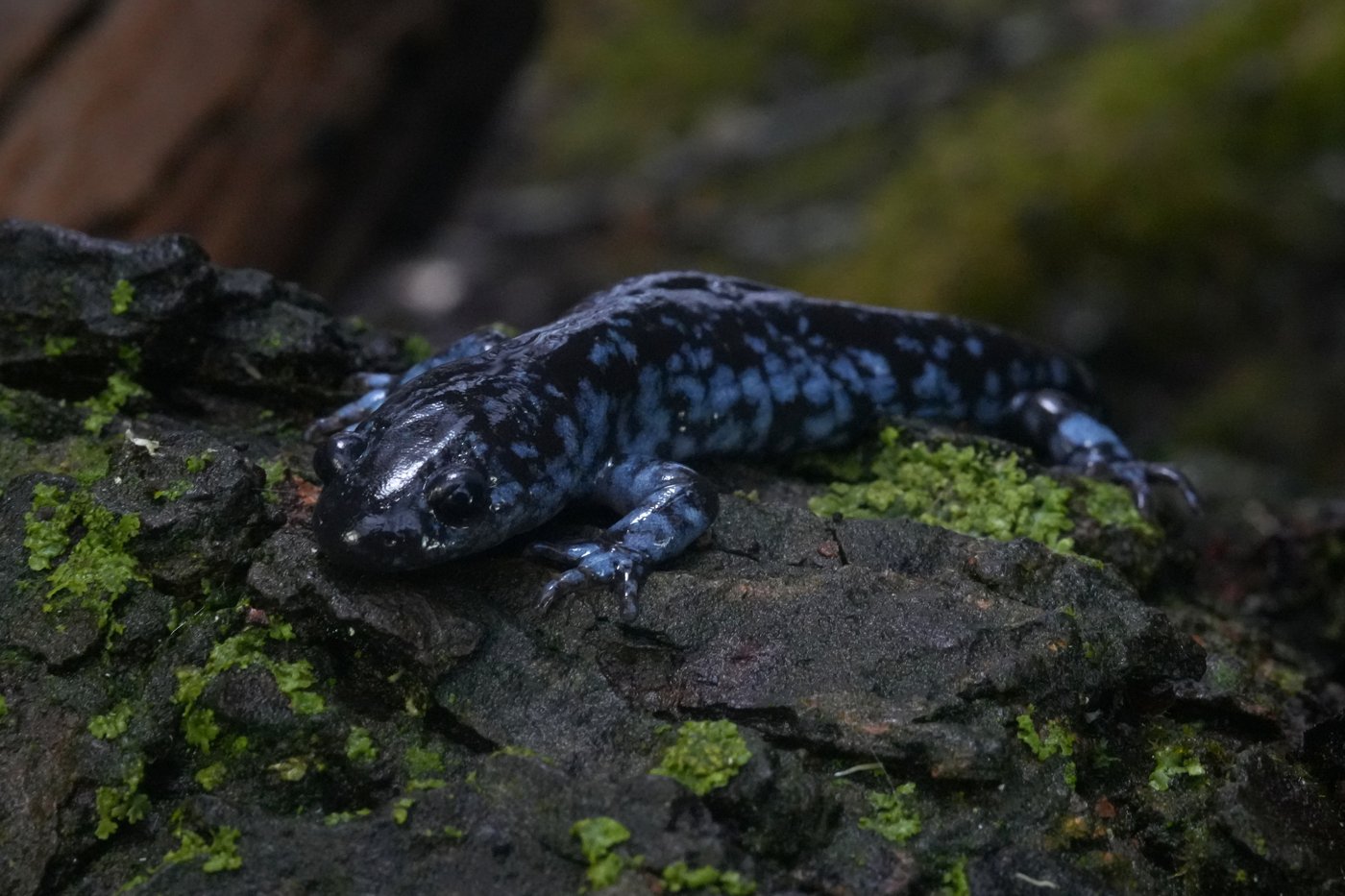
The blue-spotted salamander (Ambystoma laterale) is a mole salamander native to the Great Lakes states and northeastern United States, and parts of Ontario and Quebec in Canada. Their range is known to extend to James Bay to the north, and southeastern Manitoba to the west. Blue-spotted salamanders include unisexual lineages that can reproduce without fertilization (gynogenesis).
Description: Wikipedia (CC BY-SA 4.0).
Complex consisting of the genetically pure lineage and its associated unisexual forms (jurisdictions outside Bristol and Plymouth Counties).
Special Concern in all areas outside Bristol and Plymouth Counties. The Blue-spotted Salamander is counted once on the list, but it is Threatened in Bristol and Plymouth Counties and Special Concern in the rest of the state; the dashboard shows it as two, so the total displays as 454.
Where NHESP has recorded it
last recorded since 2001 last recorded earlier
- Dracut 2026
- Groveland 2025
- Topsfield 2025
- Wenham 2025
- Acton 2024
- Ludlow 2024
- Westford 2024
- Groton 2023
- Middleton 2023
- Canton 2022
- Danvers 2022
- Hamilton 2022
- Ipswich 2022
- Lincoln 2022
- Lynnfield 2022
- Sudbury 2022
- Wayland 2022
- West Newbury 2022
- Westborough 2022
- Haverhill 2021
- Shirley 2021
- Wilbraham 2021
- East Brookfield 2020
- Milton 2020
- Natick 2020
- Sherborn 2020
- Harvard 2019
- Northborough 2019
- Reading 2019
- Amesbury 2018
- Ayer 2018
- Carlisle 2018
- Waltham 2018
- Granby 2017
- Sheffield 2017
- Dunstable 2016
- South Hadley 2016
- Springfield 2016
- Billerica 2015
- Boston 2015
- Needham 2014
- North Reading 2014
- Belmont 2013
- Chelmsford 2013
- Methuen 2013
- Andover 2012
- Newbury 2012
- Lancaster 2011
- Wakefield 2011
- Boxford 2010
- Concord 2010
- Framingham 2010
- Littleton 2010
- Maynard 2010
- Tyngsborough 2010
- Upton 2010
- Bedford 2009
- Boxborough 2009
- Chicopee 2009
- Grafton 2009
- Lexington 2009
- Millis 2009
- Newton 2009
- Georgetown 2008
- Rowley 2008
- Salisbury 2007
- Bolton 2006
- Shrewsbury 2006
- Holliston 2005
- Hopkinton 2005
- Tewksbury 2005
- North Andover 2004
- Newburyport 2003
- Peabody 2002
- Merrimac 2000
- Leominster 1998
- Gloucester 1997
- Hampden 1992
- Stow 1992
- Spencer 1991
- Brookfield 1990
- East Longmeadow 1990
- Weston 1978
- Cambridge 1917
- Arlington 1895
- Amherst 1800s
- Berlin 1800s
- Ware 1800s
Town-level documented observations from NHESP’s Rare Species Viewer, read 4 November 2026; the year is the last documented record, as NHESP prints it, not evidence of absence. NHESP does not publish locations.
More about this species
Population
Heritage program records through 2024, tallied as of January 2025, identified roughly 149 occurrences spanning 87 towns. Field surveys and informal reports both suggest that local counts and statewide abundance have contracted since the 1990s.
2000-2024 records. Source: Massachusetts state rare-species fact sheet, Blue-spotted Salamander (complex) (published March 2025).
In Massachusetts
The highest concentrations are in Essex, Middlesex, and the eastern tier of Worcester County. Scattered sites exist in Norfolk, Plymouth, the northern strip of Bristol County, the eastern edges of Hampden and Hampshire Counties, and the far southern portion of Berkshire County.
Source: Massachusetts state rare-species fact sheet, Blue-spotted Salamander (complex) (published March 2025).
Threats
Habitat destruction, fragmentation, and degradation are the main pressures, compounded by climate change, direct mortality from human activities, and disease. Isolation of sites is linked to a theoretical mechanism by which groups dominated by unisexual individuals can spiral toward local extinction.
Source: Massachusetts state rare-species fact sheet, Blue-spotted Salamander (complex) (published March 2025).
Protections
In counties other than Bristol and Plymouth, both the diploid sexual and unisexual forms carry Special Concern status under state law. Formal vernal pool certification brings certain statutory habitat protections to breeding sites.
Source: Massachusetts state rare-species fact sheet, Blue-spotted Salamander (complex) (published March 2025).
One fact
Sites in those two southeastern counties appear to consist entirely of the diploid, sexually reproducing form — a type of population considered very rare throughout the eastern United States.
Source: Massachusetts state rare-species fact sheet, Blue-spotted Salamander (complex) (published March 2025).
Related species
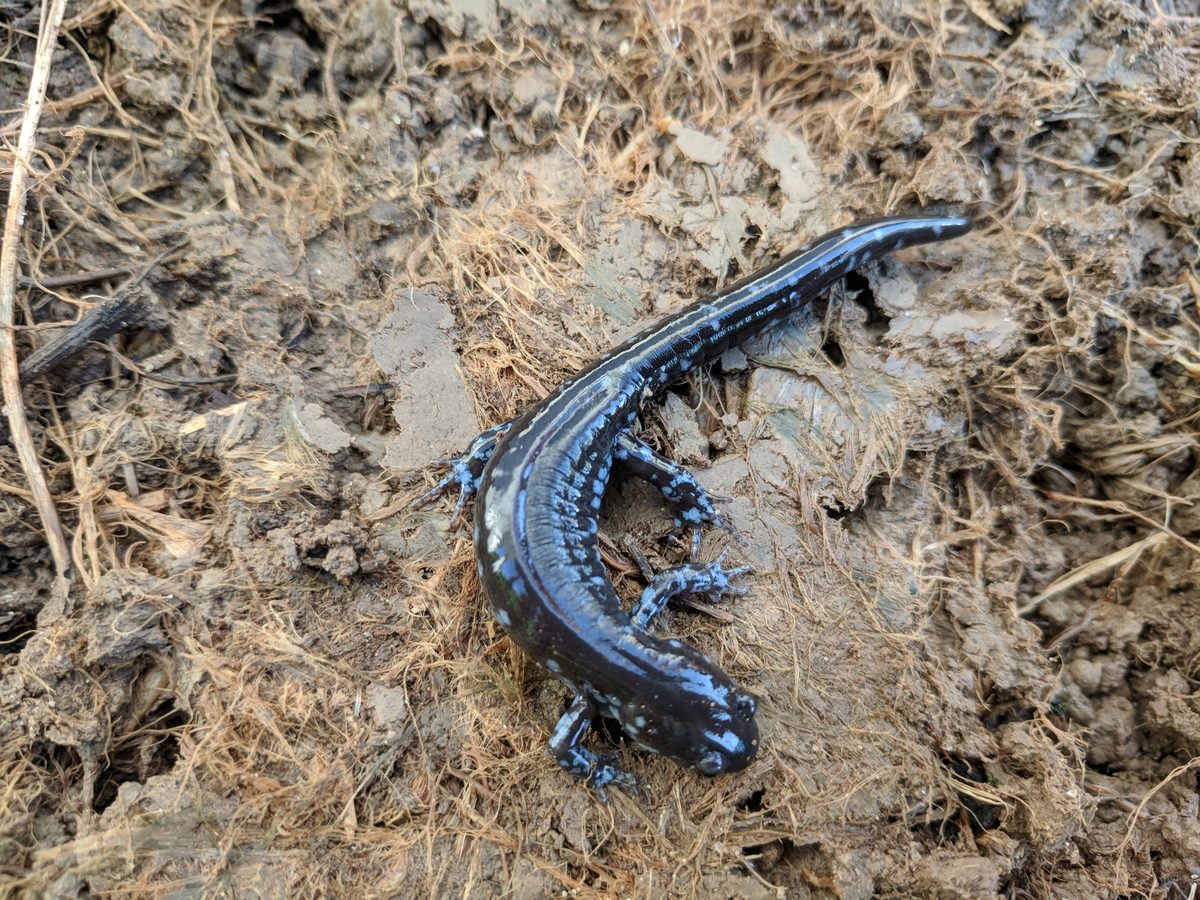
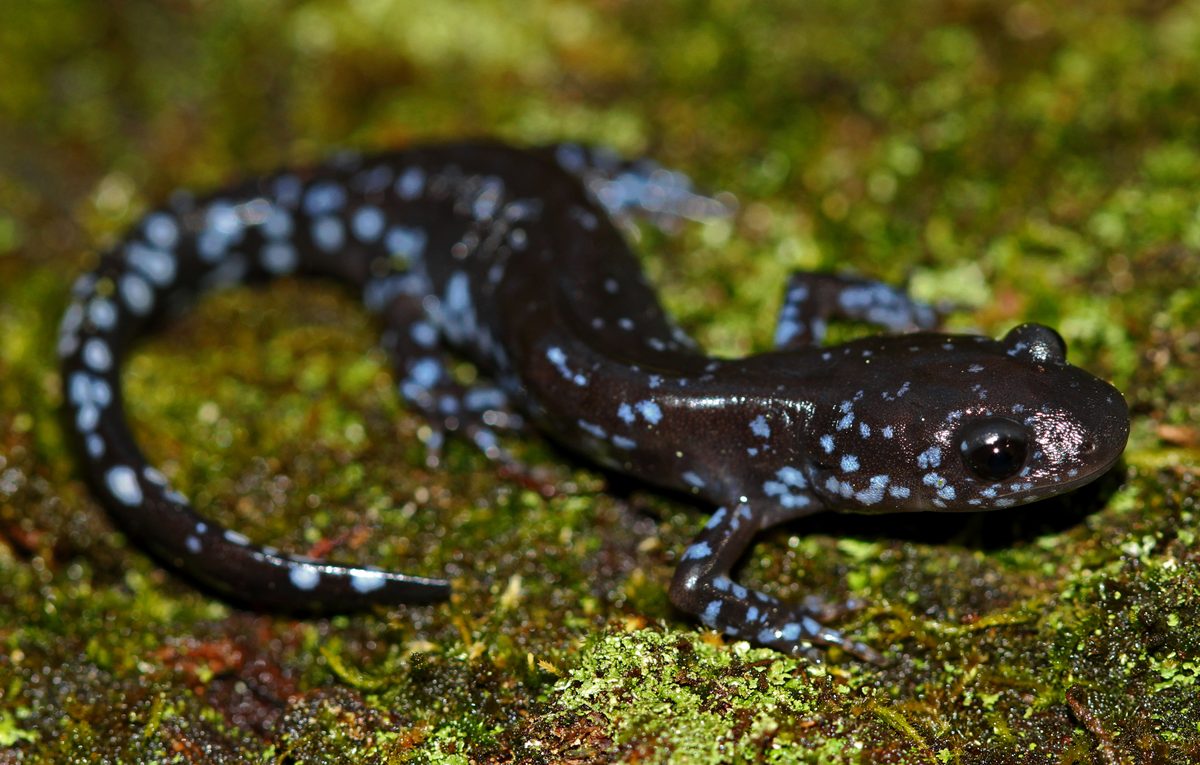
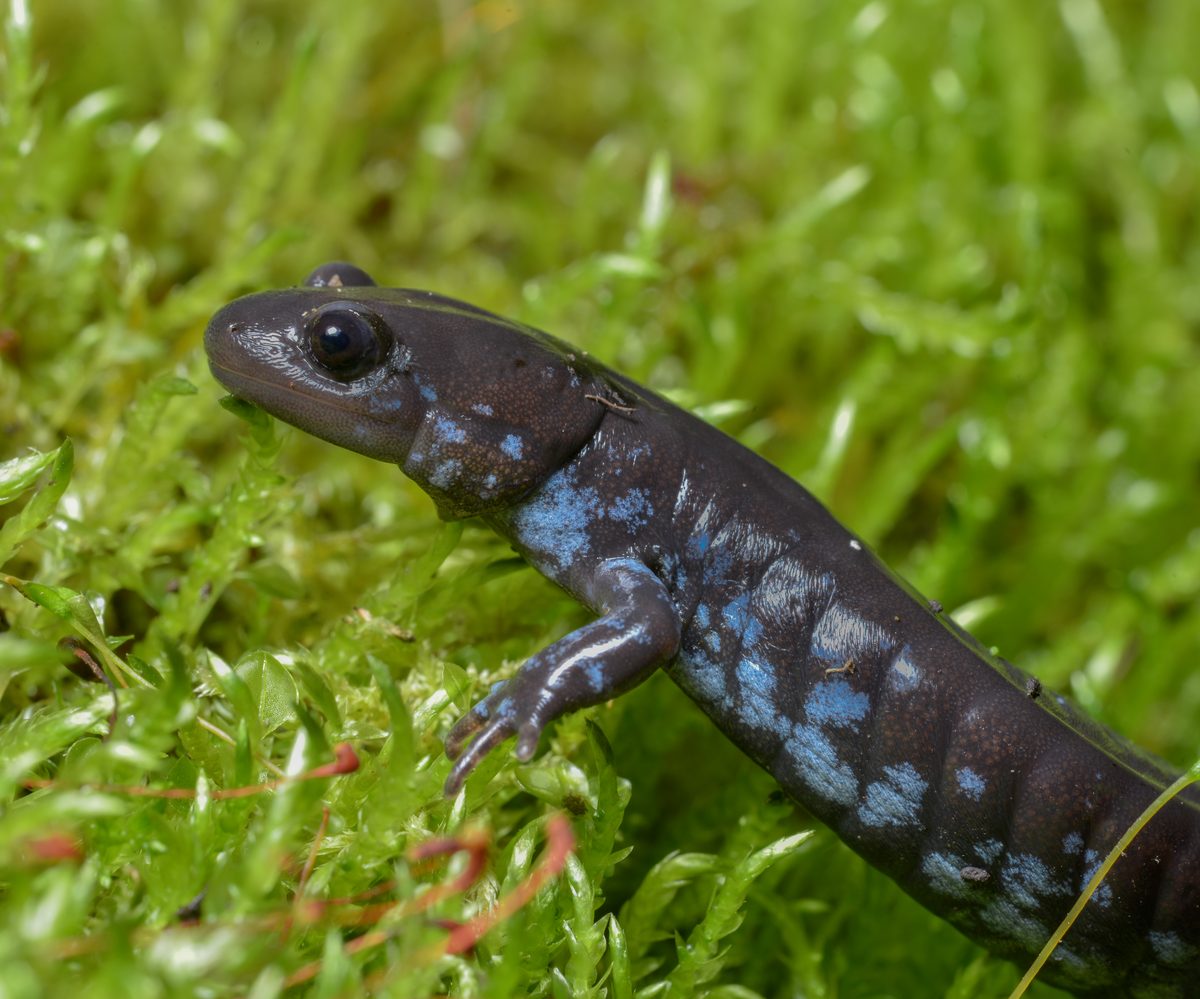
Mole salamanders on the state list:
State list: 321 CMR 10.90, as of 16 August 2024. Rare species of Massachusetts · Trees of Massachusetts