Rare species of Massachusetts · Amphibians
Marbled Salamander
Status Threatened · Group Amphibians · Recorded in 86 towns, 63 since 2001 · State sightings records: most recent 2026
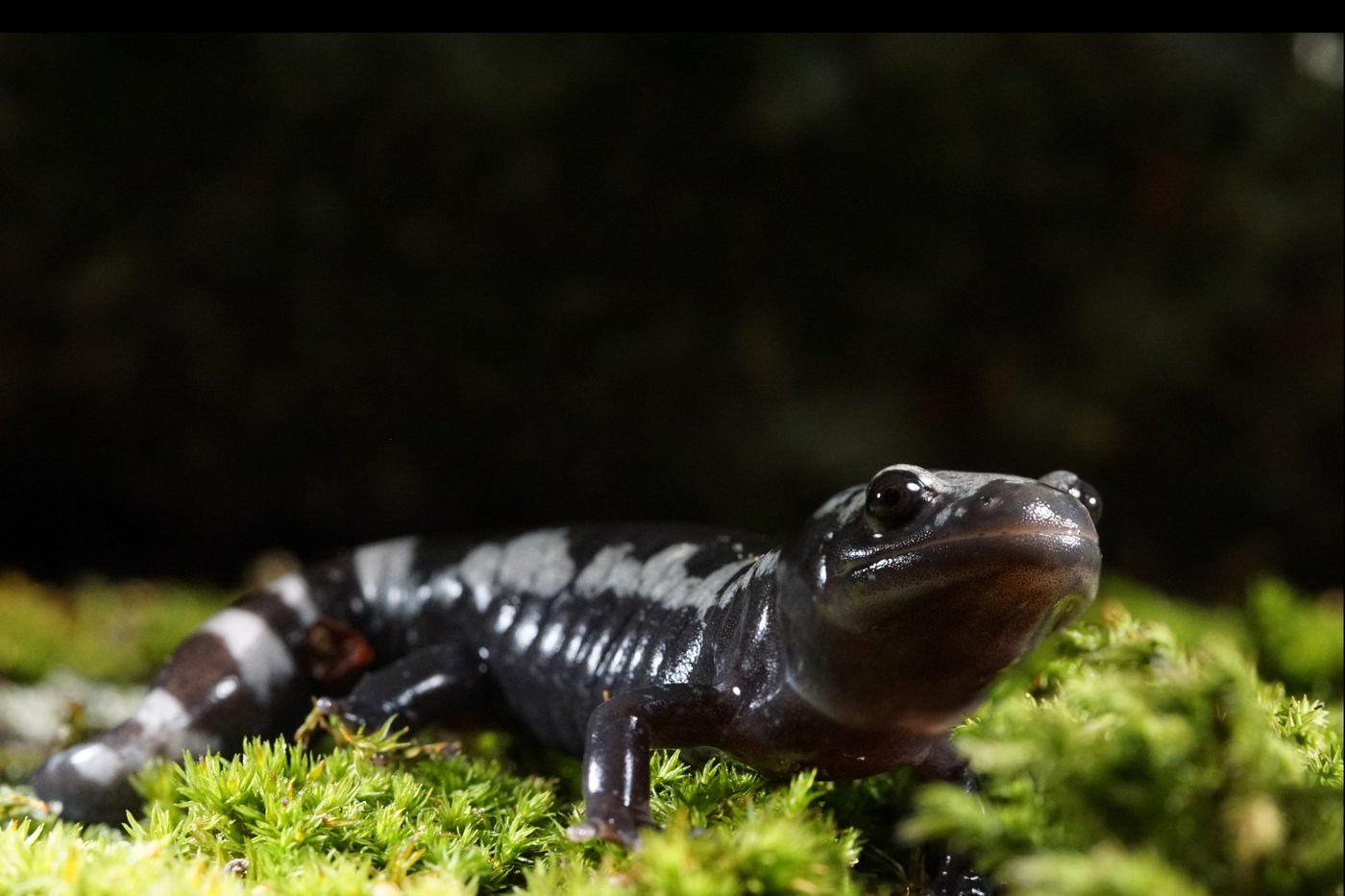
The marbled salamander (Ambystoma opacum) is a species of mole salamander found in the eastern United States.
Description: Wikipedia (CC BY-SA 4.0).
Where NHESP has recorded it
last recorded since 2001 last recorded earlier
- Uxbridge 2026
- Dartmouth 2025
- Acushnet 2024
- Holland 2024
- Norfolk 2024
- Sturbridge 2024
- Charlton 2023
- Dudley 2023
- Harvard 2023
- Hatfield 2023
- Holyoke 2023
- Medford 2023
- Princeton 2023
- Sharon 2023
- South Hadley 2023
- Southwick 2023
- Wrentham 2023
- Bellingham 2022
- Brookfield 2022
- Clinton 2022
- Leverett 2022
- Quincy 2022
- Mansfield 2021
- Somerset 2021
- North Attleborough 2020
- Lunenburg 2019
- Randolph 2019
- Westport 2019
- Groton 2018
- Southbridge 2018
- Webster 2018
- Attleboro 2017
- Bolton 2017
- Foxborough 2017
- Rehoboth 2017
- West Springfield 2017
- Mendon 2016
- Millville 2016
- Rochester 2016
- Wales 2016
- Berlin 2014
- Easton 2014
- New Bedford 2014
- Swansea 2014
- Brimfield 2013
- Northampton 2013
- Stockbridge 2013
- Sutton 2013
- Conway 2012
- Fall River 2012
- Oxford 2012
- Worcester 2012
- Belchertown 2010
- Deerfield 2010
- Gill 2010
- Granby 2010
- Ludlow 2010
- Monson 2010
- Wilbraham 2010
- Plainville 2007
- Douglas 2004
- Williamsburg 2002
- Holliston 2001
- Boylston 1999
- Pepperell 1999
- Dighton 1996
- Shutesbury 1996
- Taunton 1996
- Whately 1995
- New Salem 1992
- Pelham 1989
- Upton 1989
- Boxford 1983
- Westfield 1982
- Littleton 1980
- Wakefield 1974
- Bourne 1936
- Malden 1932
- Weymouth 1927
- Wareham 1900
- Sudbury 1896
- Lynn 1885
- Arlington 1800s
- Salem 1800s
- Springfield PRE-1904
- Waltham 1800s
Town-level documented observations from NHESP’s Rare Species Viewer, read 4 November 2026; the year is the last documented record, as NHESP prints it, not evidence of absence. NHESP does not publish locations.
More about this species
Population
About 95 distinct local groups were counted across 61 towns between 2000 and 2024, as of January 2025. Survey gaps point toward ten or more possible extirpations over recent decades, and individual groups tend to be small.
2000-2024 records, as of January 2025. Source: Massachusetts state rare-species fact sheet, Marbled Salamander (published March 2025).
In Massachusetts
The species is concentrated mainly in six counties — Bristol, Hampden, Hampshire, Norfolk, Franklin, and Worcester. A handful of groups are recorded in Middlesex County, several in Plymouth County, and an isolated cluster in Berkshire County.
Source: Massachusetts state rare-species fact sheet, Marbled Salamander (published March 2025).
Threats
Forest clearing and the destruction of breeding pools reduce suitable habitat. Road traffic and heavy equipment kill individual animals. Habitat fragmentation and storm-water runoff degrade remaining sites. Climate-linked changes in rainfall can accelerate wetland drying. Chytrid fungus and ranaviruses have been recorded in the species.
Source: Massachusetts state rare-species fact sheet, Marbled Salamander (published March 2025).
Protections
The species holds Threatened status in Massachusetts. Vernal pool habitat that carries official certification receives certain protections under state law.
Source: Massachusetts state rare-species fact sheet, Marbled Salamander (published March 2025).
One fact
Unlike other Massachusetts mole salamanders, this species lays loose clutches of eggs in dried-out wetland depressions in late summer; hatching follows when autumn rainfall refills the basin.
Source: Massachusetts state rare-species fact sheet, Marbled Salamander (published March 2025).
Related species
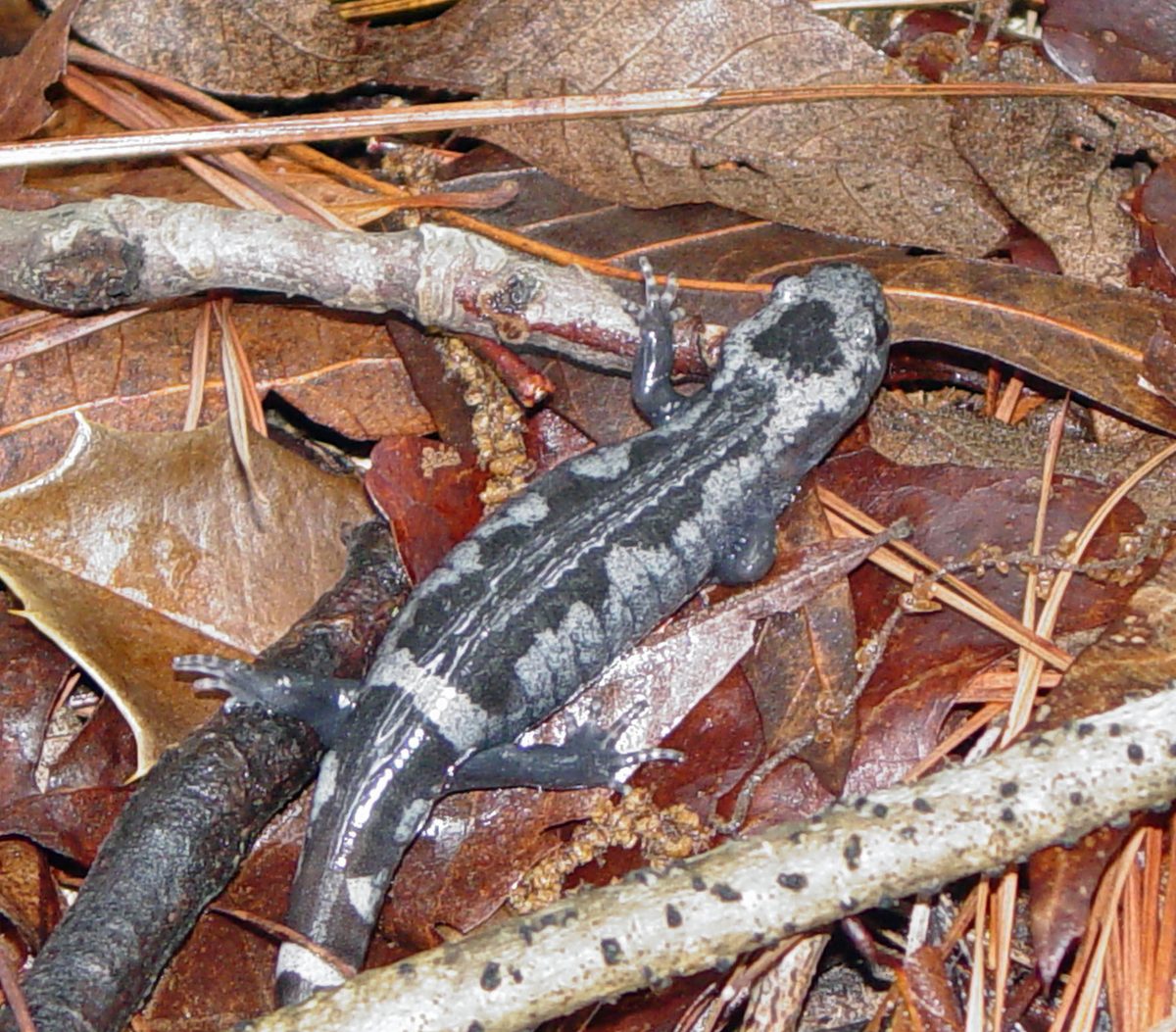
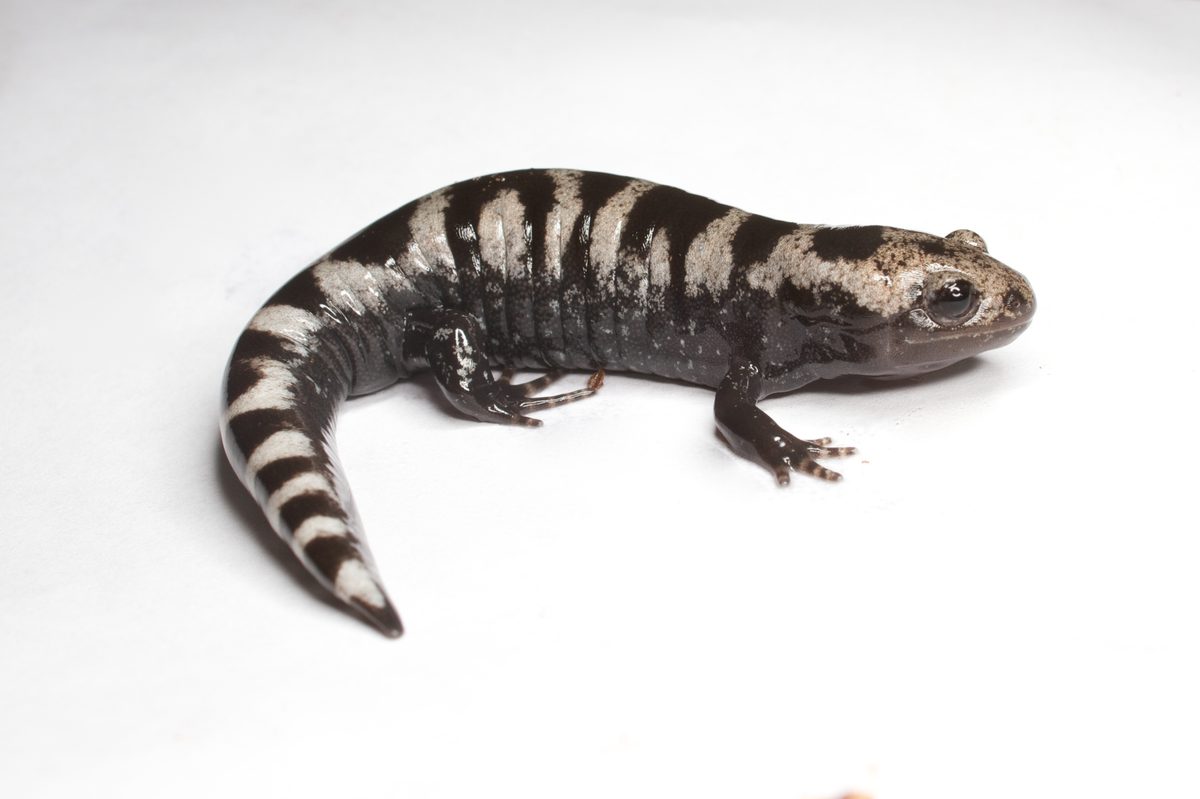
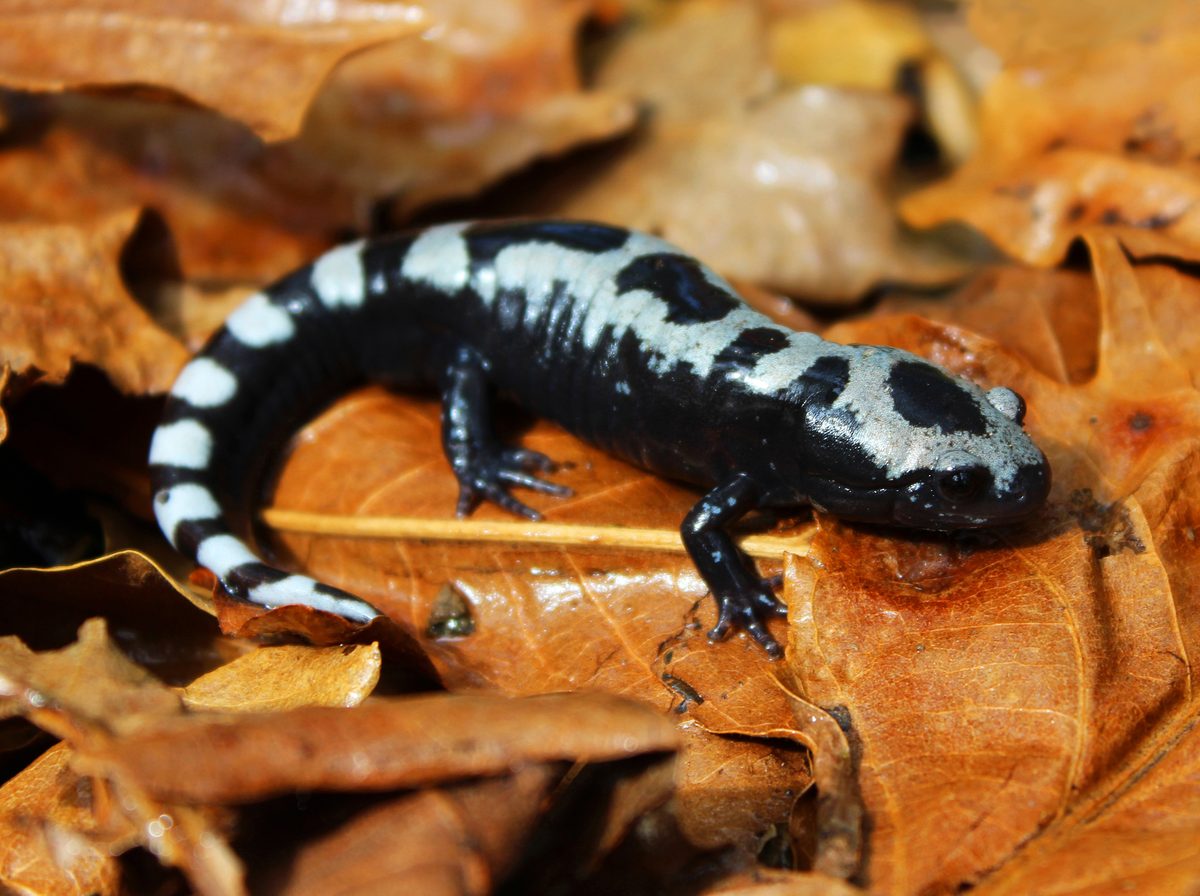
Mole salamanders on the state list:
State list: 321 CMR 10.90, as of 16 August 2024. Rare species of Massachusetts · Trees of Massachusetts