Rare species of Massachusetts · Fish
Atlantic Sturgeon
Status Endangered · Federal status Federally Endangered and Threatened (by population) · Group Fish · Recorded in 12 towns, 10 since 2001 · State sightings records: most recent 2024
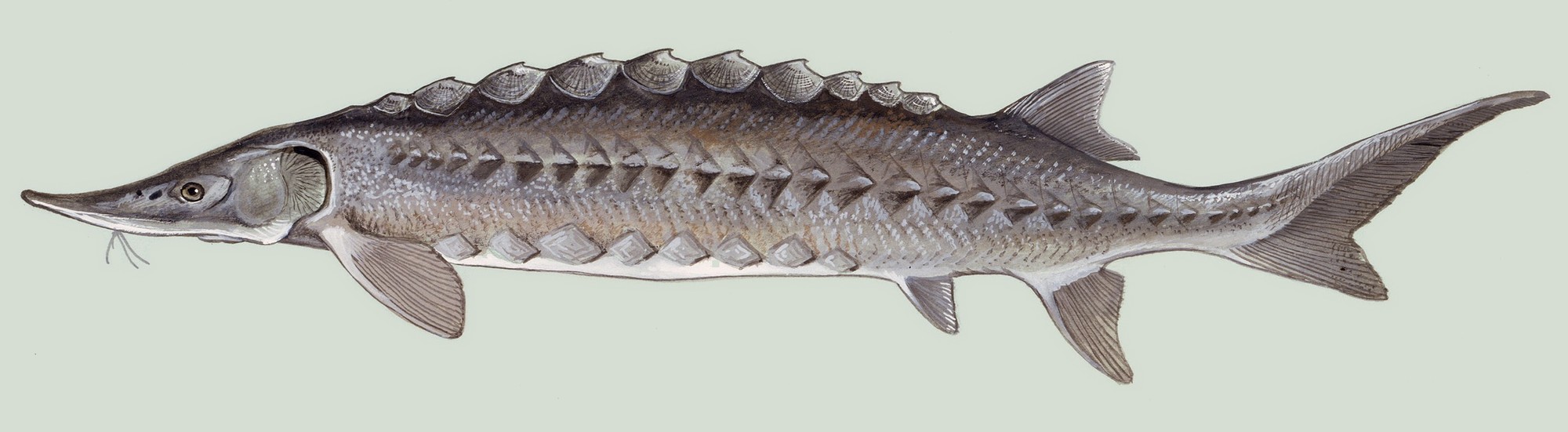
The Atlantic sturgeon (Acipenser oxyrinchus) is a large species of sturgeon native to both sides of the Atlantic Ocean, and associated river basins. It is a member of the family Acipenseridae, and, along with other sturgeon, it is sometimes considered a living fossil. The main range of the Atlantic sturgeon is in eastern North America, extending from New Brunswick, Canada, to the eastern coast of Florida, United States.
Description: Wikipedia (CC BY-SA 4.0).
Where NHESP has recorded it
last recorded since 2001 last recorded earlier
- Bourne 2024
- Sandwich 2024
- Haverhill 2023
- Revere 2022
- Orleans 2021
- Wellfleet 2021
- Amesbury 2016
- Newburyport 2016
- Salisbury 2016
- West Newbury 2015
- Dighton 1992
- Taunton 1991
Town-level documented observations from NHESP’s Rare Species Viewer, read 4 November 2026; the year is the last documented record, as NHESP prints it, not evidence of absence. NHESP does not publish locations.
More about this species
Population
Some spawning populations are believed extirpated; the survivors are small. Genetically derived effective-population figures — which gauge reproductive potential rather than total individuals — stand at 138 to 176 for Hudson River fish and just 2 to 3 for the Connecticut River group.
NOAA page updated June 5, 2026. Source: NOAA Fisheries, Atlantic Sturgeon.
In Massachusetts
The species uses the lower reach of the Merrimack River and offshore coastal waters of Massachusetts, though active spawning no longer occurs here. Both the Merrimack and Taunton river systems were historic spawning grounds.
Source: Massachusetts state rare-species fact sheet, Atlantic Sturgeon (undated).
Threats
Federal fisheries managers identify unintended capture in fishing gear, dams that cut off spawning reaches, degraded water quality, channel dredging, freshwater withdrawals, and ship strikes. The species matures late and moves between fresh, estuarine and coastal environments, which extends its exposure to these pressures.
Source: NOAA Fisheries, Atlantic Sturgeon; Massachusetts state rare-species fact sheet, Atlantic Sturgeon (undated).
Protections
Federal action in 2012 placed the New York Bight stock under Endangered status and the offshore Gulf of Maine stock under Threatened status. Harvesting of this species in state waters has been prohibited since 1998, and it carries Endangered status under state wildlife law.
Source: NOAA Fisheries, Atlantic Sturgeon; Massachusetts state rare-species fact sheet, Atlantic Sturgeon (undated).
One fact
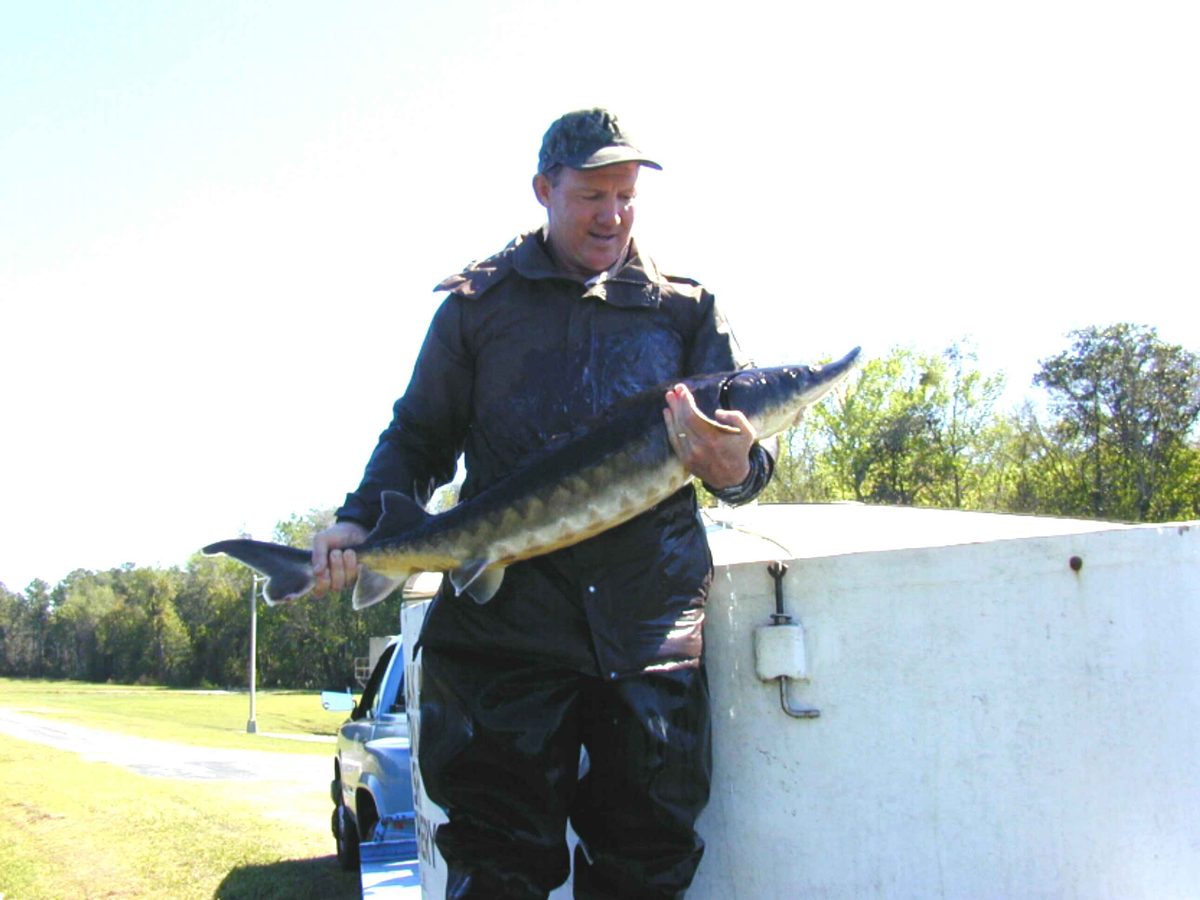
Federal fisheries data indicate this species can grow to roughly 14 feet in length, weigh up to 800 pounds, and survive for as long as 60 years.
Source: NOAA Fisheries, Atlantic Sturgeon.
State list: 321 CMR 10.90, as of 16 August 2024. Rare species of Massachusetts · Trees of Massachusetts