Rare species of Massachusetts · Fish
Shortnose Sturgeon
Status Endangered · Federal status Federally Endangered · Group Fish · Recorded in 30 towns, 27 since 2001 · State sightings records: most recent 2025
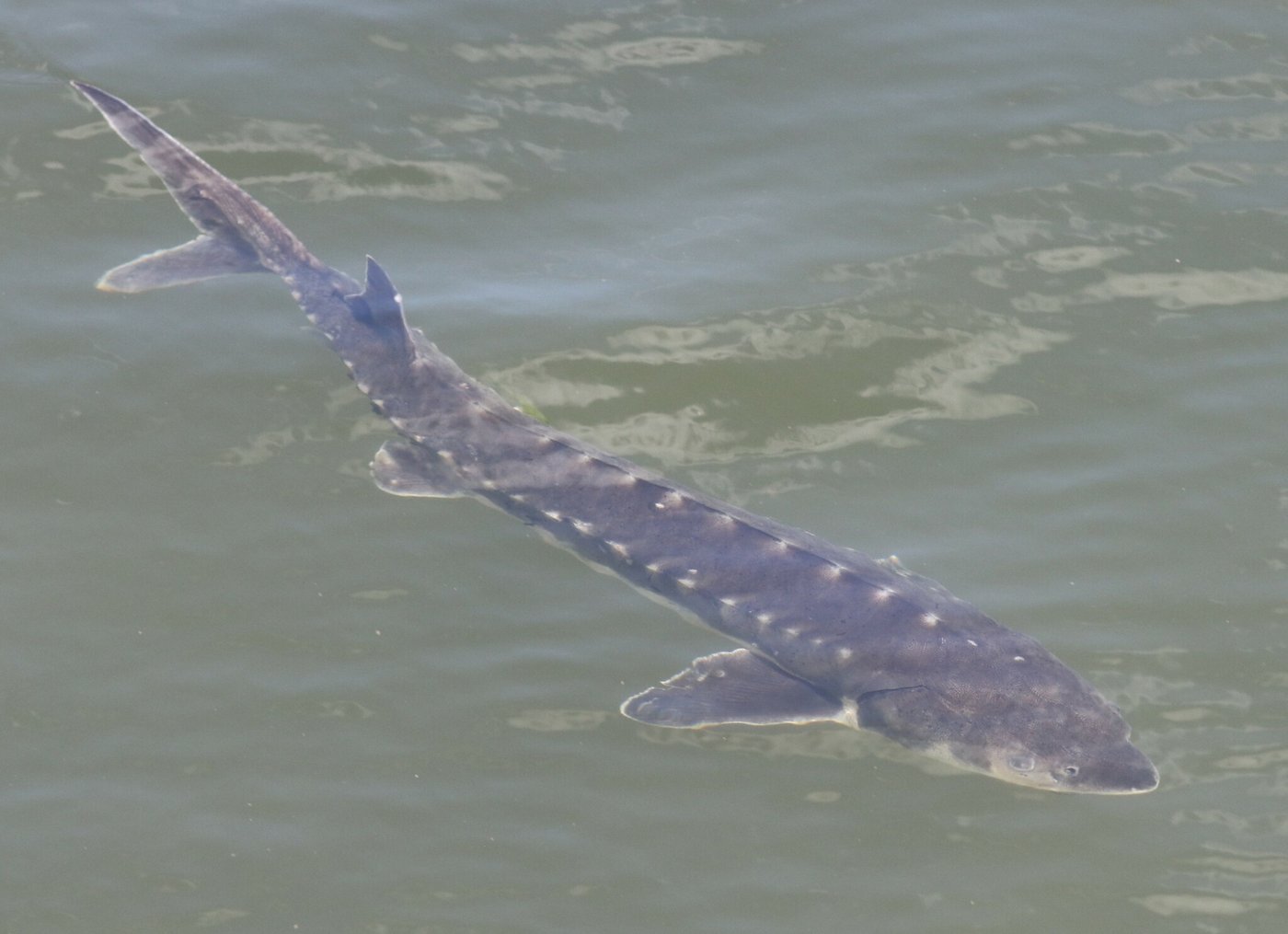
The shortnose sturgeon (Acipenser brevirostrum) is a small and endangered species of North American sturgeon. As with most sturgeons, it is an anadromous bottom-feeder, which migrates upstream to spawn but spends most of its life feeding in rivers, deltas and estuaries. Shortnose sturgeons are long-lived and slow to sexually mature.
Description: Wikipedia (CC BY-SA 4.0).
Where NHESP has recorded it
last recorded since 2001 last recorded earlier
- Holyoke 2025
- Lawrence 2025
- Greenfield 2024
- Bourne 2023
- Sandwich 2023
- Springfield 2022
- Haverhill 2021
- Methuen 2021
- North Andover 2021
- Agawam 2018
- Chicopee 2018
- Deerfield 2018
- Easthampton 2018
- Hadley 2018
- Hatfield 2018
- Montague 2018
- Northampton 2018
- South Hadley 2018
- Sunderland 2018
- Whately 2018
- Amesbury 2016
- Merrimac 2016
- West Newbury 2015
- Groveland 2010
- Longmeadow 2009
- Newburyport 2008
- Salisbury 2008
- Gill 1993
- Falmouth 1871
- Provincetown 1860s
Town-level documented observations from NHESP’s Rare Species Viewer, read 4 November 2026; the year is the last documented record, as NHESP prints it, not evidence of absence. NHESP does not publish locations.
More about this species
Population
Connecticut River counts put the number of adults at around 1,600 in the lower section (2004) and roughly 328 upstream of Holyoke Dam (2012). An upper-bound figure of 2,000 adults was reached on the Merrimack (2009); winter sonar surveys estimated between 3,000 and 4,000 individuals — both immature and mature — using that river's deeper pools.
2004-2012 estimates. Source: NOAA Fisheries, Shortnose Sturgeon (updated October 1, 2026); Massachusetts state rare-species fact sheet, Shortnose Sturgeon (undated).
In Massachusetts
Established groups inhabit the state's two largest rivers, the Connecticut and the Merrimack. The fish also forage in smaller tidal estuaries along the coast. Dams on each river substantially limit the habitat that is reachable.
Source: Massachusetts state rare-species fact sheet, Shortnose Sturgeon (undated).
Threats
The inability to pass upstream of dams is the central vulnerability. Other pressures include altered flows from hydropower operations, construction and dredging, water contamination, fishing mortality, and sea-level rise. The fish's slow rate of maturation and long spawning migrations compound these risks.
Source: NOAA Fisheries, Shortnose Sturgeon; Massachusetts state rare-species fact sheet, Shortnose Sturgeon (undated).
Protections
The species was placed on the federal Endangered list on March 11, 1967, one of the original listings, and also carries Endangered status under state law. Federal law bars the take, possession or sale of shortnose sturgeon.
Source: NOAA Fisheries, Shortnose Sturgeon; Massachusetts state rare-species fact sheet, Shortnose Sturgeon (undated).
One fact
The highest Merrimack River adult count on record reached roughly 2,000 (2009), compared with just 32 counted about two decades earlier — a dramatic turnaround, though the population remains federally protected.
Source: NOAA Fisheries, Shortnose Sturgeon.
State list: 321 CMR 10.90, as of 16 August 2024. Rare species of Massachusetts · Trees of Massachusetts