Rare species of Massachusetts · Fish
American Brook Lamprey
Status Threatened · Group Fish · Recorded in 12 towns, 11 since 2001 · State sightings records: most recent 2025
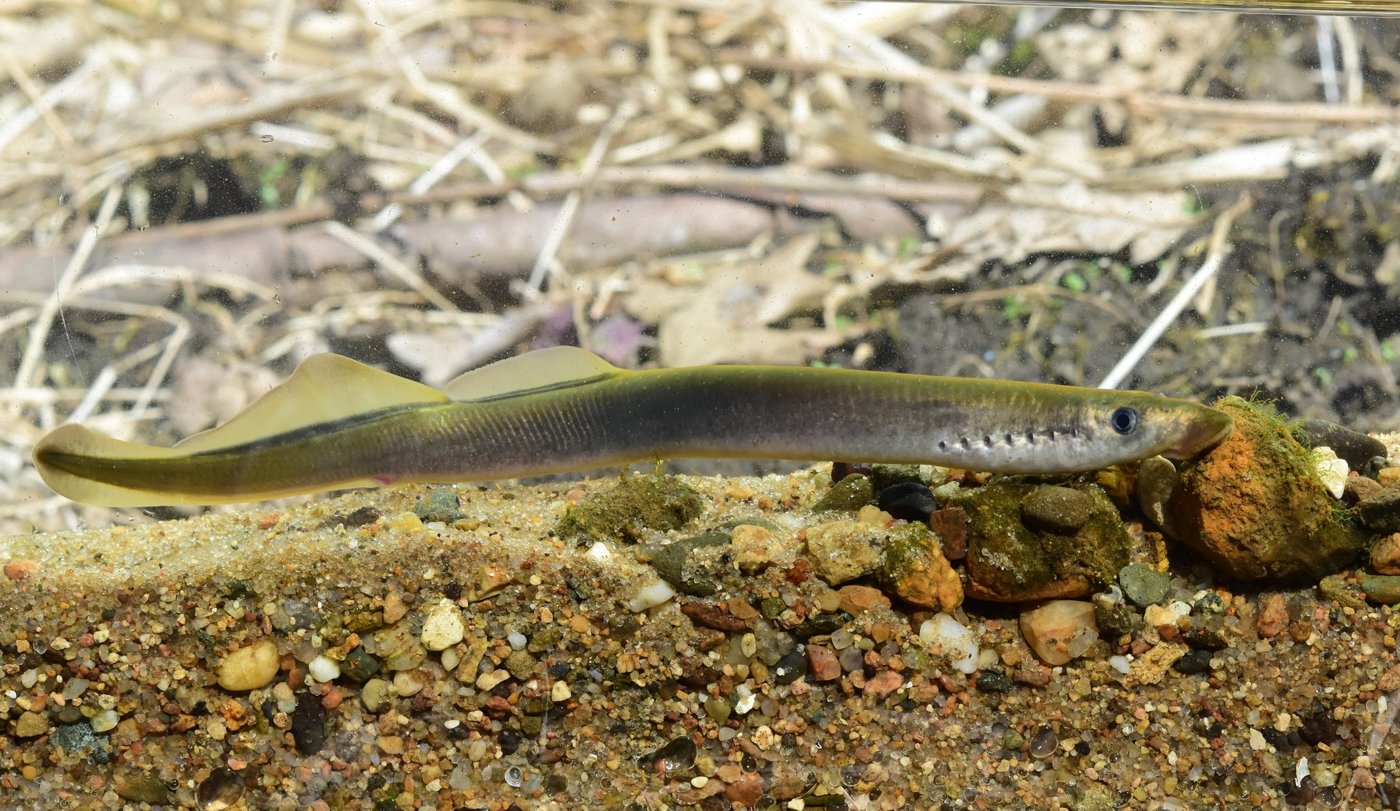
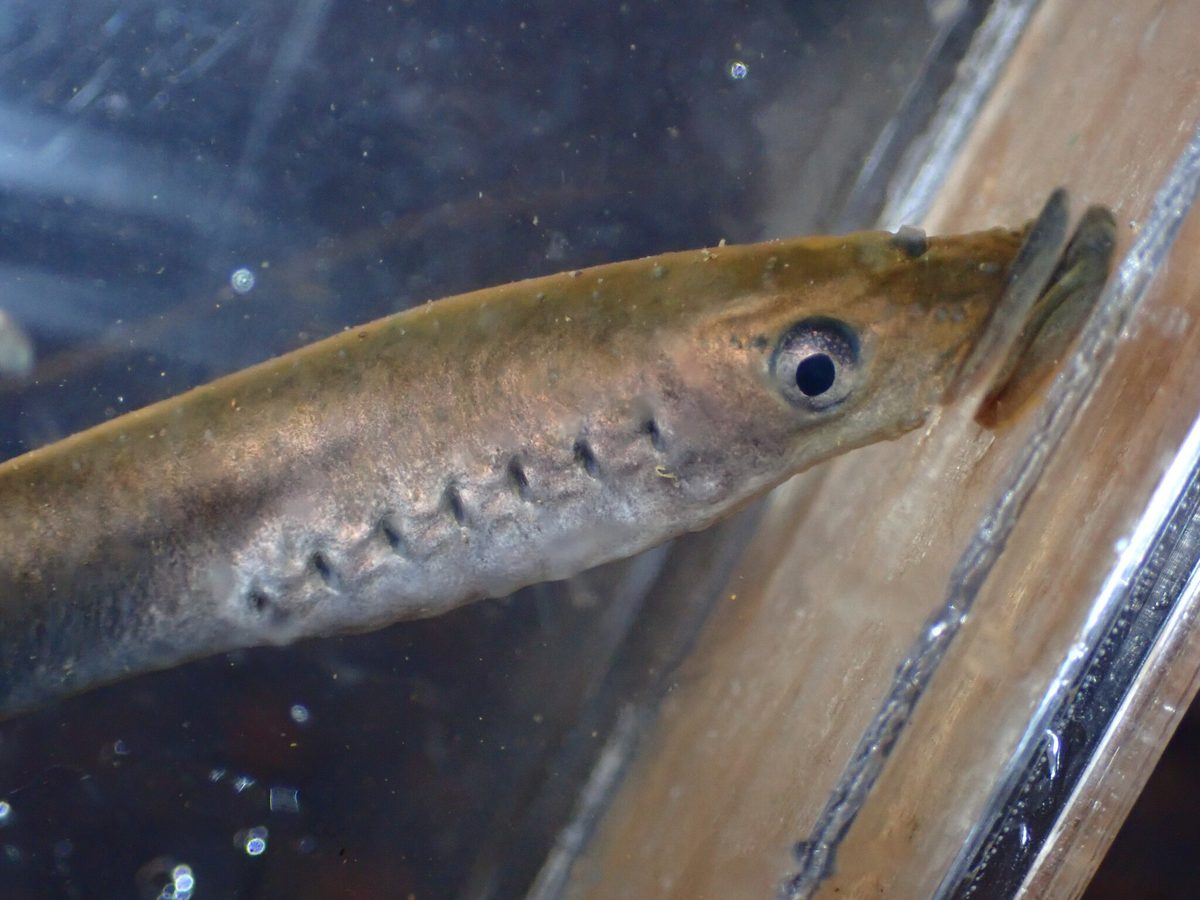
Lethenteron appendix, the American brook lamprey, is a common non-parasitic lamprey in North America. In adults their disc-like mouths contain poorly developed teeth, useless for attaching to a host.
Description: Wikipedia (CC BY-SA 4.0).
Where NHESP has recorded it
last recorded since 2001 last recorded earlier
- Bridgewater 2025
- Mashpee 2025
- Raynham 2025
- West Tisbury 2024
- North Attleborough 2022
- Bellingham 2021
- Brockton 2013
- Mendon 2010
- Leicester 2009
- Blackstone 2008
- East Bridgewater 2007
- Chilmark 1988
Town-level documented observations from NHESP’s Rare Species Viewer, read 4 November 2026; the year is the last documented record, as NHESP prints it, not evidence of absence. NHESP does not publish locations.
More about this species
Population
The species is currently documented at seven stream systems, typically one or two reaches per system. Roughly half of those systems have yielded only a handful of individuals.
State fact sheet, 2025. Source: Massachusetts state rare-species fact sheet, American Brook Lamprey (published April 2025).
In Massachusetts
Records are known from the French, Taunton, Blackstone and Cape Cod drainages, plus sites on Martha's Vineyard. The Blackstone drainage holds the healthiest populations.
Source: Massachusetts state rare-species fact sheet, American Brook Lamprey (published April 2025).
Threats
Pressures include erosion-driven sedimentation, impervious-surface runoff that alters stream hydrology, channel straightening, water withdrawal, climate-linked stream warming, forest clearing along stream banks, and water quality losses from road salt and industrial effluent.
Source: Massachusetts state rare-species fact sheet, American Brook Lamprey (published April 2025).
Protections
Classified as Threatened under state wildlife law, which bars capturing or selling individual animals. This lamprey also ranks among those targeted for conservation planning under the state wildlife action plan.
Source: Massachusetts state rare-species fact sheet, American Brook Lamprey (published April 2025).
One fact
Larvae remain buried in soft-bottom sediment for approximately three to five years before transforming into adults. After metamorphosis, the adults stop feeding and die once reproduction is complete.
Source: Massachusetts state rare-species fact sheet, American Brook Lamprey (published April 2025).
State list: 321 CMR 10.90, as of 16 August 2024. Rare species of Massachusetts · Trees of Massachusetts