Commonwealth · Land and water · Species lost and returning
Lost and Returning Species in Massachusetts
Wild turkeys were gone from Massachusetts by 1851, and black bears numbered fewer than 100 in the mid-1970s. Today the state has an estimated 30,000 to 35,000 turkeys and at least 4,500 bears. Not every loss reverses.
By Patrick White · Published November 14, 2026
How to read this
A tour, not a census
The comebacks come first, because there are more of them than most people expect. The losses are here for weight. For which species are rare today, see the rare species guide; forest, habitat and water for every city and town are on the Land pages.
Animals
Animals: back from the edge, gone, and still deciding
Mammals
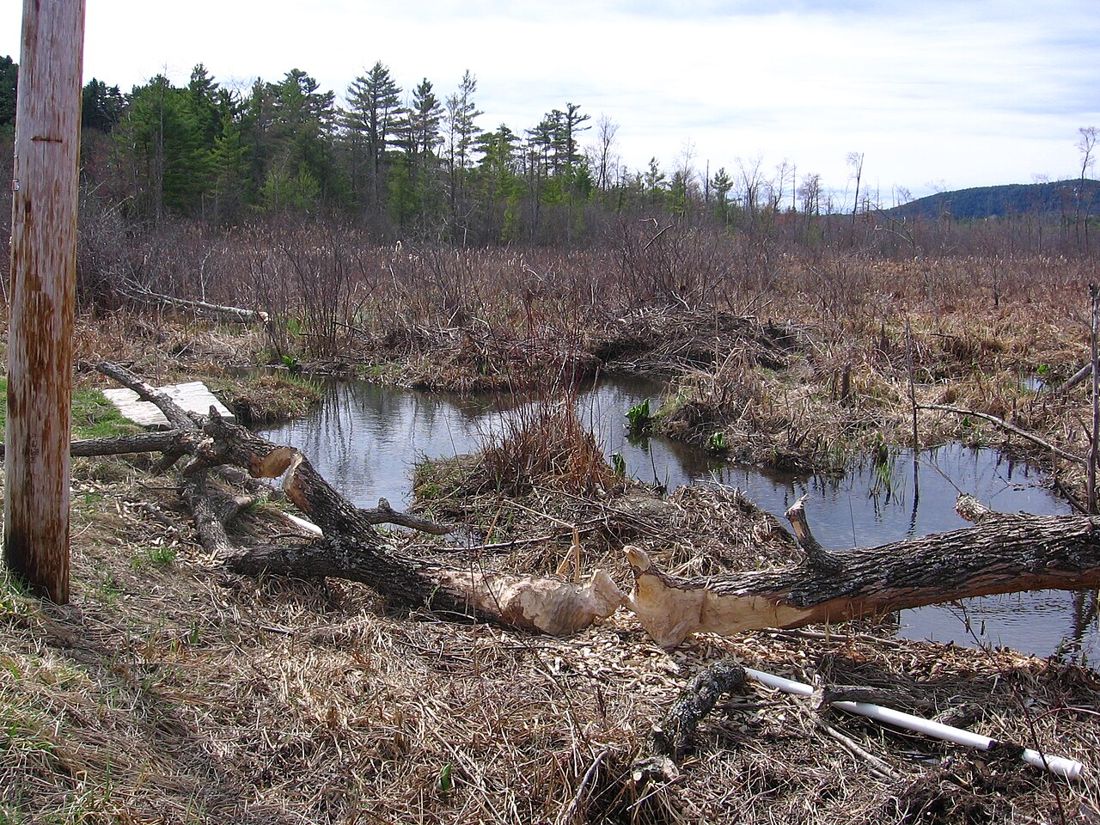
Beaver. Beavers were virtually gone from Massachusetts by the Revolution. One documented release came on October 7, 1932, when the warden at Mass Audubon’s Pleasant Valley sanctuary in Lenox put beavers back in the valley; Mass Audubon counts three, brought from New York. UMass Extension dates their return to Berkshire County to the 1930s. Today they are common across the state except Cape Cod.
Fisher. Fishers were absent for roughly a century after the mid-1800s, when unregulated trapping and cleared land drove them out. The first documented sightings of their return came in the late 1950s. By 2005 they had reached Cape Cod, and MassWildlife says they now live throughout the state, including populated areas with mature forest.
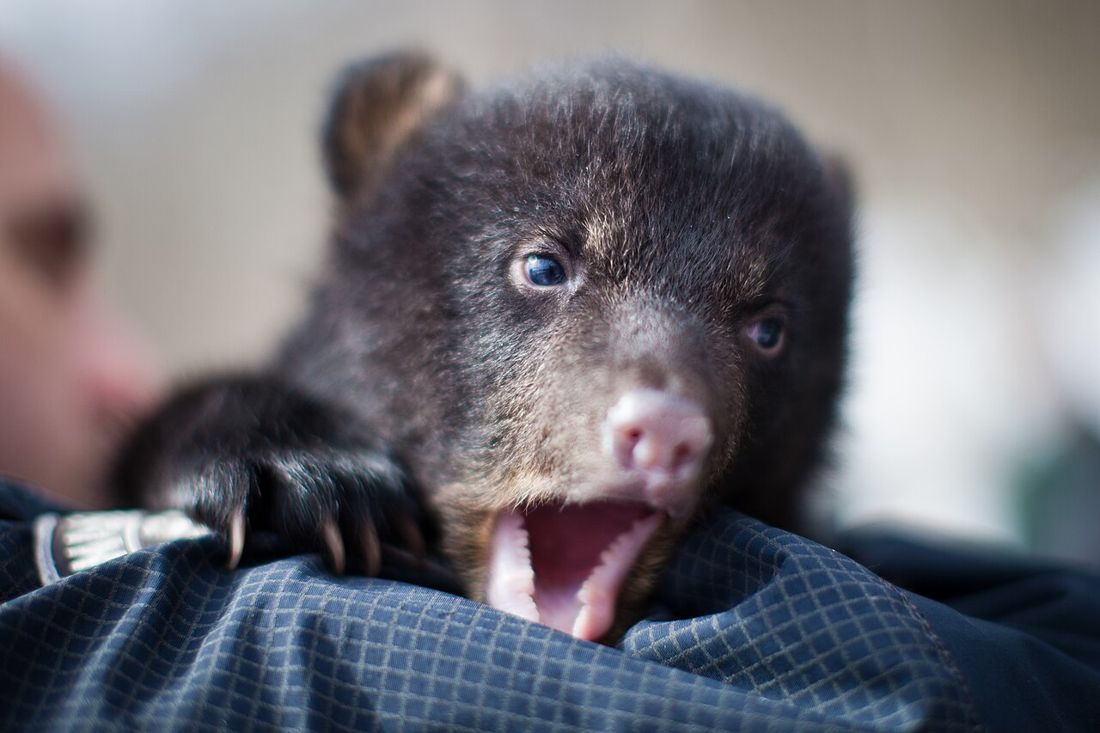
Black bear. In 1940 the U.S. Fish and Wildlife Service put the state’s black bears at fewer than 10, all in the northwest corner. MassWildlife counted fewer than 100 in the mid-1970s, about 500 in the 1980s and about 3,000 in 2005. The estimate now is at least 4,500, growing by as much as 8% a year, and young males have reached communities along Route 495.
Moose. Moose were gone from Massachusetts by the early 1700s. Scattered reports from near the Vermont and New Hampshire borders began in the 1950s, sightings peaked around 2004, and MassWildlife says the population now holds at about 800 to 1,000, mostly in western and central Massachusetts. State law bars moose hunting.
Eastern coyote, a newcomer. Coyotes were never native here. The first record is from Otis, in Berkshire County, in 1957; specimens from there and from New Salem confirmed the species by 1958. By 2000 coyotes had been documented in every mainland city and town, and the state estimate is 9,500 to 11,500. Eastern coyotes carry roughly 8% to 25% wolf DNA, a trace of the animal that was here first.
Seen, not confirmed
There have been a number of reported sightings of both wolves and mountain lions in the Berkshires. None is confirmed. MassWildlife says it cannot investigate or confirm a report without evidence. There is hope that both may return.
Wolves were gone from Massachusetts by the mid-1800s. Then in October 2007 a Shelburne farmer reported lambs killed, and the animal was shot the next day: an 85-pound male that U.S. Fish and Wildlife Service forensic testing confirmed as a gray wolf. Investigators found no sign it had been held in captivity, and the closest known wolf population is in Ontario.
Mountain lions are harder. The last native one was killed around 1858 on Mount Tom near Easthampton, according to CBS Boston. MassWildlife says only two records meet its evidence standard, both at Quabbin: scat that tested as mountain lion in April 1997 and a trail of tracks in snow in March 2011. It finds no evidence of a reproducing population. A young male killed by an SUV on the Wilbur Cross Parkway in Milford, Connecticut, on June 11, 2011, had traveled about 1,800 miles from the Black Hills of South Dakota, and MassWildlife says he may have left the Quabbin tracks. A wolf in Shelburne and a cat that crossed half the continent show these animals can still arrive. Whether either stays is another matter.
Birds
Wild turkey. Wild turkeys were gone from Massachusetts by 1851, and at least nine restoration attempts between 1911 and 1967 failed. What worked began in southern Berkshire County in the early 1970s: 37 wild birds trapped in southwestern New York and released, at Beartown State Forest according to a 2022 WAMC report. By the fall of 1978 the flock had grown to about 1,000 birds across Berkshire and Franklin counties. The estimate today is 30,000 to 35,000.
Bald eagle. The last historic eagle nest in Massachusetts was at Snake Pond in Sandwich, in 1905. From 1982 to 1988 MassWildlife raised 41 eaglets in cages at Quabbin Reservoir and released them. A territorial pair appeared at Quabbin in 1987, and in 2025 there were 98 pairs holding territories, 39 of which fledged at least 64 chicks.
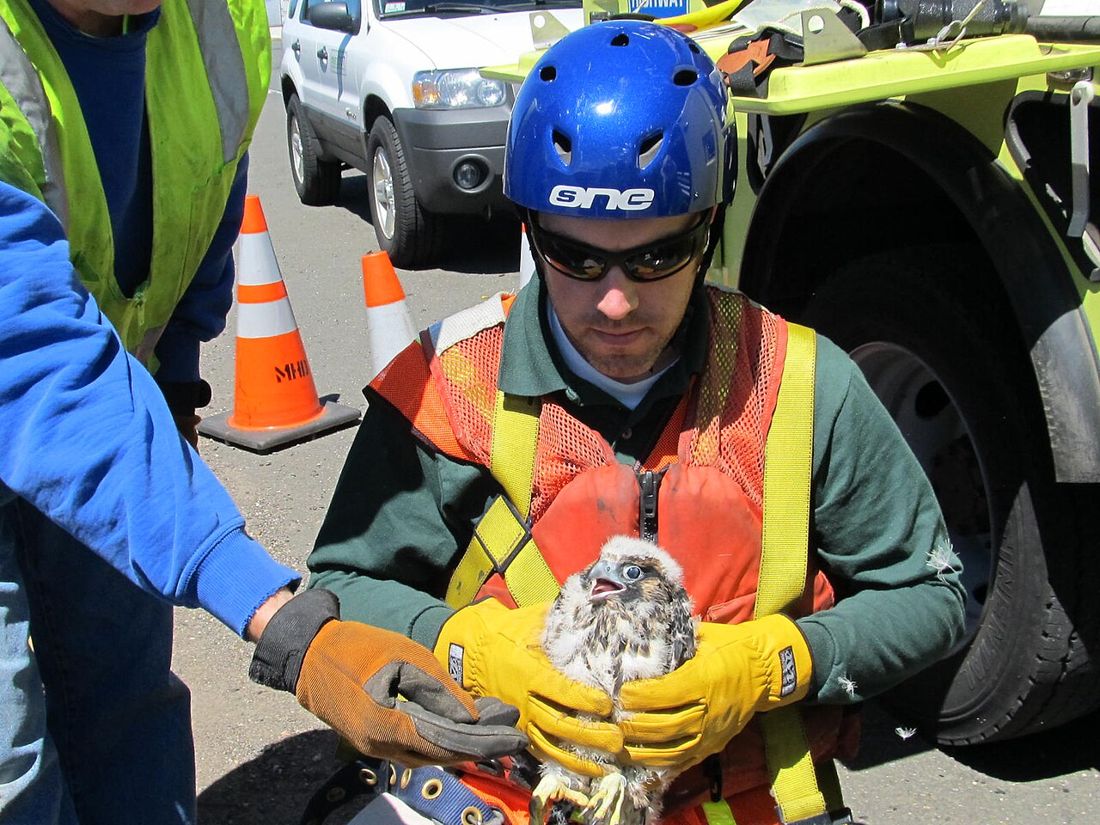
Peregrine falcon. The last peregrine nest in Massachusetts for decades was on Monument Mountain in the southern Berkshires, in 1955. DDT was banned in 1972, restoration began in the early 1980s, and the first successful nest was on Boston’s Customs House Tower in 1987. In 2025, 40 pairs held territories, and at least 1,207 wild-born chicks have fledged since the program began.
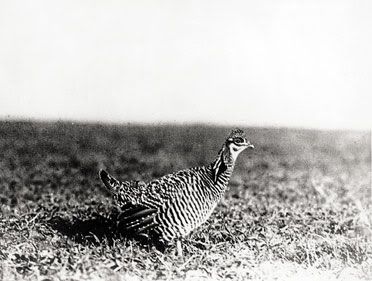
Heath hen. The last heath hen was a male on Martha’s Vineyard, known as Booming Ben. He was alone for about four years and disappeared in March 1932. The state had set aside a 1,600-acre reservation on the island in 1907, and the birds were estimated at 300 by 1910. A fire in May 1916 and a winter of goshawks hit them hard; the count on the reservation peaked at over 400 in 1920 and then fell. On the mainland, the last one had been shot near Northampton in the 1830s.
Passenger pigeon. Flocks of passenger pigeons once exceeded three billion birds, MassWildlife notes. The last one, a female named Martha, died at the Cincinnati Zoo on September 1, 1914. Her body went to the Smithsonian Institution.
Fish
American shad and river herring. In 1967, 19,484 American shad were counted at the Holyoke fish lift on the Connecticut River. In 2025 the count was 324,172. Blueback herring went the other way there, from about 630,000 a year in the 1980s to 144 in 2025, a collapse a 2025 account in Estuary blames mainly on ocean bycatch. On coastal rivers, dam removal is working: in Braintree, two dams came out and herring can again reach 180-acre Great Pond, closed to them for about 225 years, and about 200,000 river herring ran up Stony Brook in Brewster in 2025.
Atlantic salmon, the end of a program. Dams ended the Connecticut River’s Atlantic salmon run in the early 1800s. A multi-agency restoration began in 1967, and with no native fish left it used eggs from Maine’s Penobscot River. After 45 years it was abandoned in 2012. The Holyoke fish lift counted no salmon in 2025.
Reptiles
Timber rattlesnake. A female timber rattlesnake does not breed until about age 7 and then only every two to three years, with five to nine young a litter, which is why losses last. The snake is endangered in Massachusetts and survives at a handful of sites; in the past 50 years it has been recorded only in Berkshire County, the Connecticut River Valley and the Boston area. In 2016 the state proposed releasing young snakes on Mount Zion, an uninhabited island in Quabbin Reservoir, and the Fisheries and Wildlife Board voted unanimously to suspend the plan on April 19, 2017. The rare species guide has its status.
Insects
American burying beetle. One idea about why this inch-long beetle vanished is that it lost its food: MassWildlife lists the passenger pigeon’s extinction among the hypotheses, though the link is circumstantial. It was gone from Nantucket by 1926. Releases of captive-bred beetles, descended from Rhode Island’s Block Island population, began on Nantucket in 1994 after a seven-year pilot on Penikese Island, and 2,923 beetles were released over 13 years. The beetle is still endangered, and a self-sustaining population has not been confirmed. See the rare species guide.
Plants
Plants: the forest is changing under us
Trees
American chestnut. Four billion is the American Chestnut Foundation’s estimate of the American chestnuts killed by the blight, a fungus that arrived from Asia in the late 1800s. The foundation calls the tree functionally extinct in the wild. It is backcross-breeding blight-resistant trees, and in December 2023 it withdrew support for its genetically engineered Darling 58 petitions after a lab error showed the tested tree was a different line, Darling 54. See the chestnut page.
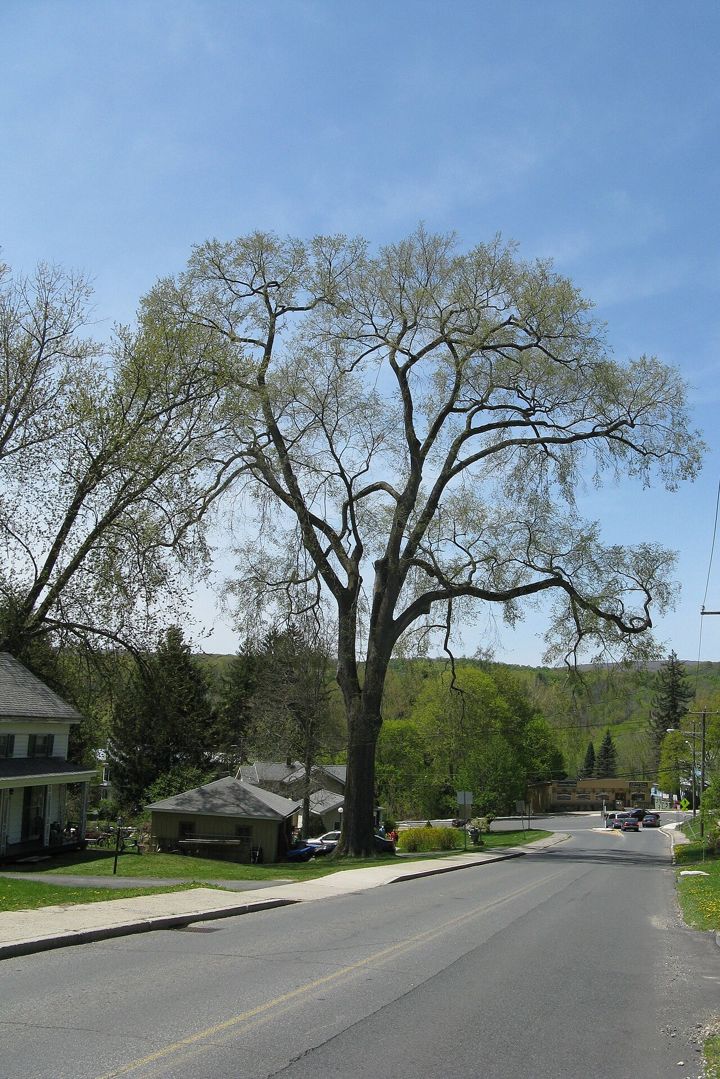
American elm. Massachusetts reported its first case of Dutch elm disease in 1941, the year the American elm became the state tree, on March 21. By the end of the 1970s much of New England’s planted elm was gone. One survivor in Lanesborough, more than 107 feet tall and dated to about the town’s incorporation in 1765, is inoculated every couple of years, paid for mostly by donations to a volunteer tree committee. See the elm page.
Eastern hemlock. Hemlock woolly adelgid, an insect from Asia, is now in every Massachusetts county and in every community with significant hemlock. Mild winters have let it grow: the winter die-off averaged 19% in February 2024, the lowest since surveys began in 2017. See the hemlock page.
Ash. The emerald ash borer was first found in Massachusetts in August 2012, in Dalton, and Berkshire County has the state’s highest share of ash. By 2024 it had been detected in all 14 counties and 280 communities, and aerial surveys mapped 29,551 acres of ash dying or dead, which the Forest Service says understates the damage. Infested ash die within a few years, small ones in one to two and large ones in three to four. Ash is on its way out. In 2024 foresters injected 24 white ash at Mohawk Trail State Forest to protect old-growth ash. See the white ash page.
American beech. Beech leaf disease was first found in Massachusetts in June 2020, in Plymouth. By 2024 it was confirmed in 339 communities and every county, and aerial surveys mapped more than 7,400 acres of severe damage. It darkens and shrivels the leaves, thins the crown and can eventually kill the tree; there is no treatment, and how long it takes is not yet known. Beech looks likely to follow ash. See the beech page.
Other plants
Pine-drops. A plant with no chlorophyll turned up in the Berkshires in 2023 that had never been recorded in Massachusetts. An amateur botanist, Skye van der Laan, noticed the odd-looking plant and told MassWildlife, whose state botanist confirmed it as pine-drops, a relative of ghost pipe that lives on fungi in the soil. MassWildlife called the find extraordinary and does not know whether more will turn up or why this one went unseen so long.
American chaffseed. In 2018 a Rhode Island botanist found American chaffseed on Cape Cod, the first Massachusetts population since 1965. MassWildlife staff counted more than 2,600 stems. It is federally endangered and endangered in Massachusetts. See the rare species guide.
The animals that came back share two things: forest grew back over old farmland, and hunting and trapping came under rules. The trees in trouble went the other way. An insect or a fungus arrived from abroad, and rules could not stop it. The newest arrival on this page is a plant nobody had recorded until 2023. What else is out there?
Sources and limits
Sources and limits
Mammals
- MassWildlife, Black Bear
- Massachusetts Wildlife, “Massachusetts Is Bear Country”
- MassWildlife, Moose
- GBH, moose in Massachusetts, October 2019
- MassWildlife, Learn about fishers
- Massachusetts Wildlife, “Demystifying the Fisher”
- Mass Audubon, Beavers
- Mass Audubon, Pleasant Valley history
- UMass Extension, beavers in Massachusetts
- Massachusetts Wildlife, “Living with the Eastern Coyote”
- MassWildlife history, 1948 to 1969
- MassWildlife, Are there mountain lions in Massachusetts?
- CBS Boston, “Mass. Mountain Lion Sightings Pit Lore Against Science,” 2012
- U.S. Fish and Wildlife Service, Shelburne, Mass., canid confirmed wolf
Birds
Fish, reptiles and insects
- U.S. Fish and Wildlife Service, Connecticut River fishway counts, 2025
- Estuary, “The Once and Future Connecticut River”
- Division of Marine Fisheries, diadromous fish run update, spring 2025
- MassWildlife, Timber Rattlesnake
- Boston magazine, rattlesnake island plan suspended, April 2017
- MassWildlife, American Burying Beetle
- IUCN, re-introduction of the American burying beetle to Nantucket
- Audubon, the American burying beetle and gone birds
Trees
- The American Chestnut Foundation, Darling 58/54
- New England Historical Society, Dutch elm disease
- Secretary of the Commonwealth, concise facts (state tree)
- iBerkshires, historic Lanesborough elm, 2019
- USDA Forest Service, Massachusetts forest health highlights, 2024
- UMass Extension, emerald ash borer
- WAMC, emerald ash borer found in the Berkshires, 2012
- MassWildlife and DCR, Beech leaf disease in Massachusetts
Counts and estimates are the agencies’ own, for the years given; they change. Reported wolf and mountain lion sightings in the Berkshires are unconfirmed, and are not counted as records. Rare species are described at the county level or higher, never at a site. Photographs are from Wikimedia Commons, each credited and licensed as shown under the picture.
Massanomics Weekly Every Tuesday
Your city or town, in the numbers that matter.
- This week’s story, with where your city or town stands
- Economics, housing and the state money that reaches you
- Land, climate, history and politics
- Side-by-side findings that show how it all connects