American Beech
Leaves alternate, simple · Family Fagaceae
In the inventory · Live trees about 1 tree in 9 (11%) · Volume 2% · Growth and mortality too few to estimate. USDA Forest Service, Forest Inventory and Analysis, 2019–2025; live trees an inch or more across, volume of trees five inches or more. Shares quoted only where the sampling error is 30% or less.
What to look for
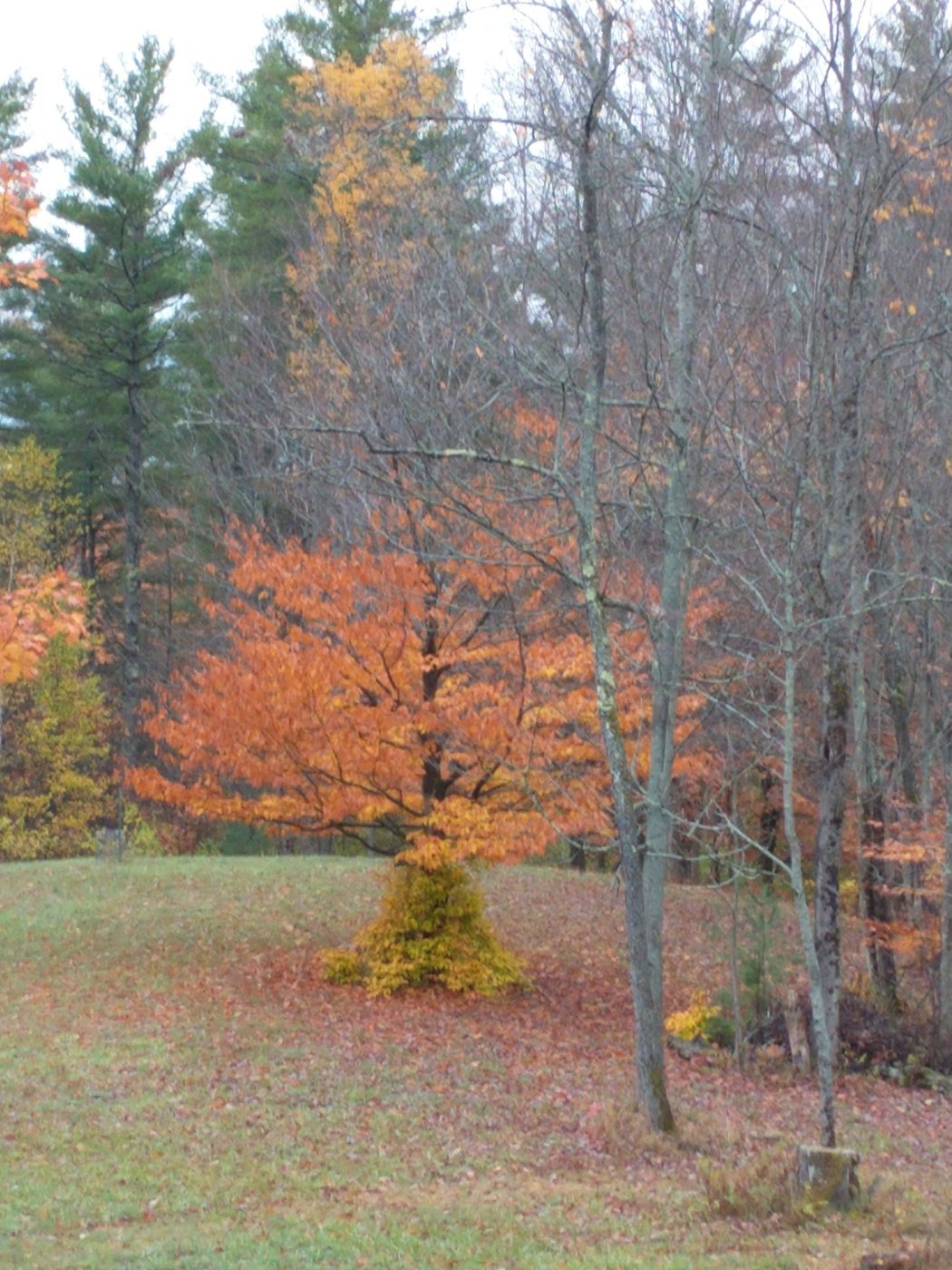
AMERICAN Beech is the only species of this genus native to North America, and is common throughout the state. Its home is on cool, rocky slopes. Beech is classified as very shade tolerant. It is a spreading tree with a broad and dense head, usually growing from sixty to eighty feet high and having a diameter of one and a half to three feet. Frequently the stem is without branches for ten to twenty feet. The root system is capable of sending up hundreds of sprouts, called suckers, creating dense stands of genetically identical saplings.
The bark on the trunk is smooth and blue-gray in color. It is not to be mistaken for that of any other native tree, except possibly that of the Hornbeam which never gets as large.
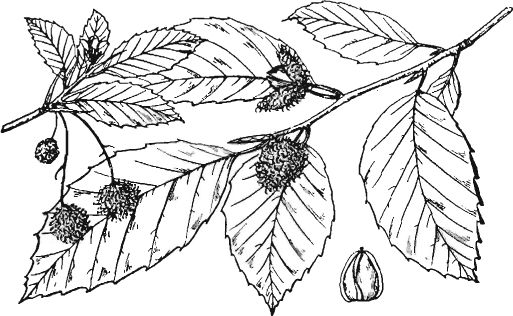
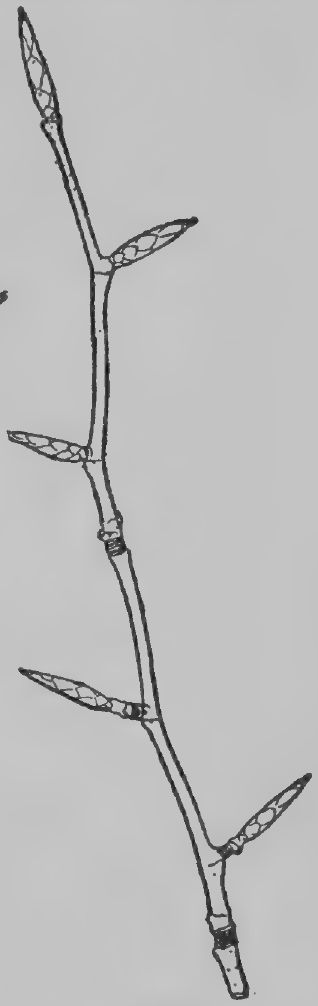
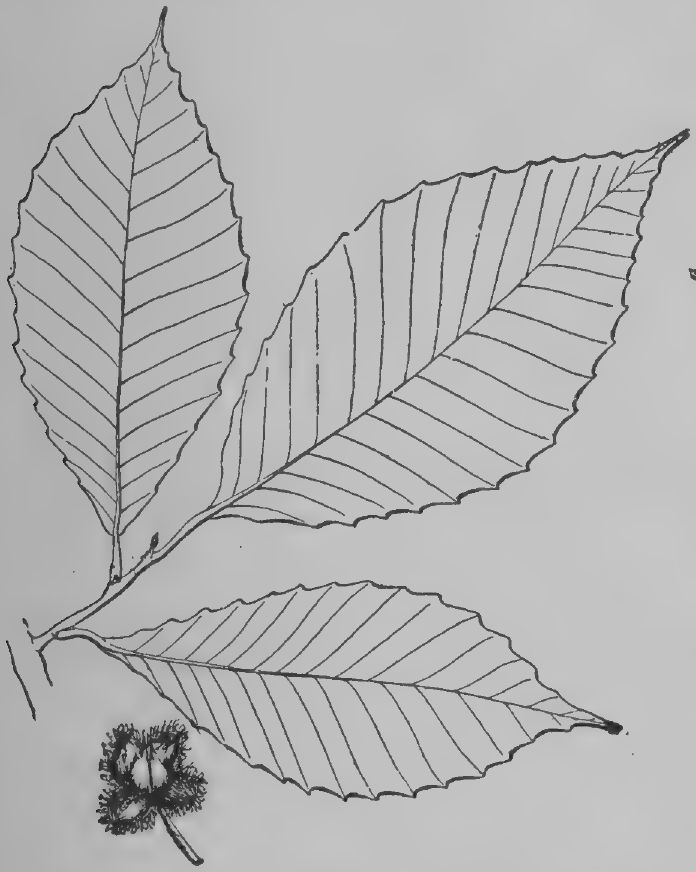
Leaves are simple, alternate, oval, from three to five inches in length, coarsely serrate and green on both surfaces. Young trees may retain some leaves into winter. Winter buds are long and slender and taper slowly to a sharp point.
The fruit is a four-valved, prickly bur which encloses a triangular nut.
Its wood is hard, strong, tough, perishable, and liable to warp. It is employed in the manufacturing of some kinds of furniture, for shoe lasts, for the handles of tools and for fuel. Beech wood is excellent for turning and steam bending. It wears well, is easily treated with preservatives, and is used for flooring, furniture, veneer, and containers.
Where it grows
Mapped in all fourteen counties.
Forest types where the 2016 manual places it: Northern Hardwoods, Spruce-Fir / Northern Hardwoods.
In the forest record
Trees of this group (beech) were 8% of the trees surveyors recorded at lot corners before settlement and are 3% of trees on inventory plots today, statewide.
Each town’s own numbers are on its habitat, forest and water page.
The beech group is among the three most common kinds of tree in the surveyors’ record of 44 of the 164 towns with a surviving record, and the largest share of that record is in Becket (48%), Sandisfield (47%), Williamstown (39%). The record is by group of trees, not by species, and covers towns with at least 50 recorded trees for the “largest share” list.
Insects and disease on the record
| Agent | Years seen | Worst year | Acres that year | Last seen |
|---|---|---|---|---|
| Spongy moth | 21 | 2017 | 1,049,099 | 2025 |
| Beech leaf disease | 4 | 2025 | 21,571 | 2025 |
| Beech bark disease complex | 11 | 2003 | 6,957 | 2021 |
Acres are of mapped damage, which can include other trees and non-forest; some agents attack several hosts.
As described in 1925
Show
Listed as Beech (Fagus atropunicea Sudworth).
THE Beech is of common occurrence throughout the State, yet it is more abundant in the western sections than the eastern. Its home is on cool rocky slopes.
In habit it is a spreading tree with a broad and dense head, usually growing from fifty to sixty feet high and having a diameter of one and one-half to three feet. Not infrequently the stem is without branches for ten to twenty feet. The bark on the trunk is smooth and blue-gray in color. It is not to be mistaken for that of any other native tree, except possibly that of the Blue Beech.
The winter buds are long and slender and taper slowly to a sharp point. The leaves are simple, alternate, oval, from three to five inches in length, coarsely serrate and green on both surfaces. The fruit is a four-valved, prickly bur which encloses a triangular nut. Its wood is hard, strong, tough, perishable and liable to warp. It is employed in the manufacture of some kinds of furniture, for shoe lasts, for the handles of tools and for fuel.
Text and line illustrations: Forest Trees of Massachusetts, 7th edition (2016), Massachusetts Department of Conservation and Recreation, Bureau of Forest Fire Control and Forestry, funded by the USDA Forest Service. Drawings, 1925 descriptions and the “How to know” keys: The Commercial Forest Trees of Massachusetts (1925), Massachusetts Department of Conservation, Division of Forestry. Forest shares before settlement and today: Harvard Forest data archive (Cogbill, Burk and Motzkin 2002; Thompson and others 2013). Insects and disease: USDA Forest Service Insect and Disease Survey, Region 9, with DCR. Photographs: observations on iNaturalist (inaturalist.org), each credited to its photographer under its Creative Commons licence; the list is under “Where the pictures come from” on the guide page. Species ranges by county are as the 2016 manual maps them. Transcribed by script and proofread in part; the manuals govern where they differ.