American Elm
Leaves alternate, simple · Family Ulmaceae
In the inventory · Live trees too few to estimate · Volume under 1% · Growth and mortality too few to estimate. USDA Forest Service, Forest Inventory and Analysis, 2019–2025; live trees an inch or more across, volume of trees five inches or more. Shares quoted only where the sampling error is 30% or less.
What to look for
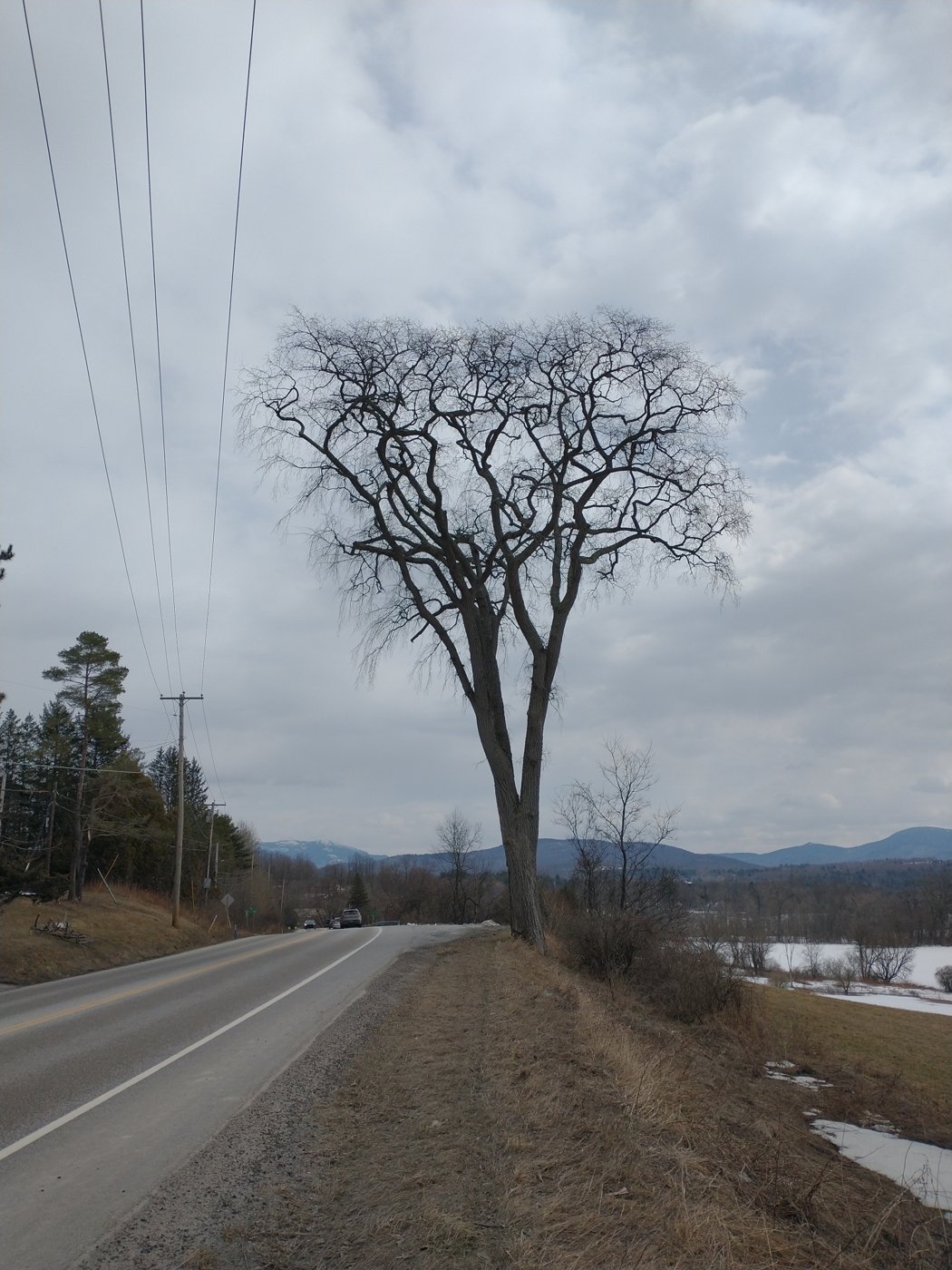
AMERICAN Elm, is the state tree of Massachusetts, and is capable of occurring everywhere, however it reaches its maximum development in the Connecticut River Valley. Its favorite habitat is the moist ground along streams and rich bottomlands. American Elm is intermediate in shade tolerance.
Its graceful appearance, typically vase-shaped, yet often varied, is very familiar. Commonly from fifty to sixty feet in height, it often grows to a height of one hundred feet or more, and may acquire a trunk diameter of six to ten feet. It is usually a quick-growing tree.
The bark on the trunk is ashy-gray, thick, and divided by deep fissures into flat ridges which separate into thin scales.
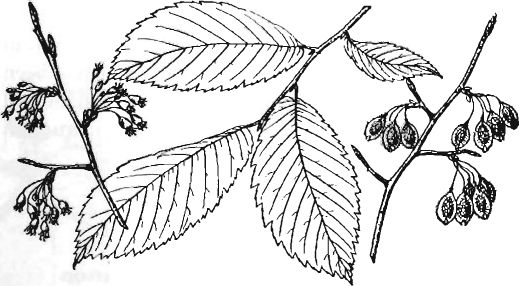
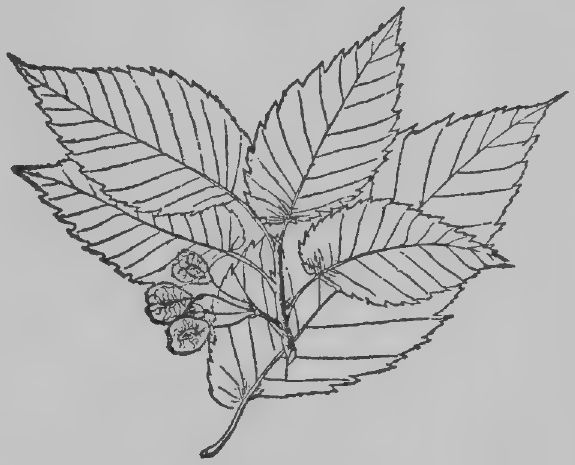
Leaves are simple, alternate, four to six inches in length, coarsely doubly-toothed, and uneven at the base. They are dark green and somewhat rough on the upper surface.
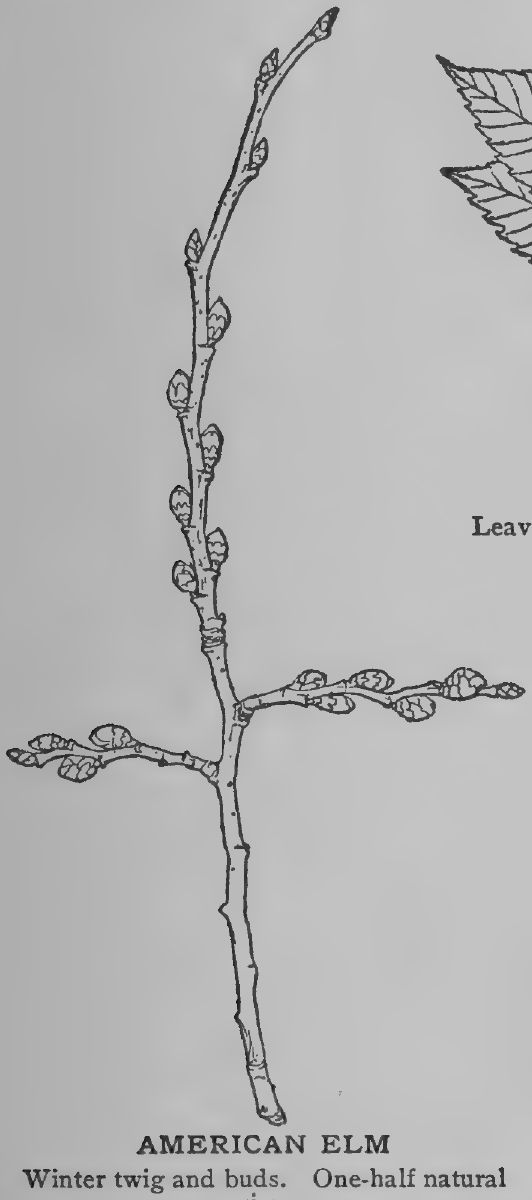
Twigs are smooth, reddish-brown, marked with obscure pale breathing pores. Buds are egg-shaped, usually smooth, covered with six to ten overlapping reddish-brown scales with darker margins.
Flowers appear in late March or early April before the leaves. Small winged fruits (samaras) ripen in May before the leaves are fully developed.
The wood is heavy, hard, strong, tough and rather durable. It has been employed for the hubs of wheels, in boat and ship building, for flooring, and in cooperage.
Where it grows
Mapped in 13 of fourteen counties: Barnstable, Berkshire, Bristol, Dukes, Essex, Franklin, Hampden, Hampshire, Middlesex, Nantucket, Plymouth, Suffolk, Worcester.
Forest types where the 2016 manual places it: Floodplain Forest.
As described in 1925
Show
Listed as White or American Elm (Ulmus americana L.).
How to know the Elms (1925): Habit — Tall and variable in outline, yet typically vase-shape. Bark_On_Trunk — Ashy-gray. Inner bark not mucilaginous. Leaves — Somewhat rough on the upper surface and smooth on the lower. Winter_Buds — Brown and smooth. Compare the elms ›
THE American Elm is very common everywhere in Massachusetts and reaches its maximum development in the Connecticut Valley. Its favorite habitat is the moist ground along streams and rich bottom-lands.
Its graceful habit, typically vase-shape, yet often varied, is very familiar. Commonly from fifty to sixty feet in height, it often grows to a height of one hundred feet or more and acquires a trunk diameter of six to ten feet. It is usually a quick-growing tree.
The bark on the trunk is ashy-gray, thick and divided by deep fissures into flat ridges which separate into thin scales.
The leaves are simple, natural alternate, two to five Winter inches in length, coarsely doubly toothed and dark green and somewhat rough on the upper surface.
The flowers appear in late March or early April before the leaves, and the small, winged fruit ripens in May before the leaves are fully developed.
The wood is heavy, hard, strong and tough. It is employed for the hubs of wheels, in boat and ship building, for flooring and in cooperage.
Text and line illustrations: Forest Trees of Massachusetts, 7th edition (2016), Massachusetts Department of Conservation and Recreation, Bureau of Forest Fire Control and Forestry, funded by the USDA Forest Service. Drawings, 1925 descriptions and the “How to know” keys: The Commercial Forest Trees of Massachusetts (1925), Massachusetts Department of Conservation, Division of Forestry. Forest shares before settlement and today: Harvard Forest data archive (Cogbill, Burk and Motzkin 2002; Thompson and others 2013). Insects and disease: USDA Forest Service Insect and Disease Survey, Region 9, with DCR. Photographs: observations on iNaturalist (inaturalist.org), each credited to its photographer under its Creative Commons licence; the list is under “Where the pictures come from” on the guide page. Species ranges by county are as the 2016 manual maps them. Transcribed by script and proofread in part; the manuals govern where they differ.