Rare species of Massachusetts · Bees
Parnassia Miner
Status Threatened · Group Bees · Recorded in 8 towns, 8 since 2001 · State sightings records: most recent 2023
Where NHESP has recorded it
last recorded since 2001 last recorded earlier
Town-level documented observations from NHESP’s Rare Species Viewer, read 4 November 2026; the year is the last documented record, as NHESP prints it, not evidence of absence. NHESP does not publish locations.
More about this species
In Massachusetts
Records are confined to Berkshire and Franklin Counties, and no others are anticipated. Calcareous wetland habitat across most of the state has been surveyed without further finds.
Source: Massachusetts state rare-species fact sheet, Parnassia Miner (published March 2025).
Threats
Habitat loss and hydrologic change are the primary drivers of decline. The species also faces pressure from non-native plants, contamination of wetlands, disease organisms not native to the region, pesticide spray programs, unintended herbicide exposure, vehicles traveling off established trails, and warming temperatures.
Source: Massachusetts state rare-species fact sheet, Parnassia Miner (published March 2025).
Protections
Carries Threatened status under the state endangered species law and appears on the state's wildlife priority list. Acquiring and actively managing existing sites are considered the most effective conservation tools.
Source: Massachusetts state rare-species fact sheet, Parnassia Miner (published March 2025).
One fact
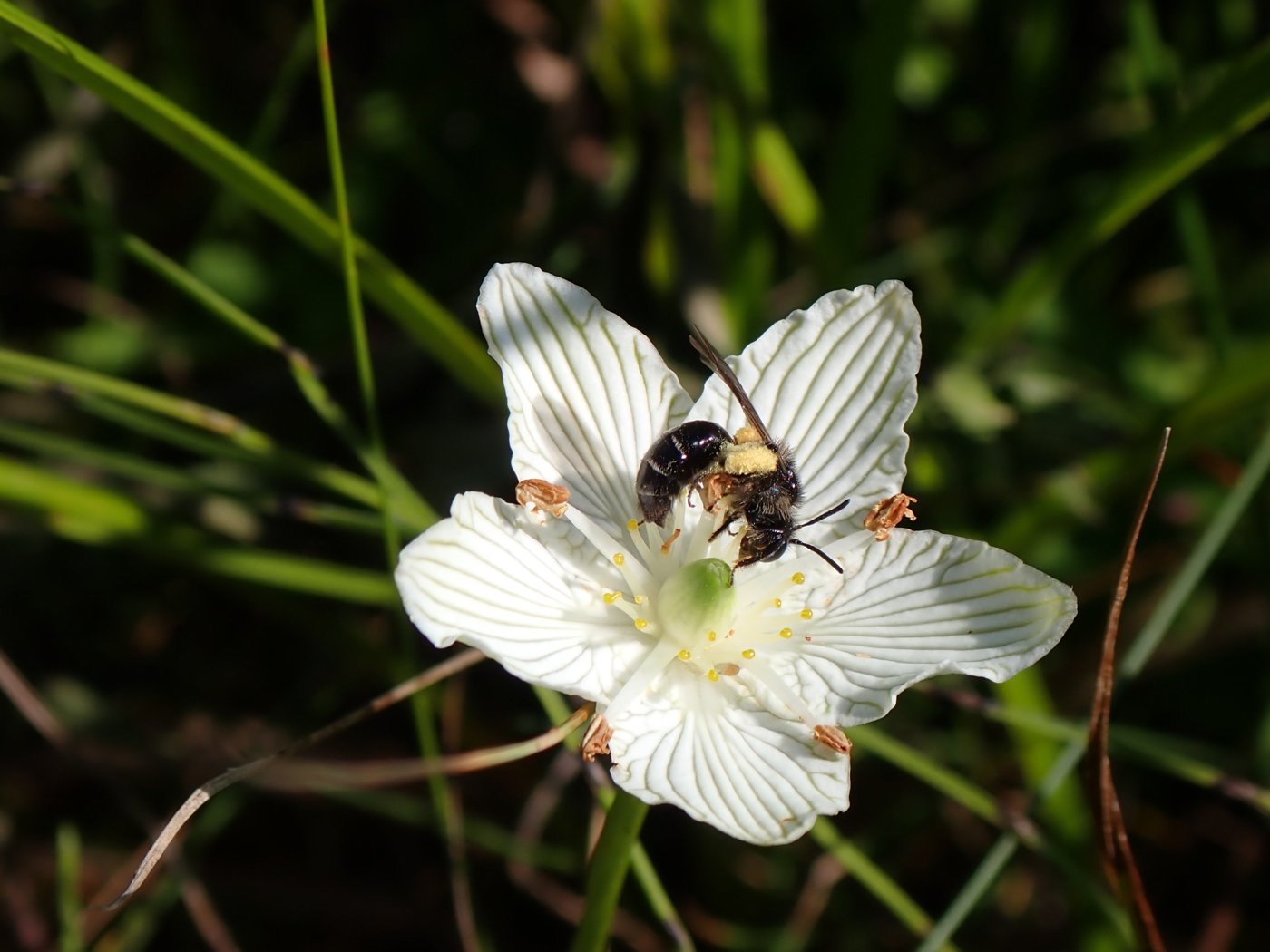
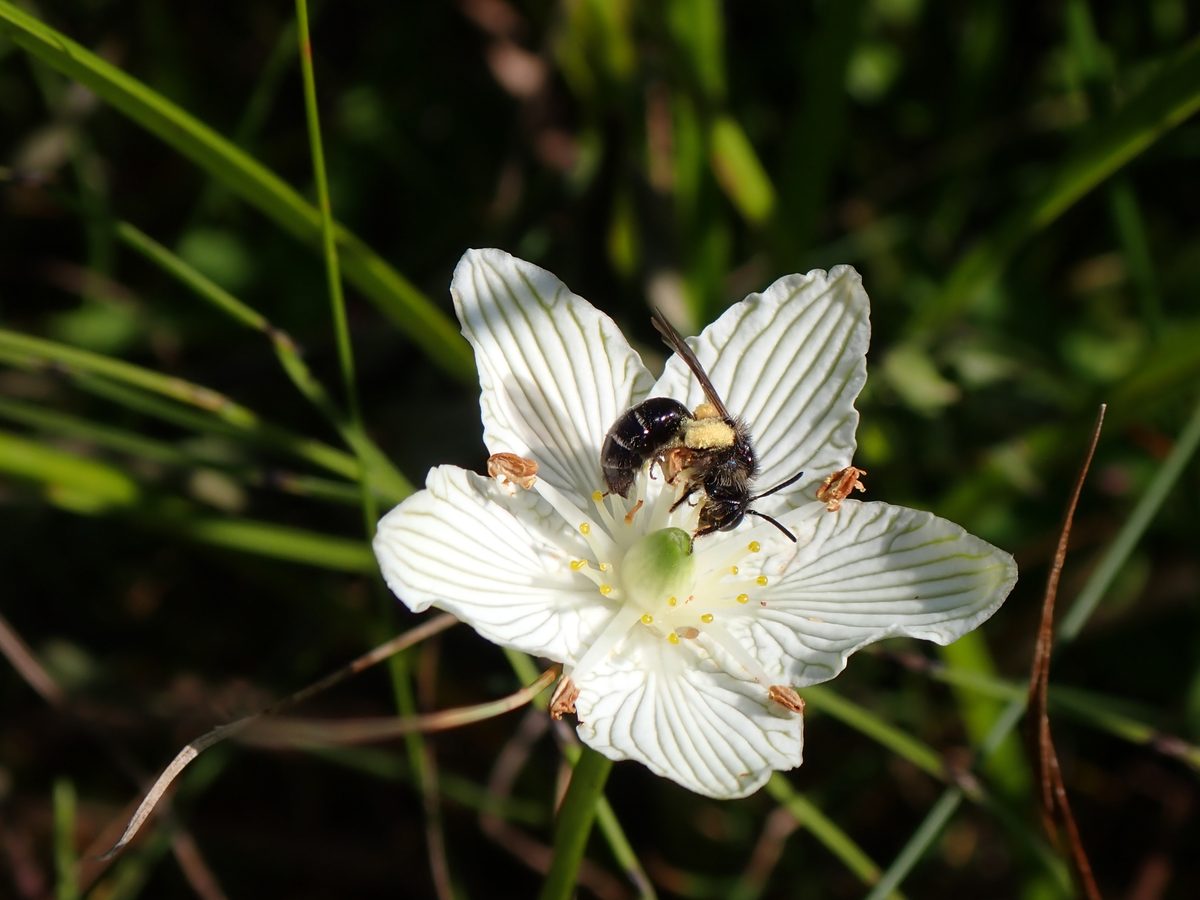
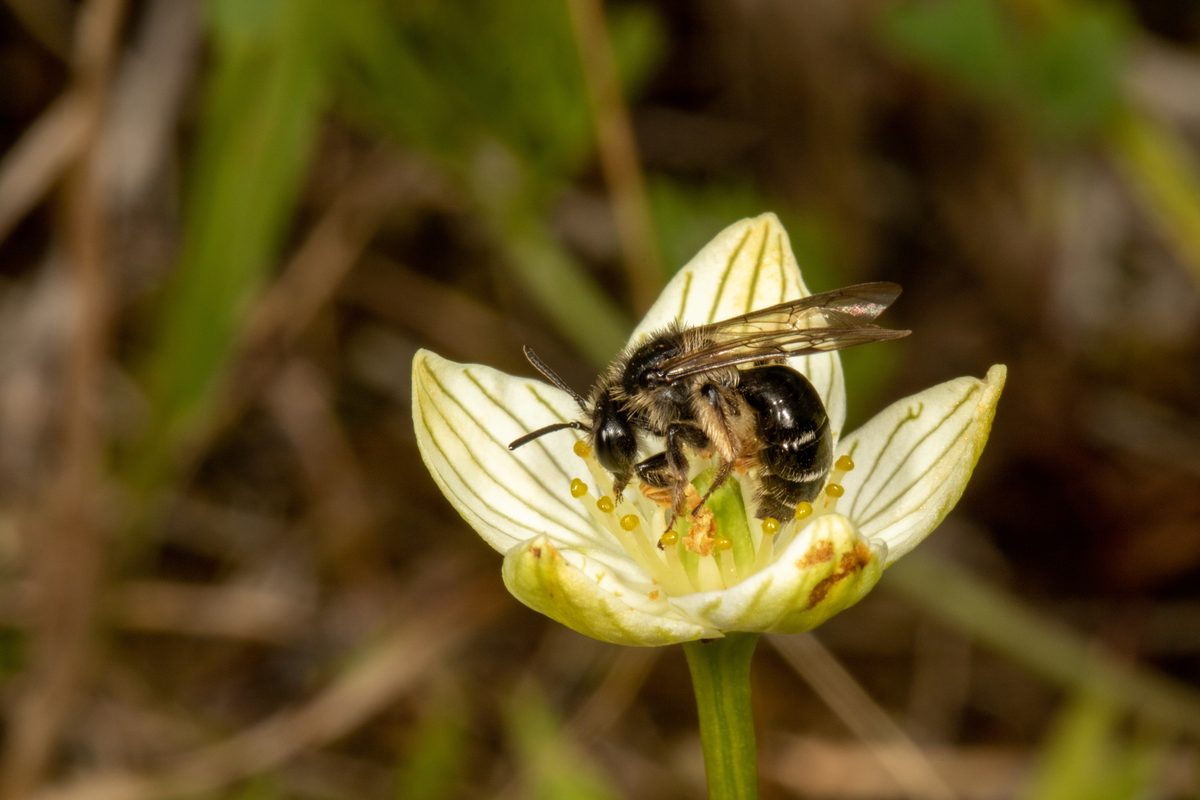
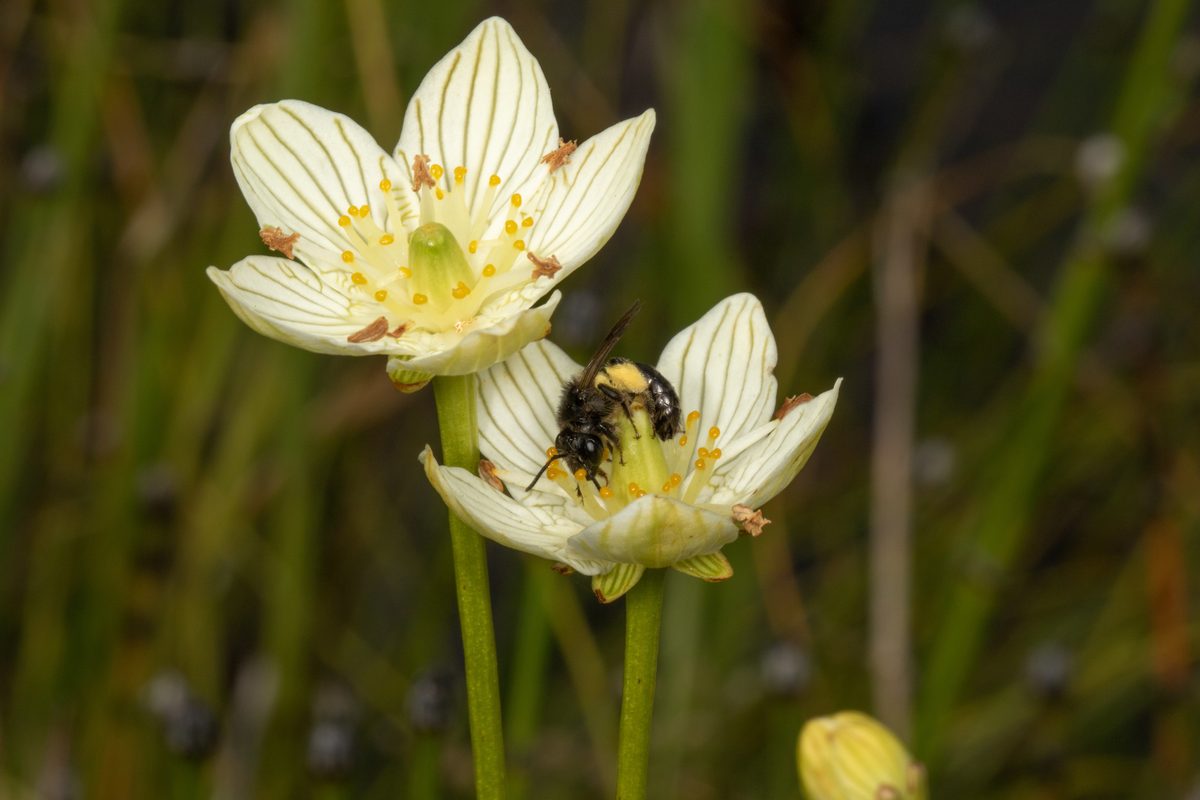
Adults are on the wing from late August through early October. This bee is a specialist on fen grass of Parnassus, drawing all of its pollen and nectar from that single plant.
Source: Massachusetts state rare-species fact sheet, Parnassia Miner (published March 2025).
State list: 321 CMR 10.90, as of 16 August 2024. Rare species of Massachusetts · Trees of Massachusetts