Rare species of Massachusetts · Birds
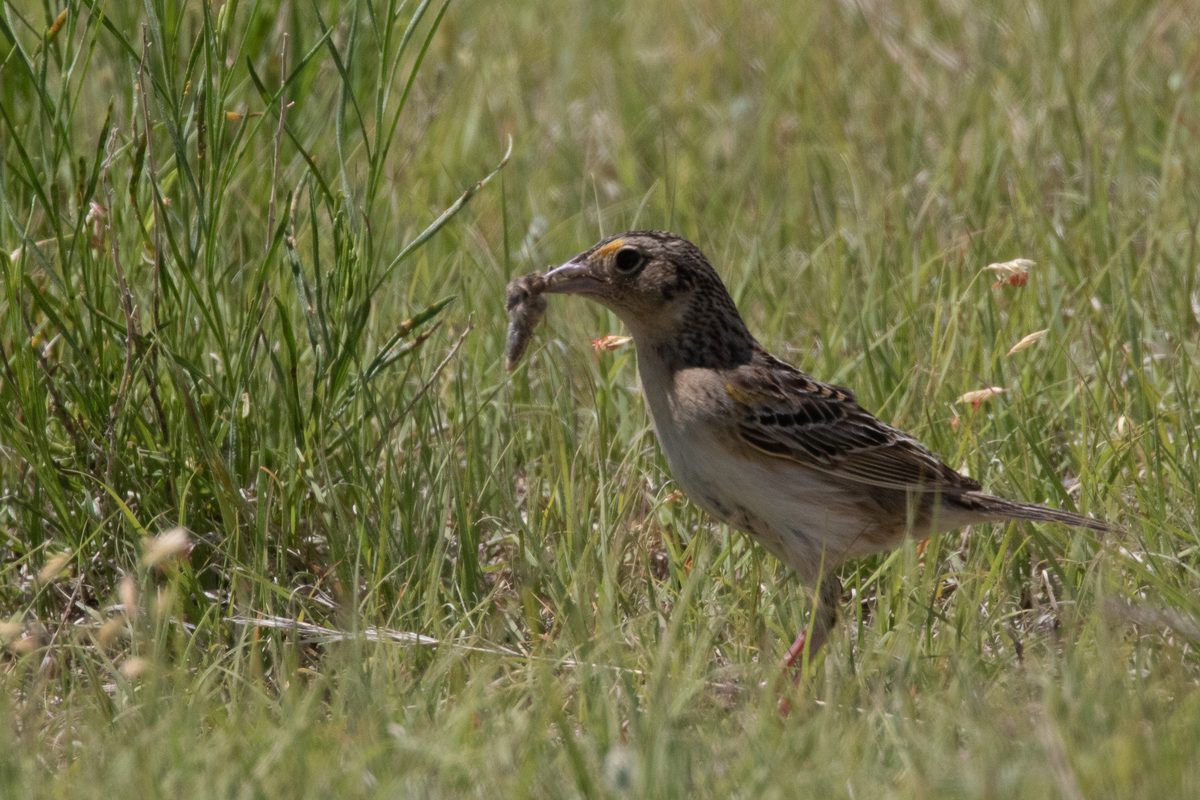
Grasshopper Sparrow
Status Threatened · Group Birds · Recorded in 62 towns, 41 since 2001 · State sightings records: most recent 2025 · eBird reported in 7 of 14 counties in the last 30 days, latest 28 October 2026 (birders’ reports, eBird, Cornell Lab of Ornithology; as of 6 November 2026)
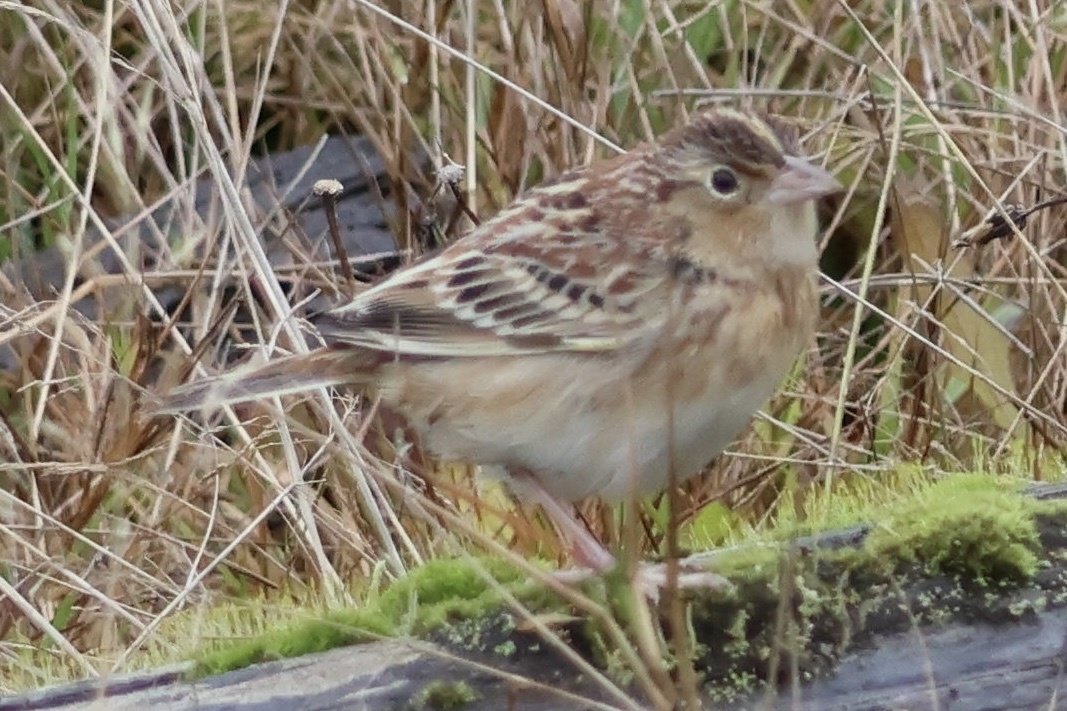
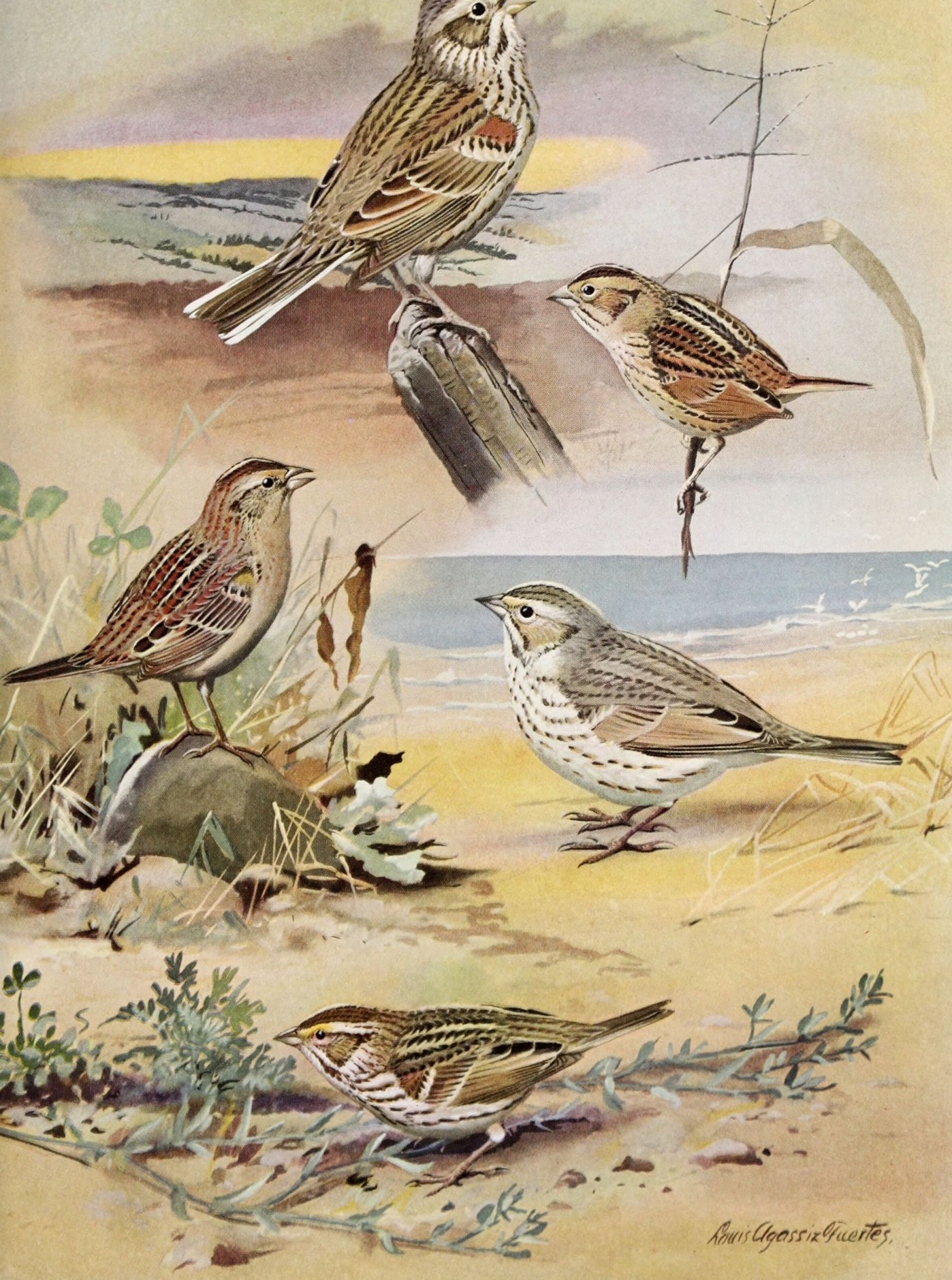
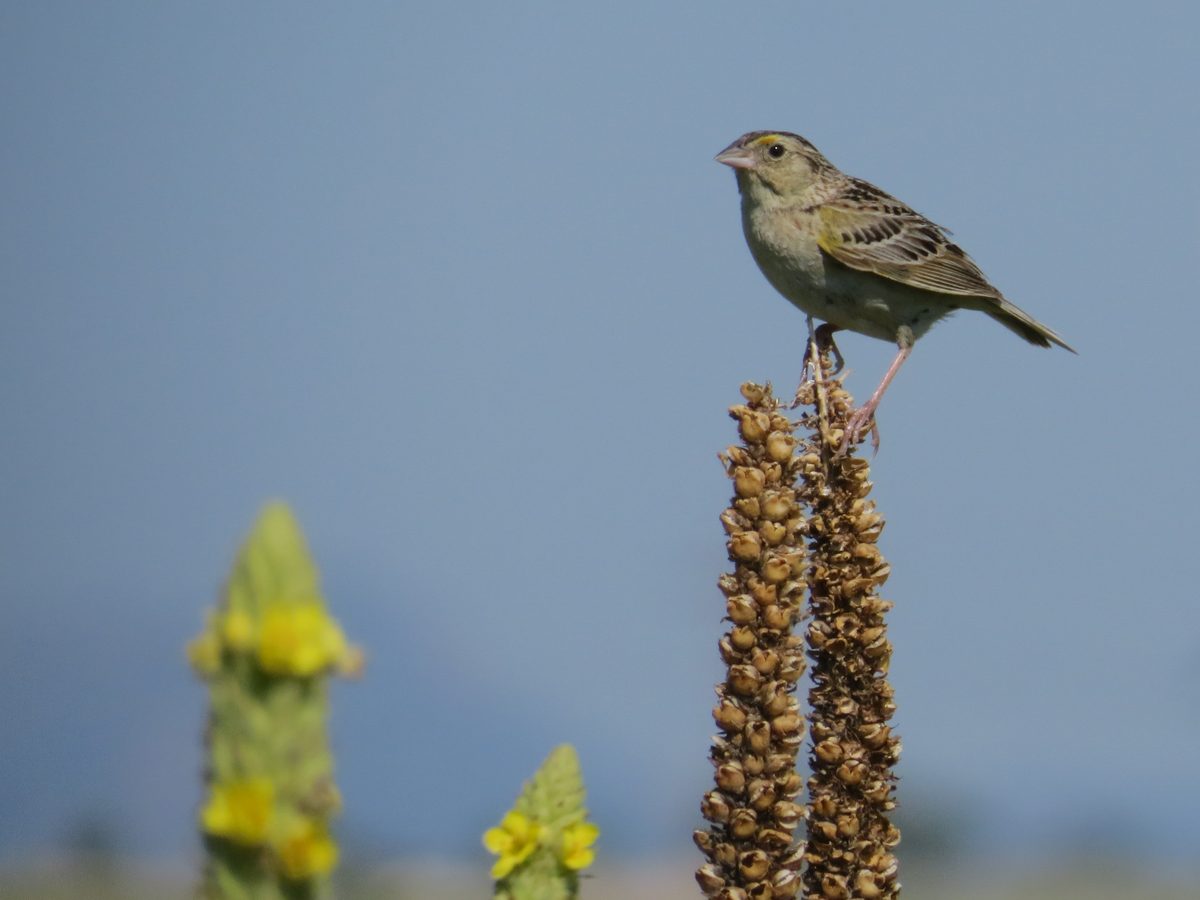
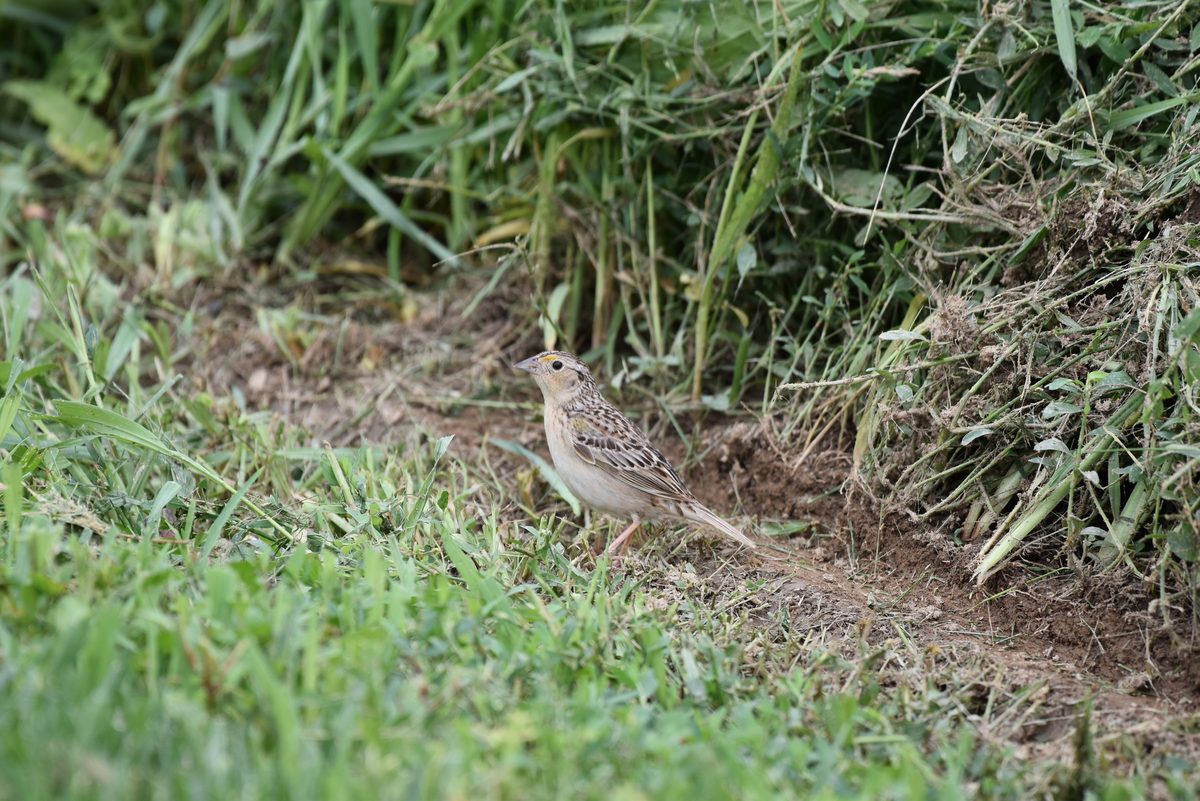
The grasshopper sparrow (Ammodramus savannarum) is a small New World sparrow. It belongs to the genus Ammodramus, which contains three species that inhabit grasslands and prairies. Grasshopper sparrows are sometimes found in crop fields and they will readily colonize reclaimed grassland.
Description: Wikipedia (CC BY-SA 4.0).
Where NHESP has recorded it
last recorded since 2001 last recorded earlier
- Bourne 2025eBird: Barnstable County, 11 Oct 2026
- Sandwich 2025eBird: Barnstable County, 11 Oct 2026
- Bedford 2023eBird: Middlesex County, 27 Oct 2026
- Concord 2023eBird: Middlesex County, 27 Oct 2026
- Pittsfield 2023
- Clinton 2022eBird: Worcester County, 10 Oct 2026
- Norfolk 2022
- Sterling 2022eBird: Worcester County, 10 Oct 2026
- Shirley 2021eBird: Middlesex County, 27 Oct 2026
- Sutton 2021eBird: Worcester County, 10 Oct 2026
- Essex 2020
- Bolton 2019eBird: Worcester County, 10 Oct 2026
- Lancaster 2019eBird: Worcester County, 10 Oct 2026
- Leicester 2019eBird: Worcester County, 10 Oct 2026
- Mashpee 2019eBird: Barnstable County, 11 Oct 2026
- Northampton 2019
- Edgartown 2018
- Falmouth 2018eBird: Barnstable County, 11 Oct 2026
- Chicopee 2017
- Southwick 2016
- Ayer 2015eBird: Middlesex County, 27 Oct 2026
- Lincoln 2015eBird: Middlesex County, 27 Oct 2026
- Ludlow 2015
- Montague 2015eBird: Franklin County, 17 Oct 2026
- Plymouth 2014eBird: Plymouth County, 28 Oct 2026
- Sunderland 2014eBird: Franklin County, 17 Oct 2026
- Westfield 2014
- Amherst 2013
- Palmer 2013
- Southampton 2013
- Granby 2012
- West Tisbury 2012
- Orange 2009eBird: Franklin County, 17 Oct 2026
- Royalston 2009eBird: Worcester County, 10 Oct 2026
- Winchendon 2009eBird: Worcester County, 10 Oct 2026
- Worcester 2009eBird: Worcester County, 10 Oct 2026
- Carver 2008eBird: Plymouth County, 28 Oct 2026
- Spencer 2008eBird: Worcester County, 10 Oct 2026
- New Braintree 2006eBird: Worcester County, 10 Oct 2026
- Abington 2005eBird: Plymouth County, 28 Oct 2026
- Rockland 2005eBird: Plymouth County, 28 Oct 2026
- Harvard 2000eBird: Worcester County, 10 Oct 2026
- Rowley 1999
- Bridgewater 1997eBird: Plymouth County, 28 Oct 2026
- Gosnold 1997
- Nantucket 1997
- Barnstable 1993eBird: Barnstable County, 11 Oct 2026
- Boston 1993eBird: Suffolk County, 14 Oct 2026
- Dartmouth 1993eBird: Bristol County, 9 Oct 2026
- Hadley 1993
- Templeton 1993eBird: Worcester County, 10 Oct 2026
- Savoy 1990
- Chilmark 1988
- Agawam 1984
- Egremont 1978
- Newburyport 1978
- Pepperell 1978eBird: Middlesex County, 27 Oct 2026
- West Newbury 1977
- Wilbraham 1976
- Petersham 1972eBird: Worcester County, 10 Oct 2026
- Great Barrington 1970
- Leverett 1970seBird: Franklin County, 17 Oct 2026
Town-level documented observations from NHESP’s Rare Species Viewer, read 4 November 2026; the year is the last documented record, as NHESP prints it, not evidence of absence. NHESP does not publish locations. The list shows NHESP’s documented record (year) and, for birds, birders’ reports to eBird in the last 30 days by county.
Reported to eBird in the last 30 days: Barnstable, Bristol, Franklin, Middlesex, Plymouth, Suffolk, Worcester
eBird reports are birders’ sightings, not the state’s record. eBird hides the locations of sensitive species, so a county is the finest level shown here and a species can be missing for that reason. Source: eBird, Cornell Lab of Ornithology, reports of the last 30 days as of 6 November 2026.
More about this species
In Massachusetts
Active nesting sites now number fewer than 20 statewide. The bird was once widespread and common across eastern Massachusetts, Nantucket, and Martha's Vineyard; today breeding is thin and localized.
Source: Massachusetts state rare-species fact sheet, Grasshopper Sparrow (published April 2025).
Threats
Conversion of open land to development and the natural encroachment of shrubs and trees into grassland reduce nesting area. Haying and mowing that coincide with active nests destroy them. Shifts in agriculture, cat predation, and collisions with lit buildings add to losses.
Source: Massachusetts state rare-species fact sheet, Grasshopper Sparrow (published April 2025).
Protections
The state classifies the species as Threatened and places it among the highest-priority wildlife for conservation.
Source: Massachusetts state rare-species fact sheet, Grasshopper Sparrow (published April 2025).
One fact
The buzzy, insect-like song of this bird is routinely confused with the call of a grasshopper.
Source: Massachusetts state rare-species fact sheet, Grasshopper Sparrow (published April 2025).
State list: 321 CMR 10.90, as of 16 August 2024. Rare species of Massachusetts · Trees of Massachusetts