Rare species of Massachusetts · Mussels
Creeper
Status Special Concern · Group Mussels · Recorded in 73 towns, 53 since 2001 · State sightings records: most recent 2024
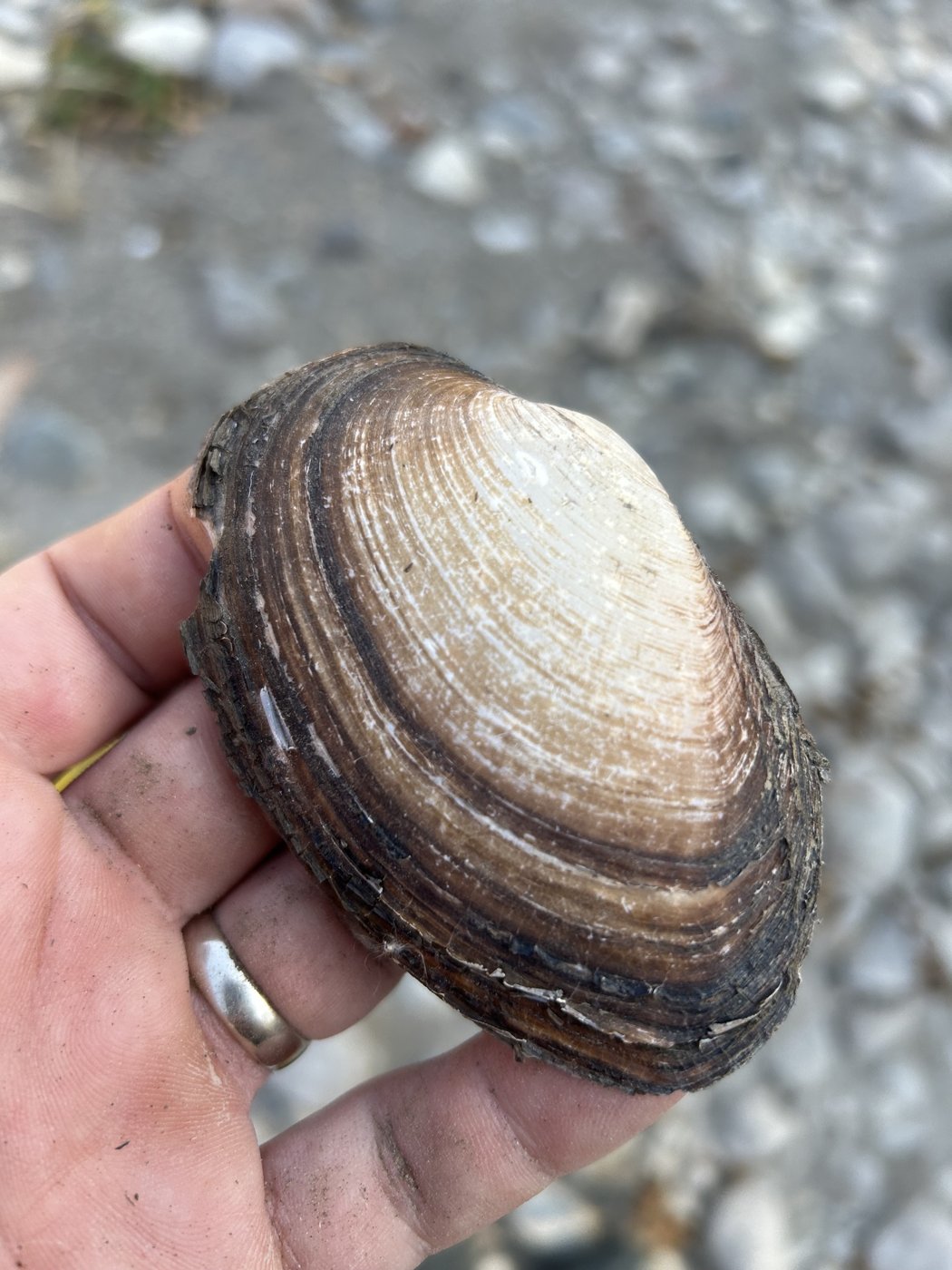
Strophitus undulatus is a species of mussel in the Unionidae, the river mussels. It is native to eastern Canada and the eastern United States. Its common names include creeper, squawfoot, sloughfoot, and strange floater.
Description: Wikipedia (CC BY-SA 4.0).
Where NHESP has recorded it
last recorded since 2001 last recorded earlier
- Rutland 2024
- Westfield 2024
- Whately 2024
- Groton 2022
- Hatfield 2022
- Middleborough 2022
- Shirley 2022
- Southampton 2022
- Townsend 2022
- North Attleborough 2021
- Petersham 2021
- Sturbridge 2021
- Monterey 2020
- Warwick 2020
- Orange 2019
- Palmer 2018
- Pepperell 2018
- Ware 2018
- Amherst 2017
- Granby 2017
- Hardwick 2017
- New Braintree 2017
- Northampton 2017
- Otis 2017
- Princeton 2017
- South Hadley 2017
- Athol 2016
- Winchendon 2016
- Agawam 2014
- Hadley 2014
- Monson 2014
- West Springfield 2014
- Erving 2010
- Huntington 2010
- Royalston 2010
- Russell 2010
- Spencer 2010
- Warren 2010
- Wendell 2010
- Great Barrington 2009
- Sheffield 2009
- Stockbridge 2009
- Barre 2008
- Lee 2008
- Plymouth 2007
- Ayer 2006
- Concord 2006
- Oxford 2006
- Bridgewater 2005
- Raynham 2005
- Southbridge 2005
- Dudley 2002
- Webster 2002
- Dover 2000
- Natick 2000
- Needham 2000
- Blackstone 1999
- West Stockbridge 1999
- Westminster 1999
- Northfield 1997
- Holland 1996
- Norton 1984
- Brimfield 1982
- Tyringham 1980
- Montague 1978
- Holyoke 1976
- Fitchburg 1970
- Sunderland 1954
- Mendon 1949
- Deerfield 1948
- Greenfield 1947
- Northbridge 1947
- Uxbridge 1944
Town-level documented observations from NHESP’s Rare Species Viewer, read 4 November 2026; the year is the last documented record, as NHESP prints it, not evidence of absence. NHESP does not publish locations.
More about this species
In Massachusetts
Occurrences span 12 river watersheds across the state, concentrated in the central and western portions. The species is never found in high numbers, and how small, low-density groups fare over time is not well understood.
Source: Massachusetts state rare-species fact sheet, Creeper (published March 2025).
Threats
Pressures include nutrient loading, fine sediment, road salt, modified flow regimes, water withdrawals, development along river corridors, non-native invaders, dams and culverts at road crossings, abrupt discharge surges after dam removals, and flooding or drought extremes tied to climate.
Source: Massachusetts state rare-species fact sheet, Creeper (published March 2025).
Protections
Listed as Special Concern under state wildlife law, with legal coverage limited to occurrences documented in the preceding 25 years. This mussel also ranks among those targeted for conservation planning under the state wildlife action plan.
Source: Massachusetts state rare-species fact sheet, Creeper (published March 2025).
One fact
This mussel can support larval development across a wide array of host fish: in one documented study, larvae successfully transformed into juveniles on 15 out of 22 fish species tested.
Source: Massachusetts state rare-species fact sheet, Creeper (published March 2025).
Related species
Freshwater mussels on the state list:
State list: 321 CMR 10.90, as of 16 August 2024. Rare species of Massachusetts · Trees of Massachusetts