Rare species of Massachusetts · Mammals
Sperm Whale
Status Endangered · Federal status Federally Endangered · Group Mammals · Recorded in no town
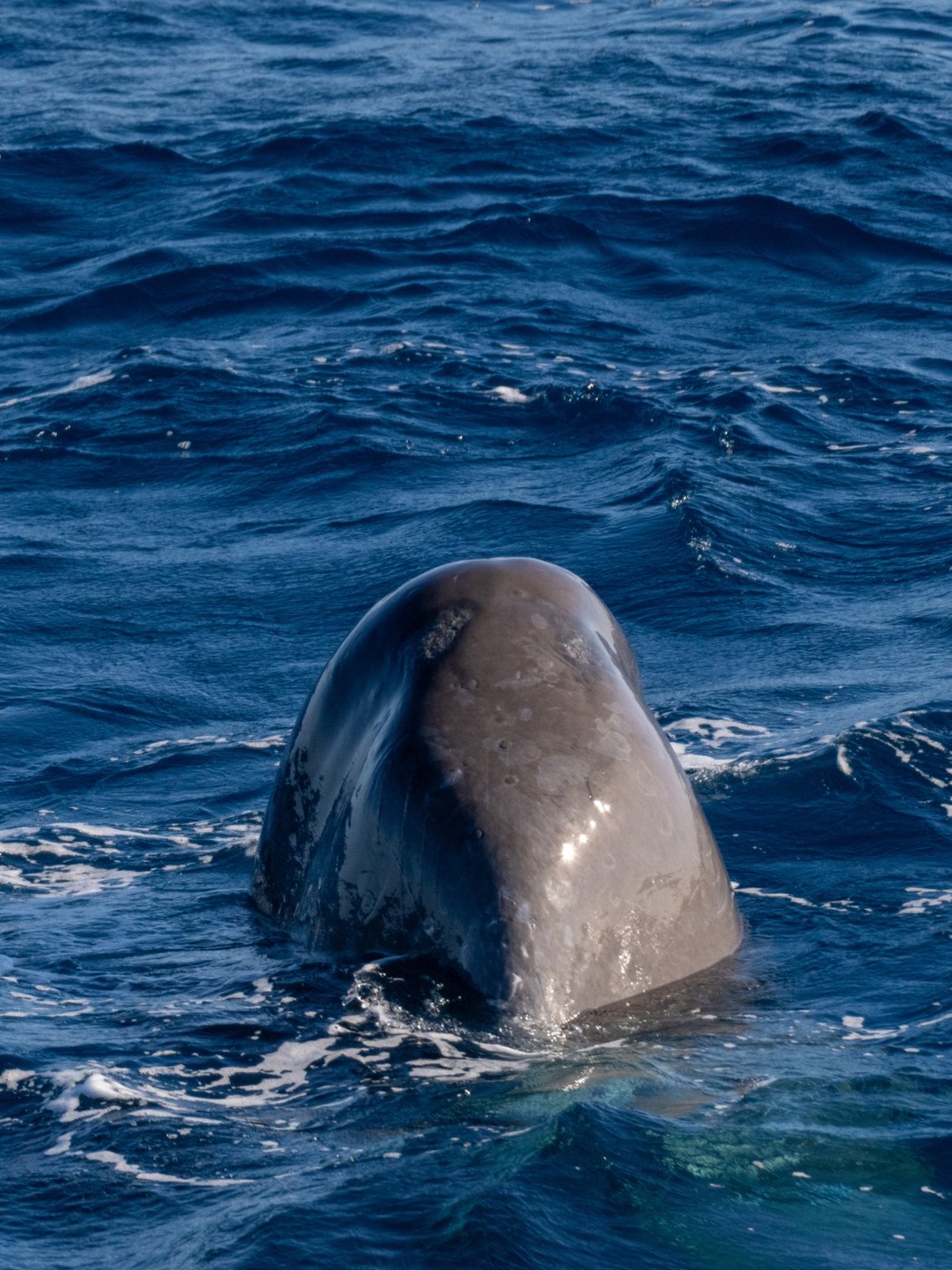
The sperm whale or cachalot (Physeter macrocephalus) is the largest of the toothed whales and the largest toothed predator. It is the only living member of the genus Physeter and one of three extant species in the sperm whale superfamily Physeteroidea, along with the pygmy sperm whale and dwarf sperm whale of the genus Kogia. The sperm whale is a pelagic mammal with a worldwide range, and will migrate seasonally for feeding and breeding.
Description: Wikipedia (CC BY-SA 4.0).
Where it is
It is listed for Massachusetts waters; the viewer records species by city and town, and the open sea has none.
More about this species
Population
Vessel surveys completed in summer 2021 produced a central estimate of 5,895 for the North Atlantic population (CV 0.29), with a minimum of 4,639. Both figures are drawn from the 2024 federal stock assessment series.
Summer 2021 surveys. Source: NOAA Technical Memorandum NMFS-NE-347, Table 1; 2023 sperm whale report.
In Massachusetts
Animals in this region typically remain at or beyond the shelf break, in deep offshore water. Aerial work has found them in shallower zones south of the islands from August through November.
Source: Massachusetts state rare-species fact sheet, Sperm Whale (undated).
Threats
Documented hazards include ship strikes, gear entanglement, underwater sound, plastic waste ingestion, oil spills, and chemical contaminants. Mortality records averaged across 2017-2021 show 0.2 human-caused fatalities or serious injuries per year, all from ingested plastic.
Source: NOAA Fisheries, Sperm Whale; NOAA, 2023 stock assessment report, Sperm Whale North Atlantic.
Protections
Federal Endangered listing dates to June 2, 1970; Massachusetts carries the same designation. A separate federal statute governing marine mammals also applies. Full delisting is the long-term federal recovery goal, with downlisting to threatened established as an interim benchmark.
Source: NOAA Fisheries, Sperm Whale; Massachusetts state rare-species fact sheet, Sperm Whale (undated).
One fact
Routine feeding dives take sperm whales down to 2,000 feet below the surface and can extend for 45 minutes.
Source: NOAA Fisheries, Sperm Whale.
State list: 321 CMR 10.90, as of 16 August 2024. Rare species of Massachusetts · Trees of Massachusetts