Rare species of Massachusetts · Bees
American Bumble Bee
Status Endangered · Group Bees · Recorded in 3 towns, 3 since 2001 · State sightings records: most recent 2012
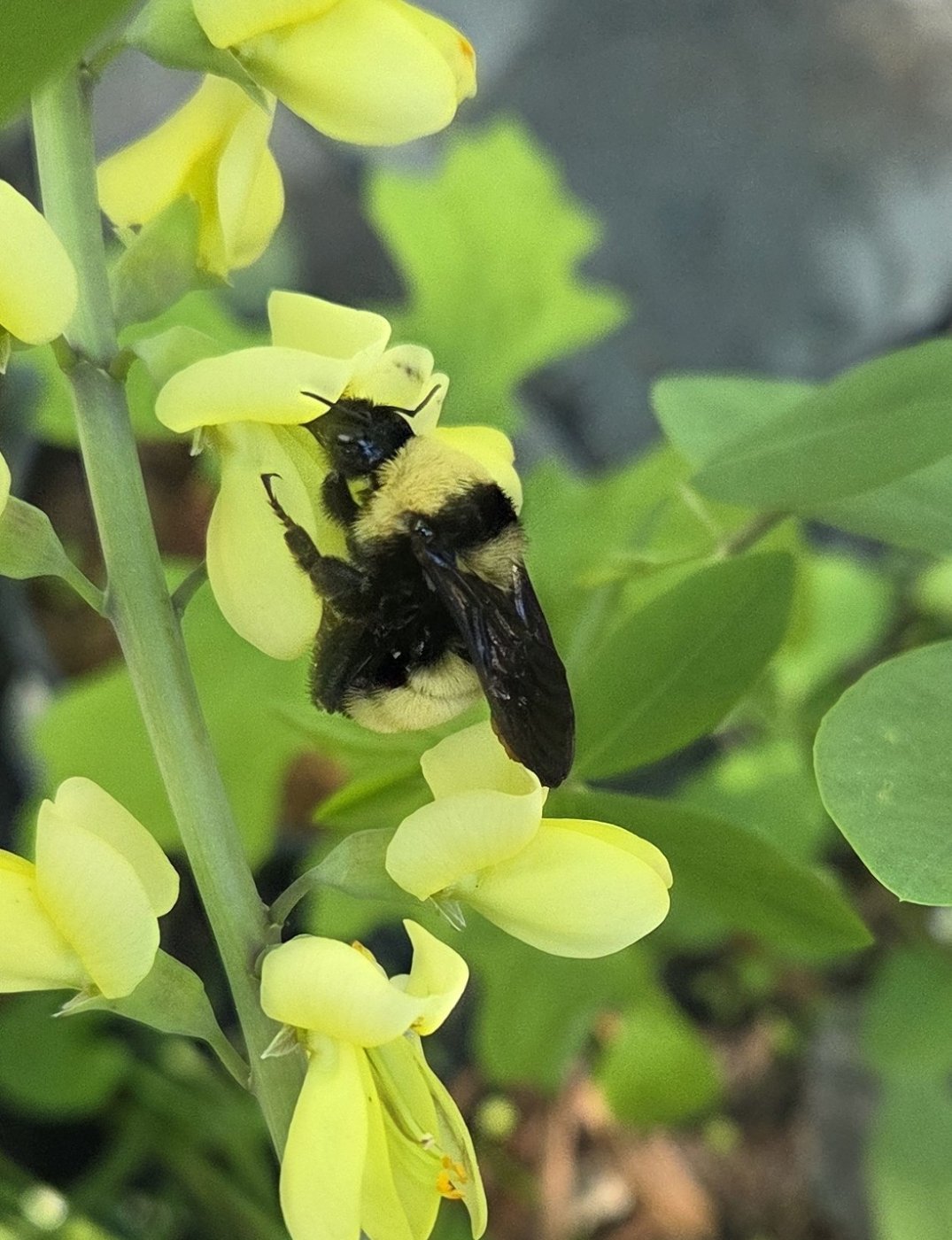
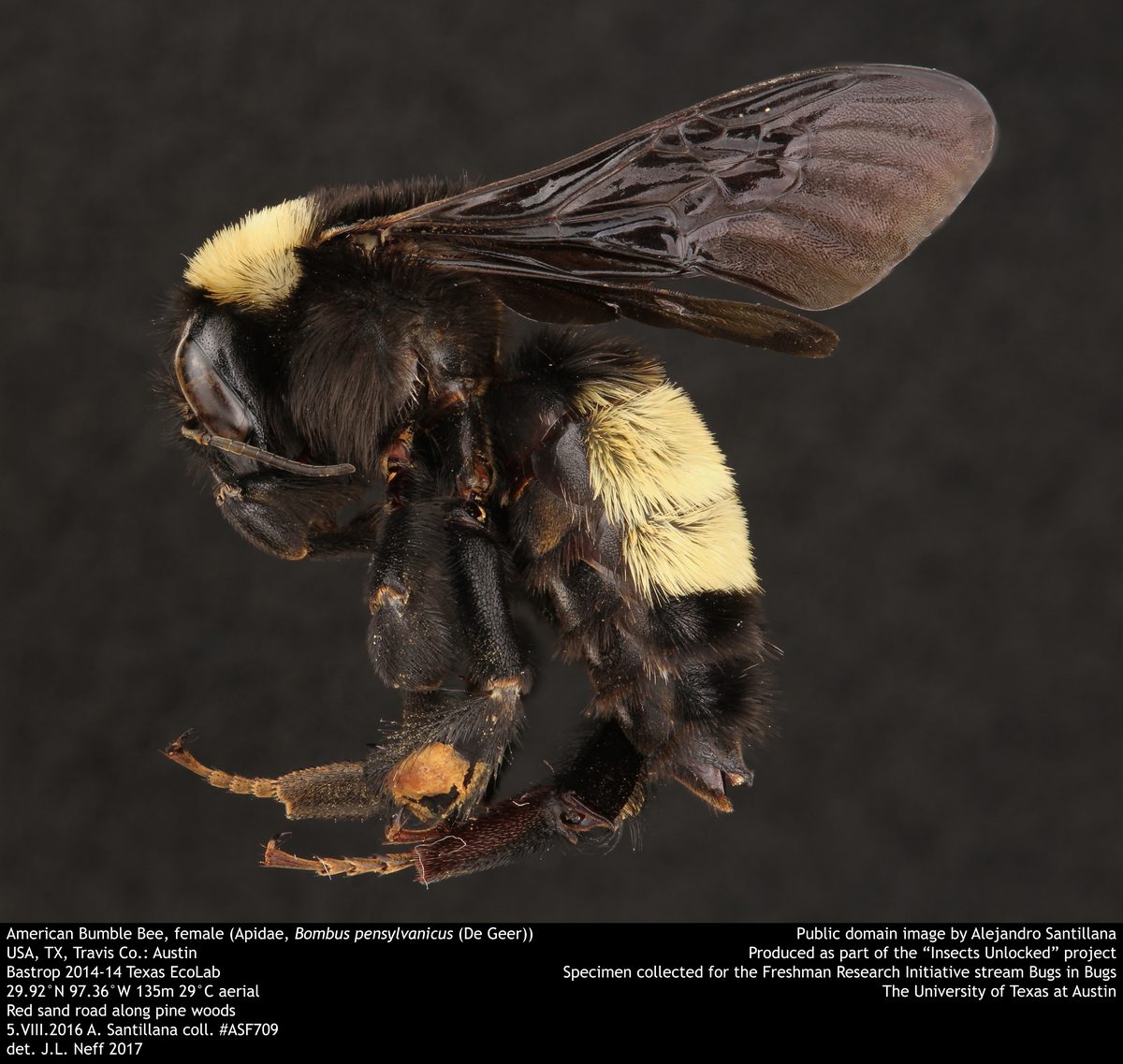
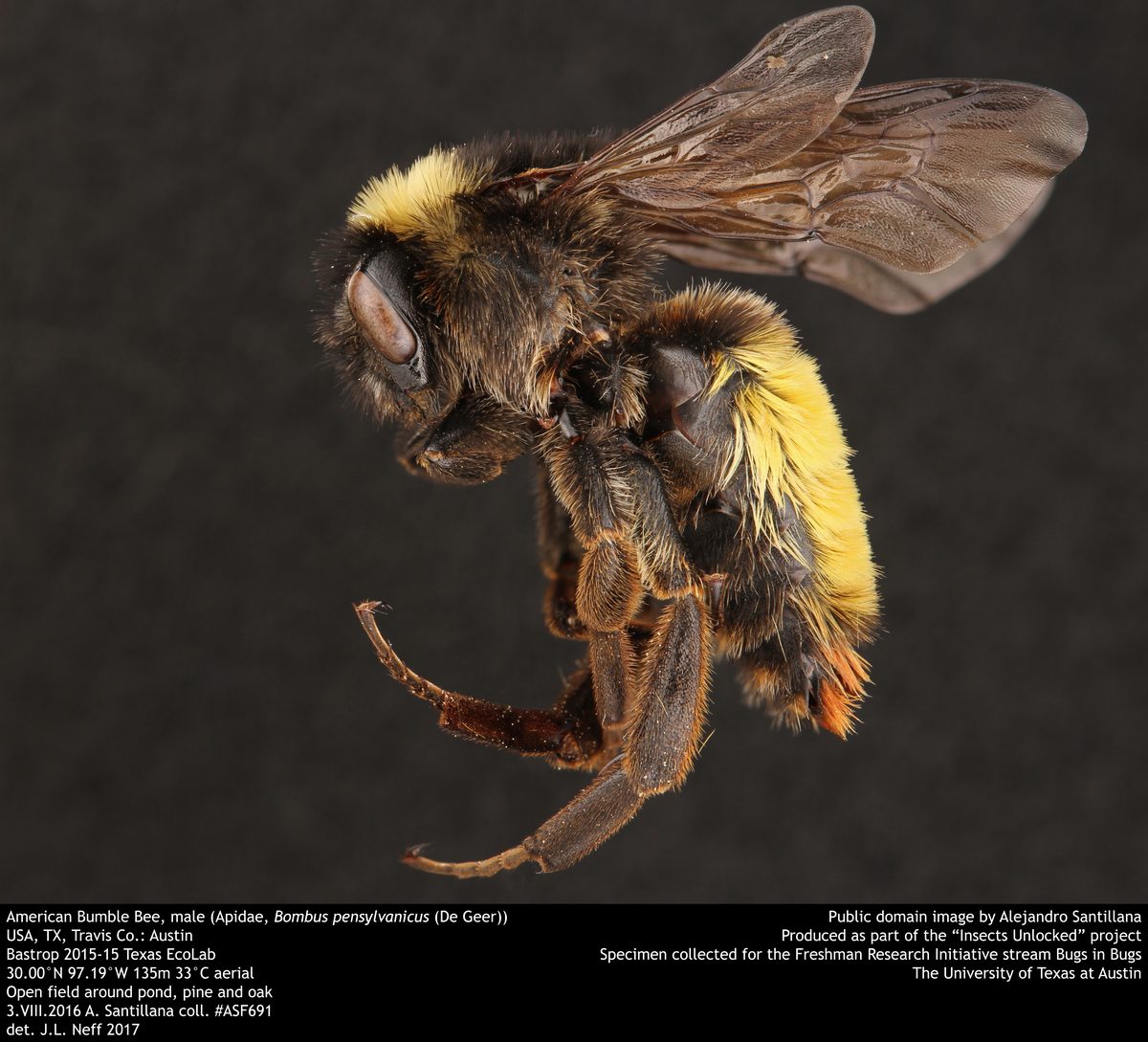
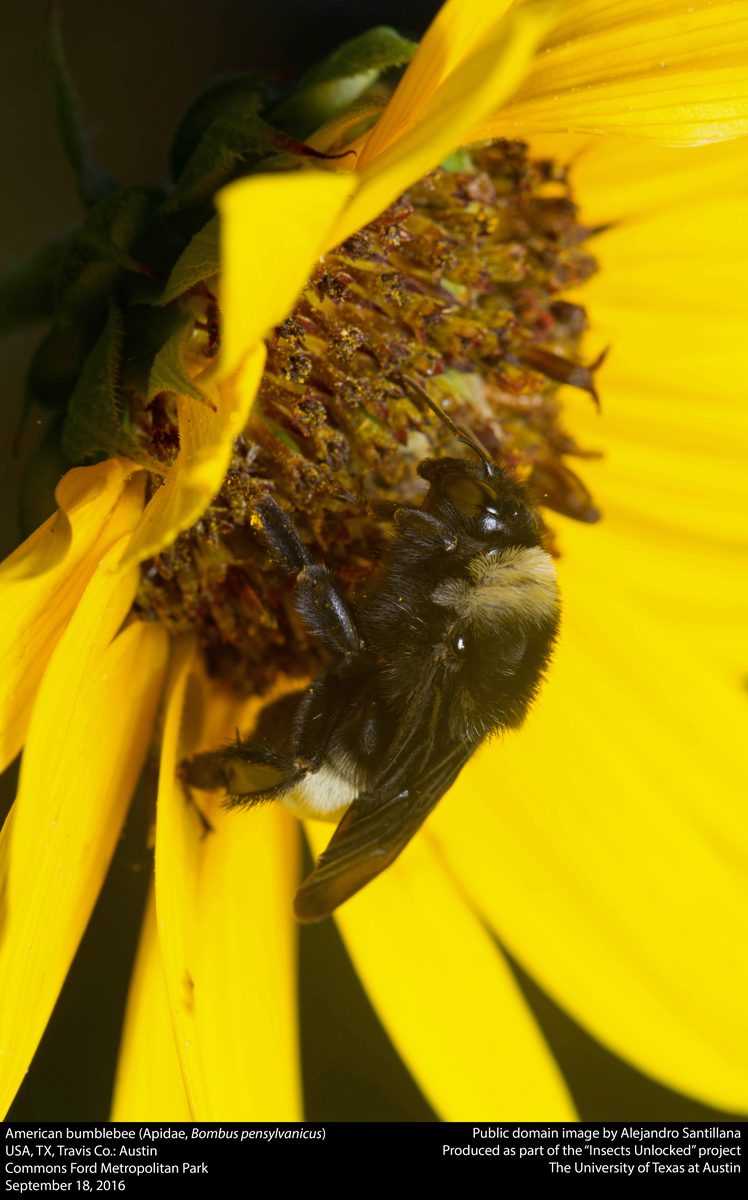
Bombus pensylvanicus, the American bumblebee, is a threatened species of bumblebee native to North America. It occurs in eastern Canada, throughout much of the Eastern United States, and much of Mexico. Once the most prevalent bumblebee in the southern United States, populations of Bombus pensylvanicus have decreased significantly in recent years, including in its scientific namesake state of Pennsylvania, where its numbers are considered critically low.
Description: Wikipedia (CC BY-SA 4.0).
Where NHESP has recorded it
last recorded since 2001 last recorded earlier
- Montague 2012
- Westhampton 2007
- Whately 2006
Town-level documented observations from NHESP’s Rare Species Viewer, read 4 November 2026; the year is the last documented record, as NHESP prints it, not evidence of absence. NHESP does not publish locations.
More about this species
Population
A 2014 International Union for Conservation of Nature assessment found this bumble bee had declined in relative abundance by 89 percent compared with other bee species sharing the same range. Steep losses have continued over recent decades.
2014 IUCN assessment. Source: U.S. Fish and Wildlife Service, American Bumble Bee.
In Massachusetts
Past records extend across much of the state, including the offshore islands. The species now turns up almost exclusively within one river drainage in the western interior, where observers rate it very rare.
Source: Massachusetts state rare-species fact sheet, American Bumble Bee (undated).
Threats
Pathogens introduced through the commercial bumble-bee trade have weakened wild colonies. Conversion of meadows through lawn culture, intensive agriculture and unchecked deer browsing strips foraging habitat of diverse bloom. Pesticide exposure compounds these pressures. Climate warming and urban sprawl are additional factors noted by federal reviewers.
Source: U.S. Fish and Wildlife Service, American Bumble Bee; Massachusetts state rare-species fact sheet, American Bumble Bee (undated).
Protections
State law lists this bee as Endangered. A petition to add it to the federal list is pending: under the July 2026 national listing timetable, a 12-month decision on the petition is set for fiscal year 2027.
Source: U.S. Fish and Wildlife Service, National Listing Workplan, July 2026; Massachusetts state rare-species fact sheet, American Bumble Bee (undated).
One fact
State wildlife assessments consider disappearance of this bumble bee from Massachusetts to be potentially imminent.
Source: Massachusetts state rare-species fact sheet, American Bumble Bee (undated).
State list: 321 CMR 10.90, as of 16 August 2024. Rare species of Massachusetts · Trees of Massachusetts