Massanomics Weekly · Issue 2 · Tuesday, November 17, 2026
Question 7 split on renters, not income. Plus $674 million in road money.
Question 7 tracked renters, not income; $674 million in Chapter 90 road money not yet reimbursed; winters warmed fastest; Bill McKibben on video; Lowell; Rep. Kevin Honan.
Massanomics Weekly · Issue 2
In this issue
Question 7: the housing divide
The yes vote followed renters, not income
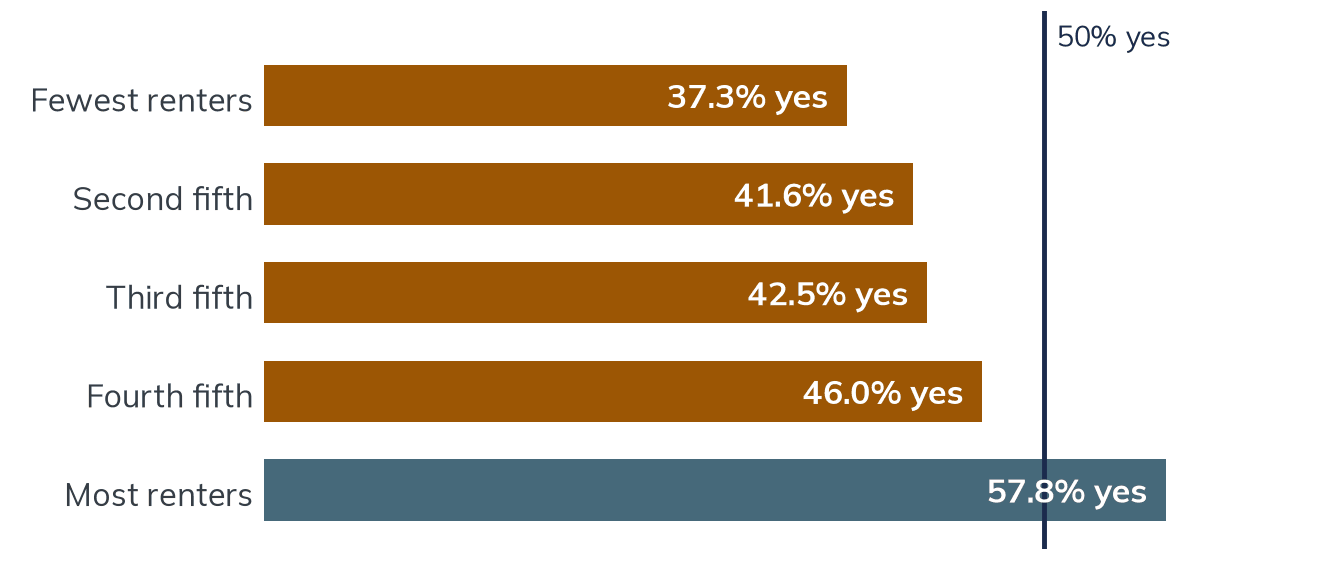
Question 7 failed, 1,257,720 yes to 1,290,405 no: 49.4% yes, 32,685 votes short. Beneath that total was a divide. The share of households that rent tracked the yes vote more closely than anything else we measured.
Statewide it was 49.4 percent yes: 75 of 350 cities and towns voted yes.
In the 70 cities and towns where the most households rent, 57.8% voted yes. In the 70 where the fewest do, 37.3%. Density came next: all 23 cities and towns above 5,000 residents per square mile voted yes, Boston among them, and 42 of the 304 below 2,500. Median family income showed no link (rank correlation −0.05), and neither did property values or recent home building.
Seventy-five of 350 cities and towns voted yes; 275 voted no. Counts are unofficial (Associated Press, as published by WBUR, November 12). New Ashford has no votes reported.
What it means for your city or town: Question 7 failed, so minimum lot sizes stay where they were, set by each city’s and town’s own zoning.
Source: Associated Press unofficial town results as published by WBUR (file modified 2026-11-12); ACS 2020–24; Department of Revenue; Massanomics analysis. Associations between town results and town characteristics, not how individual voters voted.

Road money
Chapter 90 money not yet reimbursed doubled to $674 million
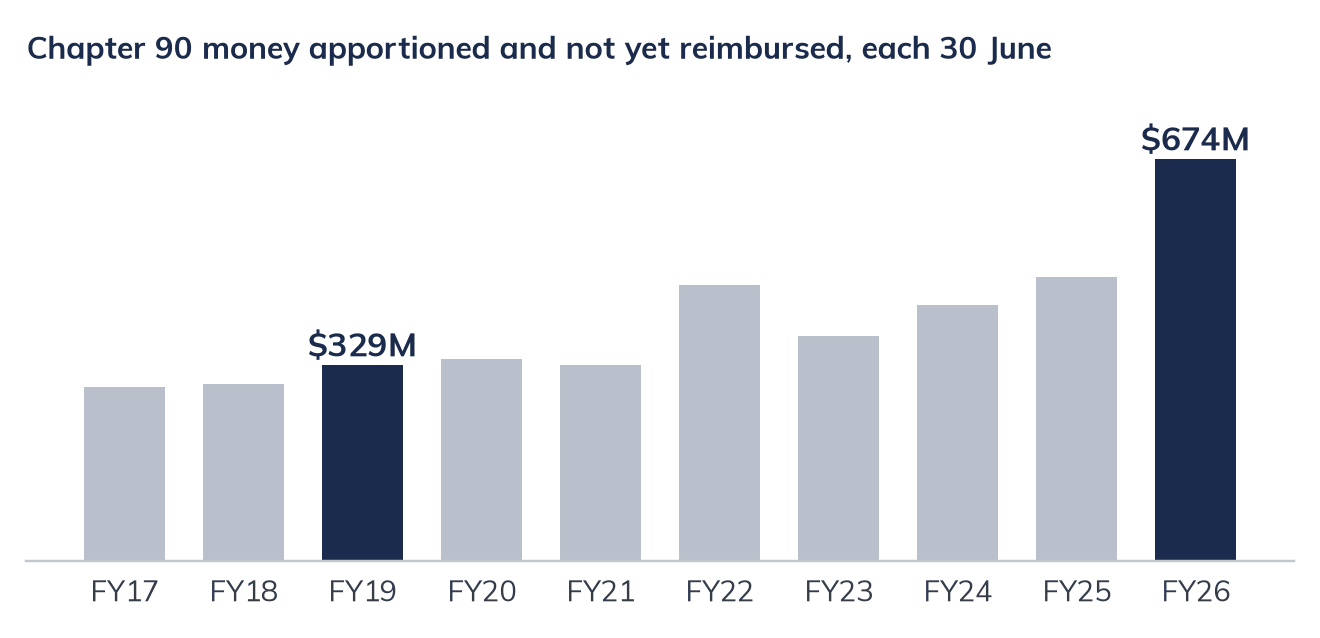
Every city and town gets Chapter 90 road money by formula and is paid back after it spends. On June 30, 2019, $329 million of apportioned money was waiting to be reimbursed. On June 30, 2026 it was $674 million.
Over those years the program grew from $240 million a year to $460 million, with one-time supplements. Payments stayed between $166 million and $285 million a year.
A balance is not idle money: MassDOT’s Chapter 90 Advisory Group found 63% of the unspent balance committed to approved projects not yet billed (January 2025). Most of it is recent. Money from FY2022 or earlier is $21.4 million, in 26 cities and towns, 2.2% of what was open on October 16.
Statewide $655 million of FY2017 to FY2026 Chapter 90 money was not yet reimbursed on October 16. Counting the annual program alone the median city or town holds 1.2 years of its yearly money.
The state pays when a city or town bills for finished work, so the balance is money promised and not yet paid.
Source: MassDOT Chapter 90 apportionments, FY2012–FY2027; Comptroller CTHRU payments through 2026-10-16 (pulled 2026-10-20); MassDOT Chapter 90 Advisory Group, January 2025; Massanomics analysis.
From the founder
A note from the founder
I was moved by Bill McKibben's talk at Old Town Hall. It's worth watching.
Congratulations, too, to Brighton's Rep. Kevin Honan, the dean of the House and this week's Legislator Focus. I lived on Sutherland Road in Brighton when I attended Boston College, and I have fond memories of Cleveland Circle!

Patrick White, Founder
Featured finding
Winters warmed fastest
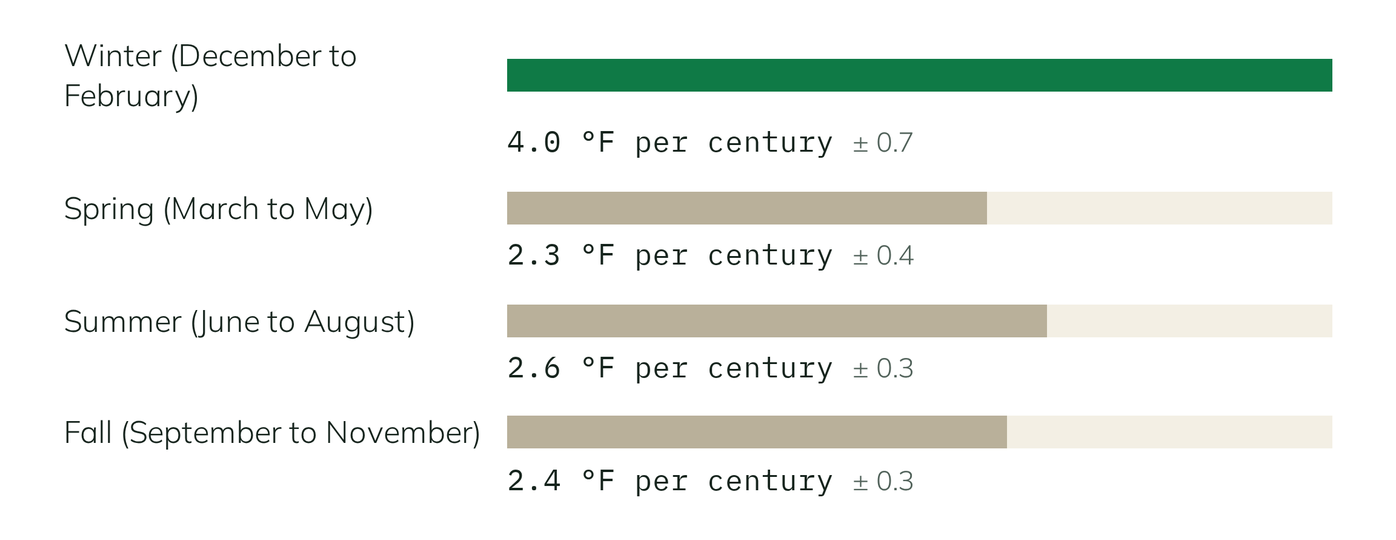
Massachusetts has warmed 2.8 °F per century since 1895, and winter fastest: 4.0 °F per century, against 2.3 to 2.6 °F in spring, summer and fall. The average winter was 28.5 °F in 1991–2020, 2.7 °F above 1951–1980.
Statewide 62 of the 252 cities and towns with an FY2026 report spent more than they appropriated for snow and ice.
Snow and ice budgets assume the winter a city or town expects. The records show the warming, not what to spend.
Source: NOAA National Centers for Environmental Information, Climate at a Glance, statewide average temperature by season, nClimDiv adjusted series 1895–2025 (pulled 2026-11-08), straight-line fits; Division of Local Services, snow and ice expenditures FY2012–FY2026 (unaudited, as reported by cities and towns).
Video
Bill McKibben: A Momentous Year – Sun, Heat, & Democracy
It was an honor to host Berkshire Community Land Trust’s Annual Meeting at Old Town Hall in Stockbridge, featuring a climate talk by Bill McKibben. Thanks so much to BCLT and Beth Carlson for presenting this moving lecture.
Outgoing Climate Chief Melissa Hoffer traveled out from Boston to introduce Bill, and the video starts with her remarks. In December she becomes president of Vermont Law and Graduate School. We wish her the best!
Bill is a founder of 350.org and Third Act. His 1989 book, The End of Nature, was the first book on climate change written for a general audience.
From the front page
About your city or town
Every one of the 351 cities and towns has a front page with five things that stand out about it.
Municipal Focus
Lowell: a mill town reinvents itself
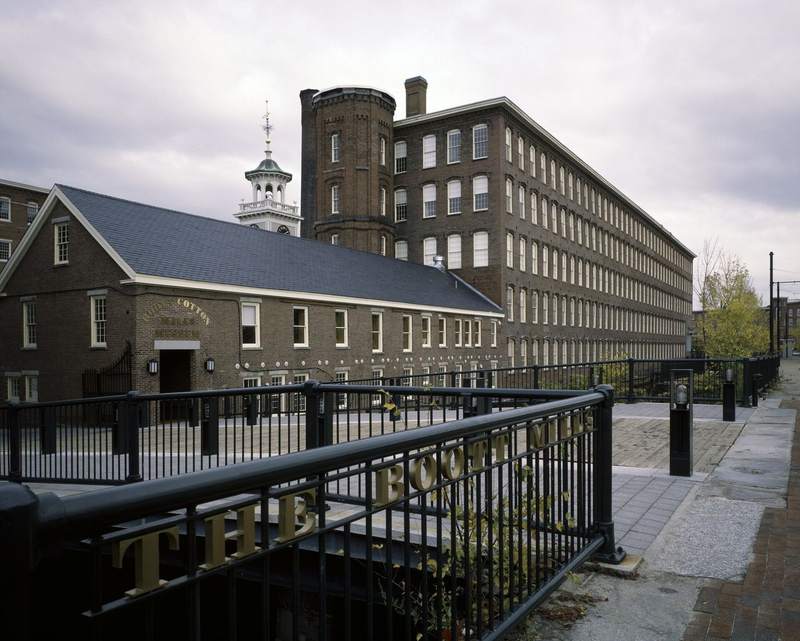
Lowell has had to invent itself twice. In the 1820s Boston financiers turned a farming village at the Pawtucket Falls into America’s first successful planned industrial city. A century later the mills left; the last of the originals closed in 1958. The turn began in 1978, when President Carter signed the law creating Lowell National Historical Park. Wang Laboratories and UMass Lowell carried it on. Population grew from 106,519 in 2010 to 115,554 in 2020, fifth in the state, and the city has the second-largest Cambodian American community in the country. State aid pays 53% of its $568.5 million FY2026 plan, before enterprise accounts; on the Fairness Index it is 12th of 351.
Source: Massanomics, Lowell Municipal Focus (published 2026-11-13); Britannica; U.S. Census Bureau; Fairness Index.
Read more: Lowell: a mill town reinvents itself →
Every one of the 351 cities and towns has a page like this. Find yours →
Legislator Focus
Rep. Kevin Honan
D-Boston, 17th Suffolk: Allston, Brighton and part of Brookline
Kevin Honan was born in Allston, graduated from Boston College and was first elected in 1986. He took his seat in 1987 and is the longest-serving member of the Legislature today.
On January 1, 2025, as the House’s senior member, he opened the 194th session, and the Journal lists his remarks as “Remarks of Dean Honan.”
He chaired the Joint Committee on Housing for 17 years from 2003, through the $1.8 billion housing bond bill of 2018 and the 2020 pandemic moratorium on evictions and foreclosures. Since 2021 he has chaired House Steering, Policy and Scheduling.
Housing is what he files most: 61 of his 184 lead bills since 2015, then municipal government (38) and taxes (19). Six became law. The Rappaport Foundation reported in 2022 that his staff helped more than 500 Allston-Brighton residents through the pandemic. In 2017 the Citizens’ Housing and Planning Association gave him its Legacy Award.
Source: malegislature.gov (House Journal, January 1, 2025; bill histories, 189th–194th General Courts); Massachusetts Elections Statistics; WGBH, May 31, 2018; WBSM, 2026; Rappaport Foundation; Citizens’ Housing and Planning Association. A bill’s topic is the committee it was first sent to for a hearing.
His page, with posts, bills and votes →
Each of the nearly 200 members of the Legislature has a page: posts, bills, votes and campaign money. Find yours →
From the National Register
Photo highlights
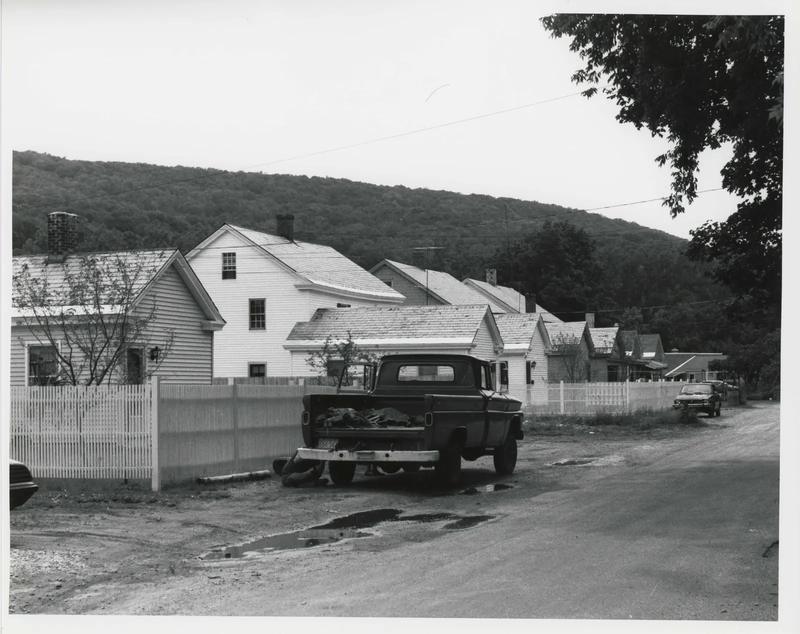
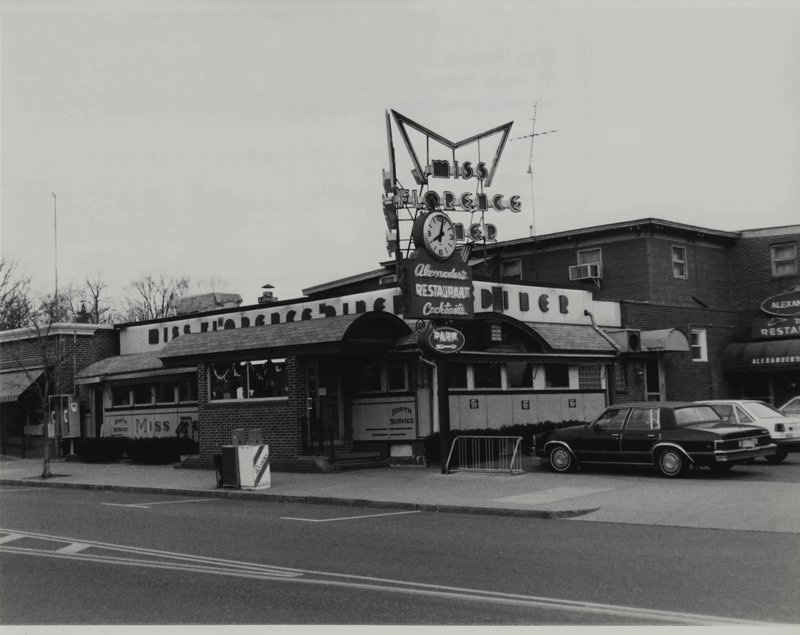
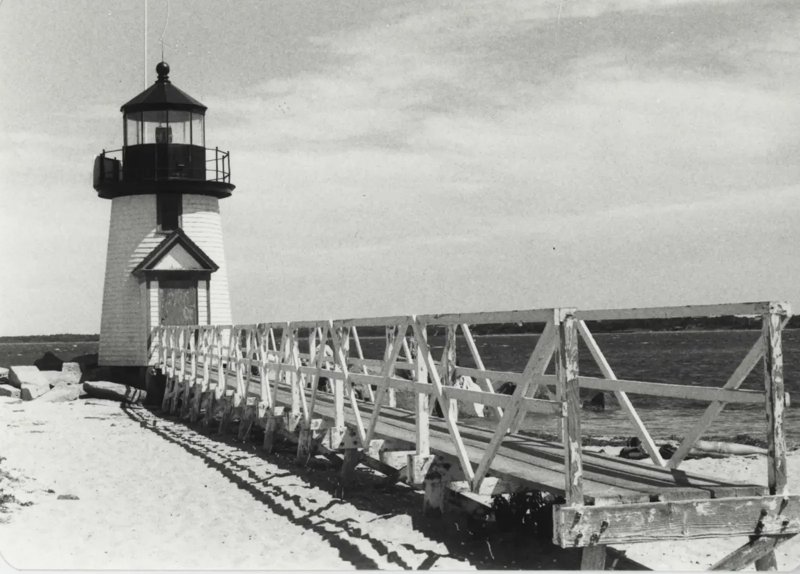
Coming up
Next week
Tuesday, November 24: Massachusetts in early America. Population since 1765, the 1830 town plans, and the forest then and now.
And Legislator Focus: House Minority Leader Rep. Brad Jones, who is retiring after 32 years.