Willows
Leaves alternate, simple · Family Salicaceae
In the inventory (genus figures) · Live trees fewer than 1 in 100 · Volume under 1% · Growth and mortality too few to estimate. USDA Forest Service, Forest Inventory and Analysis, 2019–2025; live trees an inch or more across, volume of trees five inches or more. Shares quoted only where the sampling error is 30% or less. Genus-level: FIA records Salix spp. as one group.
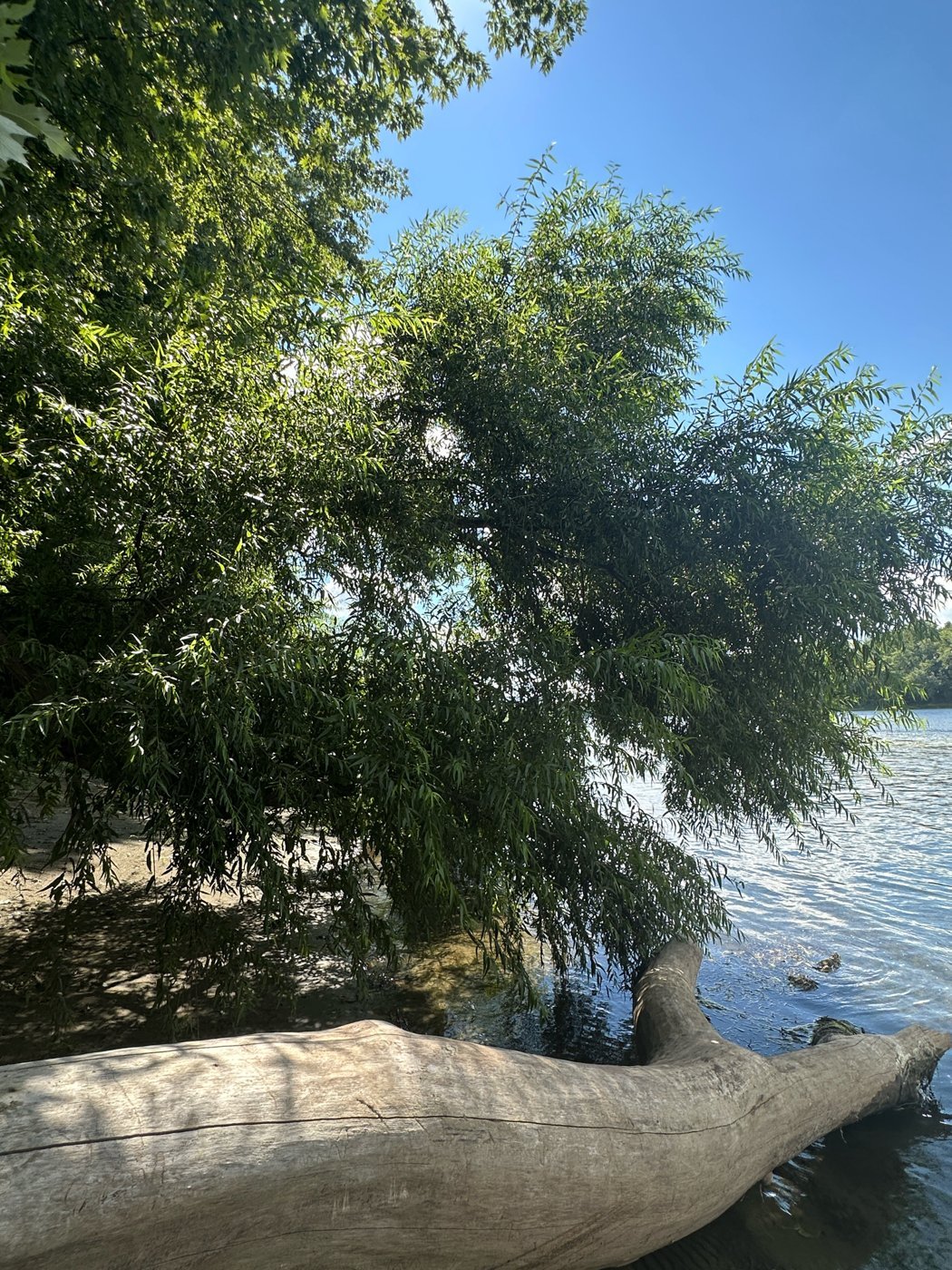
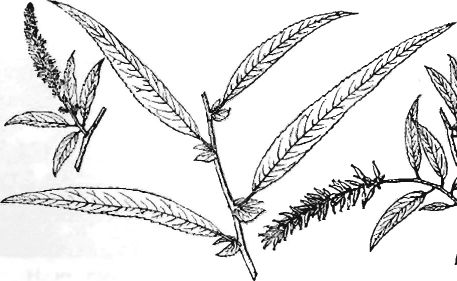
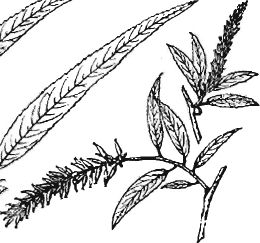
What to look for
MASSACHUSETTS has many willows, but this is a large and difficult group to differentiate. All willows have the following characteristics in common: buds are covered with a single, cap-like scale with silky, gray hairs beneath the scale. Leaves are alternate, mostly narrow, and the petioles are short or lacking. Flowers occur in catkins. Fruits consist of small, usually two-valved capsules filled with silky hairs which are attached to the seeds.
Where it grows
Mapped in 12 of fourteen counties: Barnstable, Berkshire, Bristol, Dukes, Essex, Franklin, Hampshire, Middlesex, Norfolk, Plymouth, Suffolk, Worcester.
Text and line illustrations: Forest Trees of Massachusetts, 7th edition (2016), Massachusetts Department of Conservation and Recreation, Bureau of Forest Fire Control and Forestry, funded by the USDA Forest Service. Drawings, 1925 descriptions and the “How to know” keys: The Commercial Forest Trees of Massachusetts (1925), Massachusetts Department of Conservation, Division of Forestry. Forest shares before settlement and today: Harvard Forest data archive (Cogbill, Burk and Motzkin 2002; Thompson and others 2013). Insects and disease: USDA Forest Service Insect and Disease Survey, Region 9, with DCR. Photographs: observations on iNaturalist (inaturalist.org), each credited to its photographer under its Creative Commons licence; the list is under “Where the pictures come from” on the guide page. Species ranges by county are as the 2016 manual maps them. Transcribed by script and proofread in part; the manuals govern where they differ.