Staghorn Sumac
Leaves alternate, compound · Family Anacardiaceae
What to look for
STAGHORN Sumac occurs mainly as a shrub throughout the state, usually in dry areas along roadsides, pastures, and the base of cliffs.
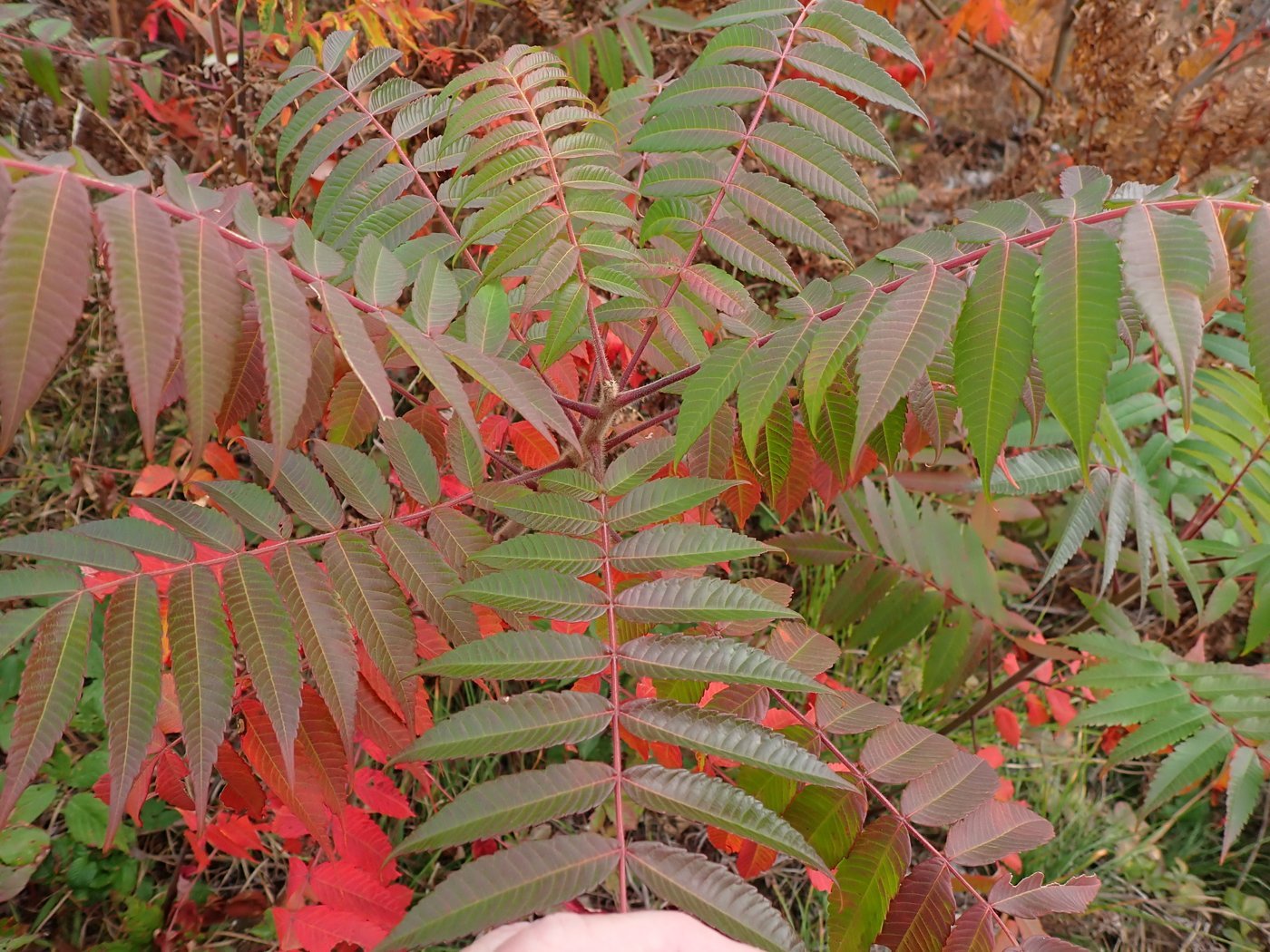
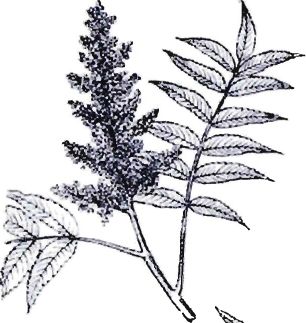
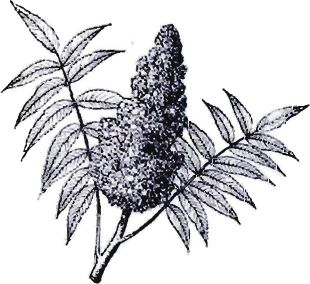
It has alternate, serrated, compound leaves with five to fifteen pairs of sessile leaflets and a single terminal leaflet.
Twigs are stout, very hairy, with a whitish milky juice.
Plants are dioecious, with flowers appearing in early summer in large, compact, yellow panicles two to eight inches long. Fruit ripens in August as a spire of showy, red, velvety berries. The plant is not poisonous. Berries can be used to make a lemonade type drink.
Where it grows
Mapped in all fourteen counties.
Text and line illustrations: Forest Trees of Massachusetts, 7th edition (2016), Massachusetts Department of Conservation and Recreation, Bureau of Forest Fire Control and Forestry, funded by the USDA Forest Service. Drawings, 1925 descriptions and the “How to know” keys: The Commercial Forest Trees of Massachusetts (1925), Massachusetts Department of Conservation, Division of Forestry. Forest shares before settlement and today: Harvard Forest data archive (Cogbill, Burk and Motzkin 2002; Thompson and others 2013). Insects and disease: USDA Forest Service Insect and Disease Survey, Region 9, with DCR. Photographs: observations on iNaturalist (inaturalist.org), each credited to its photographer under its Creative Commons licence; the list is under “Where the pictures come from” on the guide page. Species ranges by county are as the 2016 manual maps them. Transcribed by script and proofread in part; the manuals govern where they differ.