Scrub Oak
Leaves alternate, lobed · Family Fagaceae · Also called Bear Oak
In the inventory · Live trees too few to estimate · Volume under 1% · Growth and mortality too few to estimate. USDA Forest Service, Forest Inventory and Analysis, 2019–2025; live trees an inch or more across, volume of trees five inches or more. Shares quoted only where the sampling error is 30% or less.
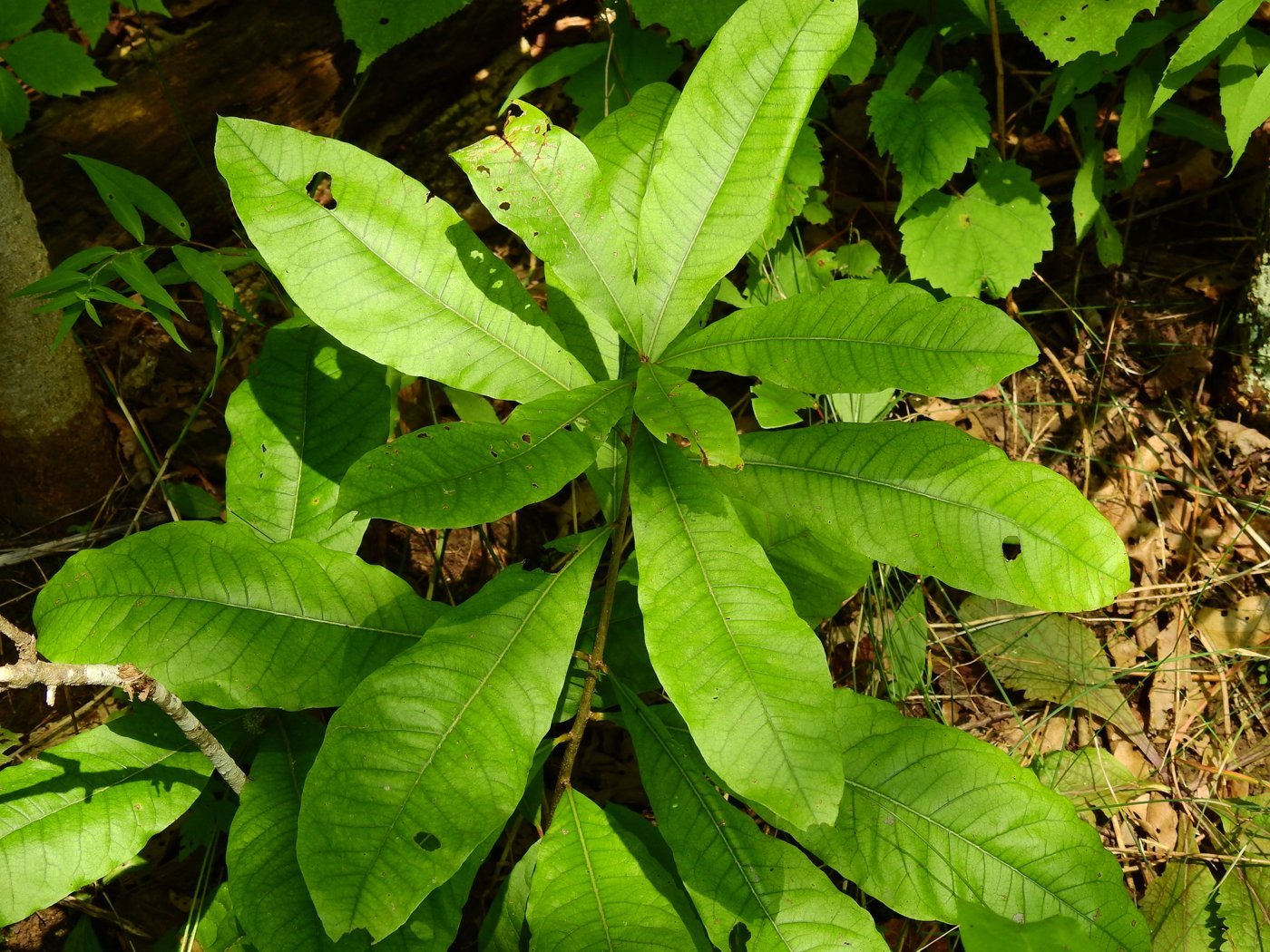
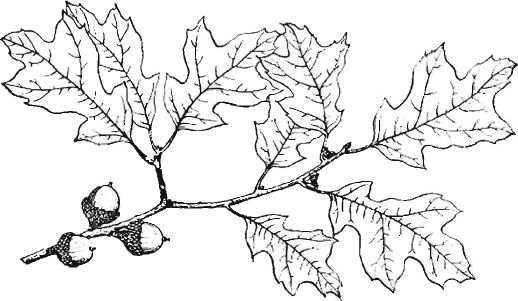
What to look for
SCRUB Oak is a thicket-forming straggling shrub or small tree reaching up to twenty five feet tall. A temporary scrub type after heavy cutting, repeated fires, or on windswept peaks. Scrub Oak is replaced by taller pines and oaks. The Latin species name, meaning “holly leaf," refers to the foliage. It is called "Bear Oak," reportedly because only bears like the very bitter acorns. Scrub Oak is very shade intolerant.
It has a short, contorted trunk with slender, horizontal sharp branches. It is a multi-branched shrub or sometimes small tree with a rounded crown.
The bark is smooth, gray-brown with a few raised lenticels. Twigs are quite slender, with obvious tan pubescence.
Buds are relatively small (under three-sixteenths of an inch in length) reddish brown, clustered, broadly conical, blunt, and hairless. The lateral buds are typically as large as the terminal bud.
Leaves are bristle-lobed and turn reddish-purple in fall. The leaves are alternate, simple, obovate, two to five inches long, somewhat bell-shaped, five to nine bristle tipped lobes with shallow sinuses, dark green above, much lighter and thickly pubescent below.
Flowers of both sexes occur on the same tree; male flowers are borne on two to four inch long pale reddish green catkins, and reddish female flowers are borne on very short axillary spikes. They appear with the leaves in mid-spring.
The fruit is a dark brown striated acorn. It is one-third to one-half inch long with a saucer-shaped cap covering one third of the nut. The cap scales are tightly packed, and the acorn matures in the fall after two growing seasons.
Where it grows
Mapped in all fourteen counties.
Forest types where the 2016 manual places it: Pitch Pine-Oak.
In the forest record
Trees of this group (oak) were 45% of the trees surveyors recorded at lot corners before settlement and are 19% of trees on inventory plots today, statewide.
Each town’s own numbers are on its habitat, forest and water page.
The oak group is among the three most common kinds of tree in the surveyors’ record of 127 of the 164 towns with a surviving record, and the largest share of that record is in Boxford (81%), Natick (80%), Newton (77%). The record is by group of trees, not by species, and covers towns with at least 50 recorded trees for the “largest share” list.
Insects and disease on the record
| Agent | Years seen | Worst year | Acres that year | Last seen |
|---|---|---|---|---|
| Spongy moth | 21 | 2017 | 1,049,099 | 2025 |
| Forest tent caterpillar | 11 | 2006 | 362,694 | 2018 |
| Winter moth | 13 | 2011 | 88,793 | 2018 |
Acres are of mapped damage, which can include other trees and non-forest; some agents attack several hosts.
Text and line illustrations: Forest Trees of Massachusetts, 7th edition (2016), Massachusetts Department of Conservation and Recreation, Bureau of Forest Fire Control and Forestry, funded by the USDA Forest Service. Drawings, 1925 descriptions and the “How to know” keys: The Commercial Forest Trees of Massachusetts (1925), Massachusetts Department of Conservation, Division of Forestry. Forest shares before settlement and today: Harvard Forest data archive (Cogbill, Burk and Motzkin 2002; Thompson and others 2013). Insects and disease: USDA Forest Service Insect and Disease Survey, Region 9, with DCR. Photographs: observations on iNaturalist (inaturalist.org), each credited to its photographer under its Creative Commons licence; the list is under “Where the pictures come from” on the guide page. Species ranges by county are as the 2016 manual maps them. Transcribed by script and proofread in part; the manuals govern where they differ.