Red Pine
Leaves needles or scales · Family Pinaceae · Also called Norway Pine
In the inventory not found in the current inventory sample (USDA Forest Service, 2019–2025); that is a sampling result, not a count of none left.
What to look for
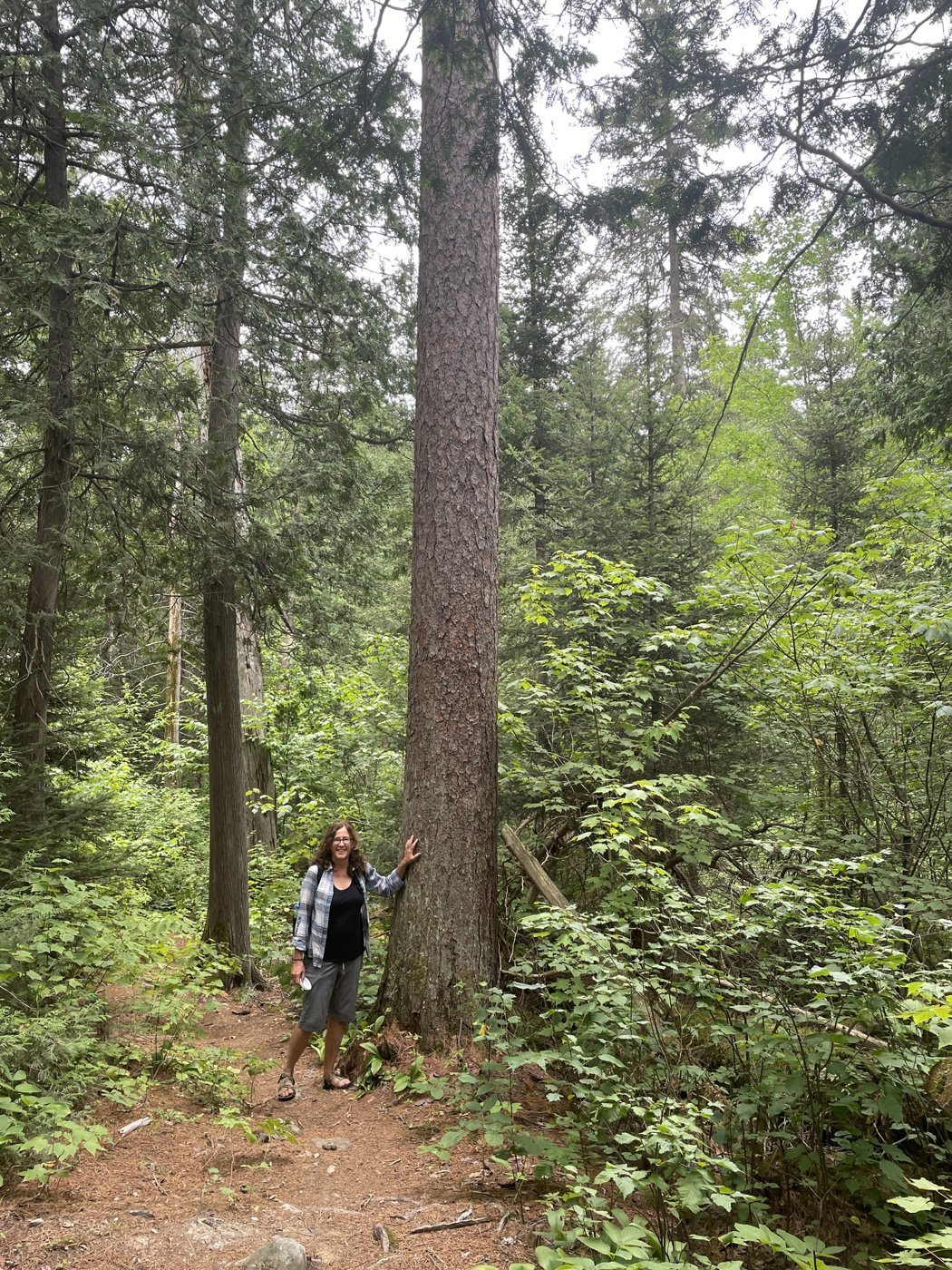
RED Pine is appropriately named because of the pale red color of the heartwood and the distinctly reddish cast of the bark. Although it occurs naturally, most stands are plantations created by the Civilian Conservation Corps (CCC) from 1933 to 1941 around and near watershed areas. It is shade intolerant and usually it grows in light and somewhat dry, well-drained soils.
When young, it has a conical outline; in old age it becomes somewhat irregular. It grows from fifty to seventy-five feet with a trunk diameter of two to three feet.
The trunk is continuous and dark with a reddish tinge. Branches are stout, extend horizontally, and occur near the ground. Red Pines which were planted look quite different. They have few branches at the base, are all uniform in size and occur in regular rows.
The bark is light red-brown in color and divided by shallow fissures into broad, flat ridges.
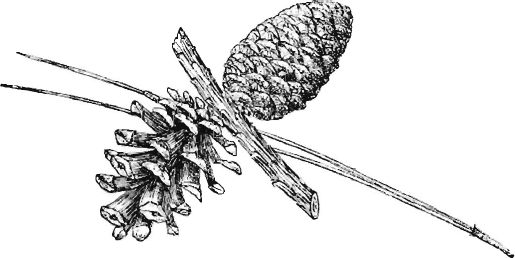
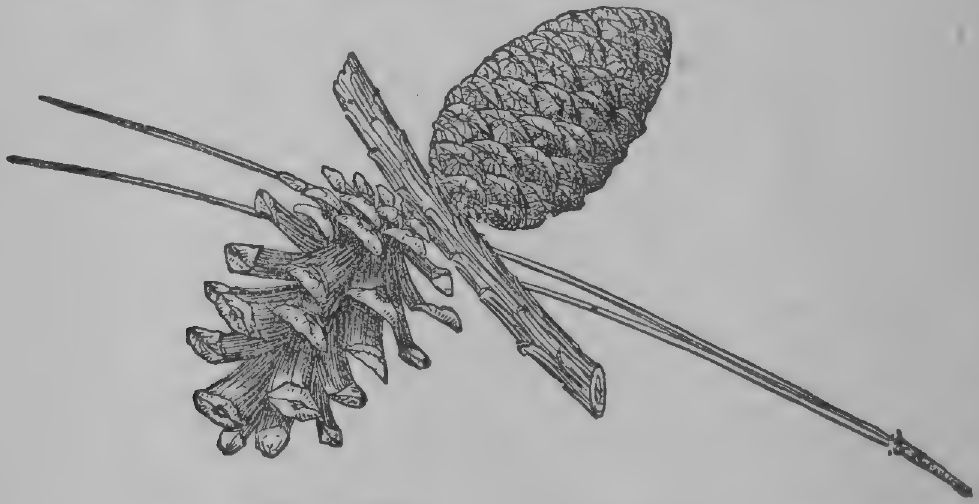
Leaves (needles) are flexible, dark green, five to six inches long and in clusters of two. When bent in half they will snap and break. They remain on the tree for four to five years. Winter buds are resinous.
Cones are egg-shaped, two to three inches long and mature in the fall of their second season.
The wood is light, strong, hard, and pale red in color. It is used in construction, as lumber, landscape timbers, and for log homes. In the colonial days it was used for ship masts like Eastern White Pine.
Early English explorers in pre-colonial times confused this tree with their own native Norway Spruce and called it Norway Pine. The Latin name suggests a resinous wood, but in fact it is less resinous than other common pines.
Where it grows
Mapped in 11 of fourteen counties: Barnstable, Berkshire, Essex, Franklin, Hampden, Hampshire, Middlesex, Nantucket, Norfolk, Plymouth, Worcester.
In the forest record
Trees of this group (pine) were 13% of the trees surveyors recorded at lot corners before settlement and are 16% of trees on inventory plots today, statewide.
Each town’s own numbers are on its habitat, forest and water page.
The pine group is among the three most common kinds of tree in the surveyors’ record of 88 of the 164 towns with a surviving record, and the largest share of that record is in Yarmouth (70%), Barnstable (44%), Truro (44%). The record is by group of trees, not by species, and covers towns with at least 50 recorded trees for the “largest share” list.
Insects and disease on the record
| Agent | Years seen | Worst year | Acres that year | Last seen |
|---|---|---|---|---|
| Lophodermium needle cast of pines | 2 | 2021 | 36,508 | 2022 |
| Red pine scale | 23 | 2025 | 6,362 | 2025 |
| Diplodia canker | 12 | 2010 | 5,252 | 2015 |
Acres are of mapped damage, which can include other trees and non-forest; some agents attack several hosts.
As described in 1925
Show
Listed as Red Pine (Norway Pine) (Pinus resinosa Ait.).
How to know the Pines (1925): Leaves — Arranged in 2-leaved clusters. Flexible, dark green and 5 to 6 inches long. Compare the pines ›
IN Massachusetts the Red Pine — appropriately so called both on account of the pale red color of the heart-wood and the distinctly reddish cast of the bark —occurs only locally and then chiefly in the northern and western sections. Usually it grows on light and somewhat dry soils.
When young it has an attractive conical outline; in old age it becomes somewhat irregular. It usually attains a height of fifty to seventy-five feet and has a continuous trunk, two to three feet in diameter. The branches are stout, usually extend horizontally and clothe the trunk quite or nearly to the ground.
The bark is light red-brown in color and divided by shallow fissures into broad, flat ridges.
The leaves are in clusters of two, flexible, dark green and five to six inches long. They remain on the tree for four or five years.
The cones are egg-shaped, two to three inches long and mature in the fall of their second season.
The wood is light, strong, hard and pale red in color. It is used in construction, for building, and to a certain extent for masts.
The name Norway Pine has so little fitness as applied to this tree, and is so evidently misleading that its use is to be discouraged.
The Latin name suggests a resinous wood, but in fact it is less so than either of the other Pines.
Text and line illustrations: Forest Trees of Massachusetts, 7th edition (2016), Massachusetts Department of Conservation and Recreation, Bureau of Forest Fire Control and Forestry, funded by the USDA Forest Service. Drawings, 1925 descriptions and the “How to know” keys: The Commercial Forest Trees of Massachusetts (1925), Massachusetts Department of Conservation, Division of Forestry. Forest shares before settlement and today: Harvard Forest data archive (Cogbill, Burk and Motzkin 2002; Thompson and others 2013). Insects and disease: USDA Forest Service Insect and Disease Survey, Region 9, with DCR. Photographs: observations on iNaturalist (inaturalist.org), each credited to its photographer under its Creative Commons licence; the list is under “Where the pictures come from” on the guide page. Species ranges by county are as the 2016 manual maps them. Transcribed by script and proofread in part; the manuals govern where they differ.