Pin Oak
Leaves alternate, lobed · Family Fagaceae
In the inventory not found in the current inventory sample (USDA Forest Service, 2019–2025); that is a sampling result, not a count of none left.
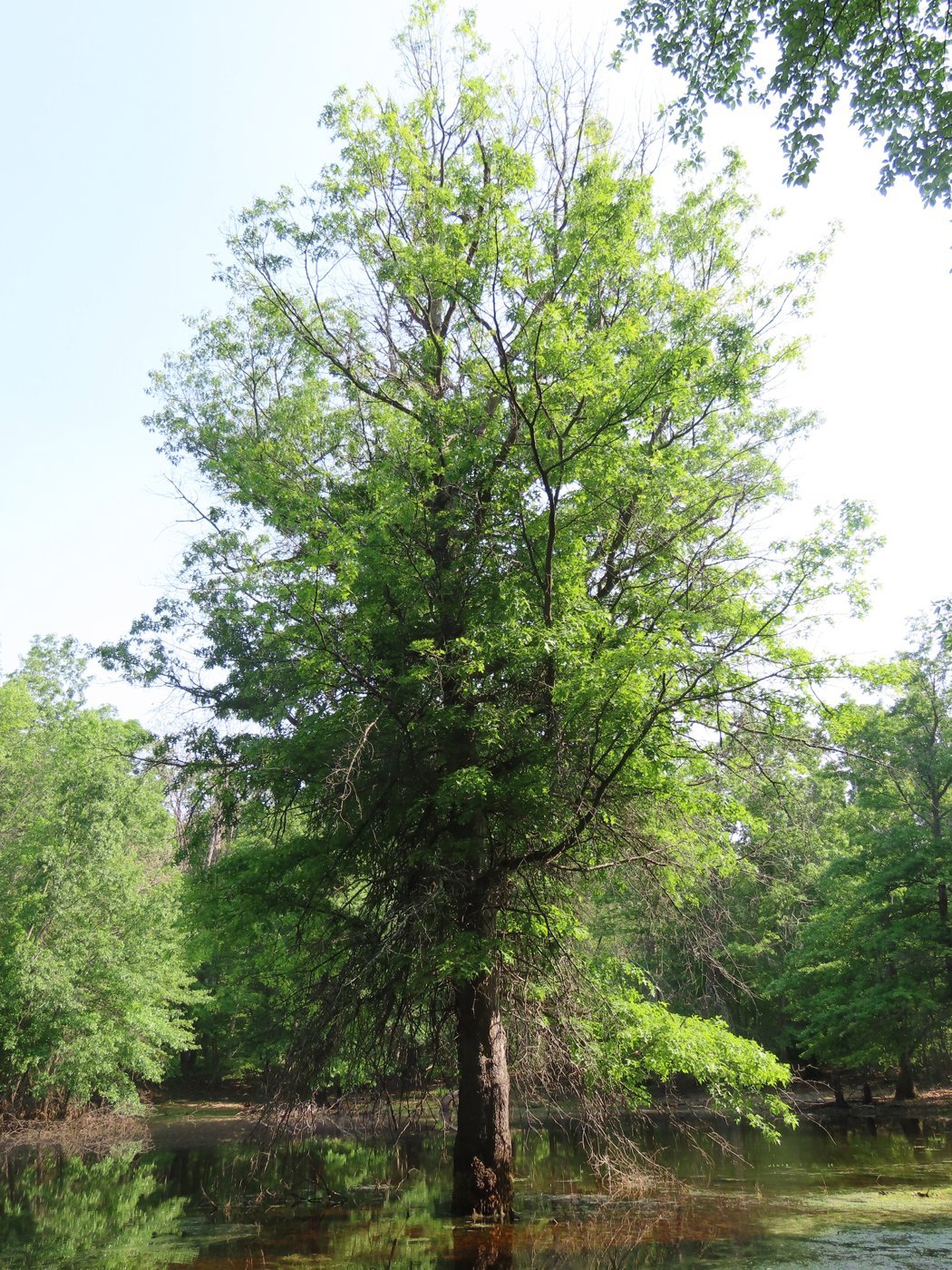
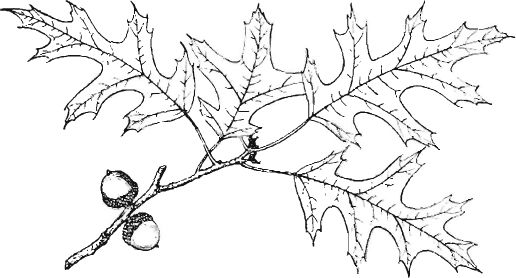
What to look for
PIN Oak is rarely found naturally except on the rich moist soil of bottomlands and the borders of swamps. It is usually not abundant in any locality, but found scattered with other kinds of trees. Because of its beauty, its hardiness, and its fairly rapid growth, Pin Oak makes an exceptionally fine street tree. Pin Oak is shade intolerant.
It more commonly attains heights of fifty to seventy feet, with diameters up to two feet, but sometimes larger. The tree typically has a single, upright trunk with numerous long, tough branches the lower ones drooping, the middle horizontal, and the upper ascending. Many small bristling twigs and branches give the tree its name.
Bark on young stems is smooth, shining and light brown; on old trunks it is light gray-brown and covered by small, close scales.
Leaves generally resemble those of Scarlet Oak, but the rounded openings do not extend quite so near the midrib, and they are somewhat smaller, giving a lacy appearance from a distance. Leaves are three to five inches long, two to four inches wide, and end in a point.
Flowers appear as dangling catkins when the leaves are about one-third grown. The fruit, taking two years to mature, is an acorn nearly hemispheric, about one-half of an inch long, light brown, often striped, enclosed only at the base in a thin, shallow, saucer-shaped cup.
The wood is heavy, hard, strong, and usually knotty. It is light brown, with thin, darker colored sapwood.
Where it grows
Mapped in 8 of fourteen counties: Berkshire, Bristol, Franklin, Hampden, Hampshire, Middlesex, Nantucket, Worcester.
In the forest record
Trees of this group (oak) were 45% of the trees surveyors recorded at lot corners before settlement and are 19% of trees on inventory plots today, statewide.
Each town’s own numbers are on its habitat, forest and water page.
The oak group is among the three most common kinds of tree in the surveyors’ record of 127 of the 164 towns with a surviving record, and the largest share of that record is in Boxford (81%), Natick (80%), Newton (77%). The record is by group of trees, not by species, and covers towns with at least 50 recorded trees for the “largest share” list.
Insects and disease on the record
| Agent | Years seen | Worst year | Acres that year | Last seen |
|---|---|---|---|---|
| Spongy moth | 21 | 2017 | 1,049,099 | 2025 |
| Forest tent caterpillar | 11 | 2006 | 362,694 | 2018 |
| Winter moth | 13 | 2011 | 88,793 | 2018 |
Acres are of mapped damage, which can include other trees and non-forest; some agents attack several hosts.
Text and line illustrations: Forest Trees of Massachusetts, 7th edition (2016), Massachusetts Department of Conservation and Recreation, Bureau of Forest Fire Control and Forestry, funded by the USDA Forest Service. Drawings, 1925 descriptions and the “How to know” keys: The Commercial Forest Trees of Massachusetts (1925), Massachusetts Department of Conservation, Division of Forestry. Forest shares before settlement and today: Harvard Forest data archive (Cogbill, Burk and Motzkin 2002; Thompson and others 2013). Insects and disease: USDA Forest Service Insect and Disease Survey, Region 9, with DCR. Photographs: observations on iNaturalist (inaturalist.org), each credited to its photographer under its Creative Commons licence; the list is under “Where the pictures come from” on the guide page. Species ranges by county are as the 2016 manual maps them. Transcribed by script and proofread in part; the manuals govern where they differ.