Paper Birch
Leaves alternate, simple · Family Betulaceae · Also called White Birch, Canoe Birch, or Silver Birch
In the inventory · Live trees too few to estimate · Volume under 1% · Growth and mortality too few to estimate. USDA Forest Service, Forest Inventory and Analysis, 2019–2025; live trees an inch or more across, volume of trees five inches or more. Shares quoted only where the sampling error is 30% or less.

What to look for
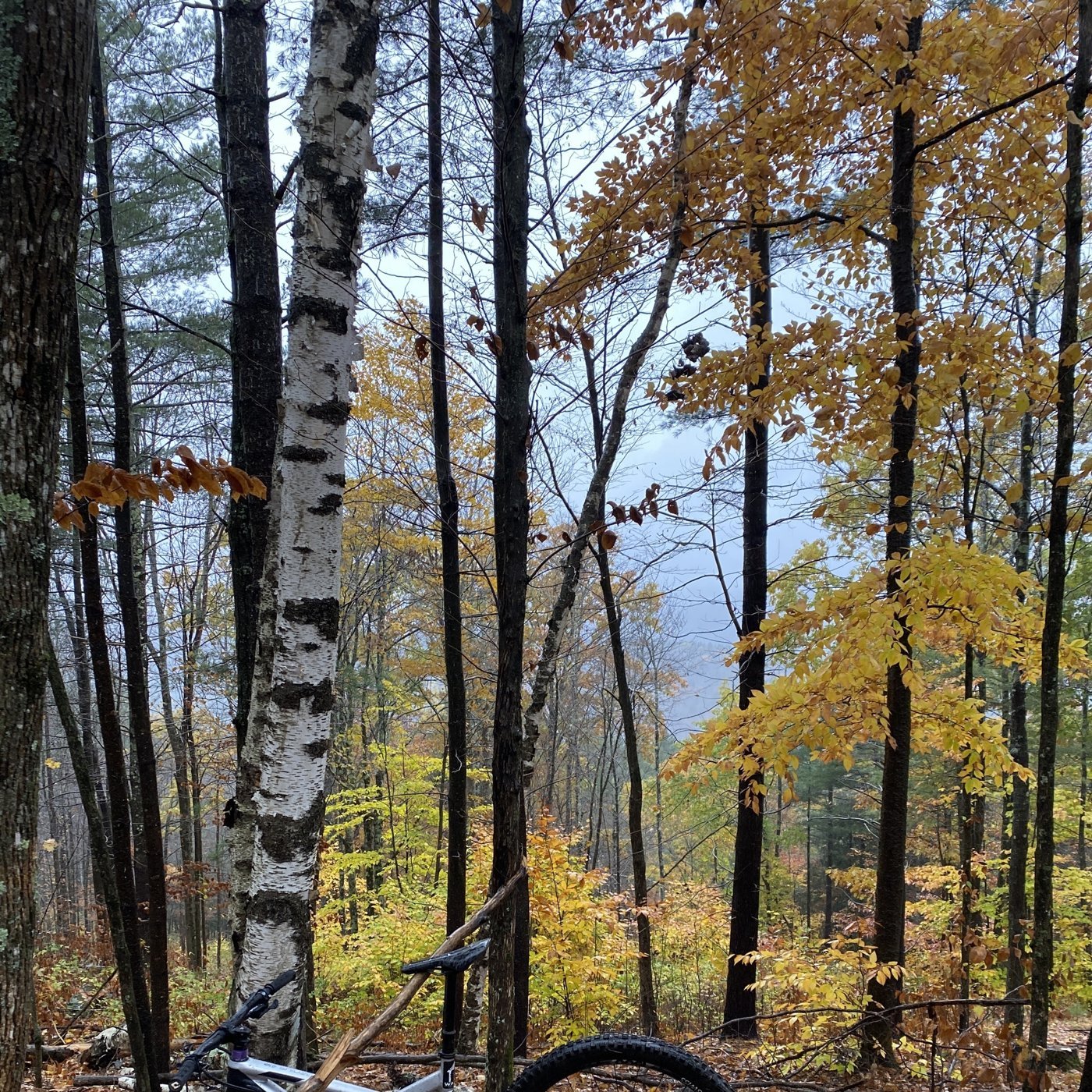
PAPER Birch grows commonly in the middle and western parts of the state. It is prolific in the vicinity of streams, swamps and the damp, wooded slopes. Paper Birch is shade intolerant and can be found in areas that were once fields.
It commonly attains a height of about seventy to eighty feet and a diameter of one to three feet. The trunk is usually continuous, though it may sometimes divide.
The branches are slender and horizontal or slightly pendulous. When old or crowded, the Paper Birch loses its lower branches and assumes a small, round head.
The bark on the trunk is white and lustrous on the outer surface and orange on the inner. It separates into thin papery scales, or the thick layers once used for birch bark canoes. The white bark of mature trees is marked by horizontal streaks, and fewer chevron-shaped dark markings than Gray Birch.
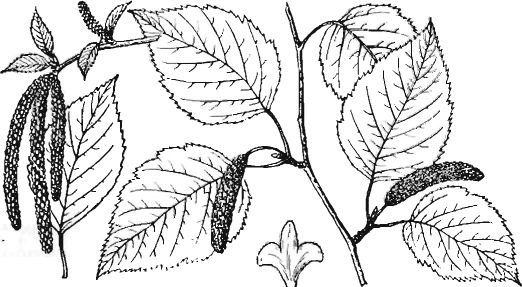
Leaves are simple, alternate, egg-shaped, apex not long-pointed, three to four inches long, doubly toothed, dark and lusterless green on the upper surface. Leaves have nine or fewer pairs of side veins. Buds are blunt and hairless.
Flowers are borne in catkins, three-quarters to one and one-quarters of an inch long. Sterile catkins that appear in the fall are mostly in clusters of three.
The wood is light, strong and hard. It was used for spools, shoe lasts, and pegs in the 1900's, as well as for paper pulp and for fuel. Now the lumber is commercially used for veneer, pulpwood, and many specialty items.
Where it grows
Mapped in all fourteen counties.
Forest types where the 2016 manual places it: Spruce-Fir / Northern Hardwoods.
In the forest record
Trees of this group (birch) were 3% of the trees surveyors recorded at lot corners before settlement and are 11% of trees on inventory plots today, statewide.
Each town’s own numbers are on its habitat, forest and water page.
The birch group is among the three most common kinds of tree in the surveyors’ record of 12 of the 164 towns with a surviving record, and the largest share of that record is in Middlefield (30%), Dalton (18%), Blandford (16%). The record is by group of trees, not by species, and covers towns with at least 50 recorded trees for the “largest share” list.
Insects and disease on the record
| Agent | Years seen | Worst year | Acres that year | Last seen |
|---|---|---|---|---|
| Spongy moth | 21 | 2017 | 1,049,099 | 2025 |
| Birch leafminer | 1 | 2005 | 63 | 2005 |
Acres are of mapped damage, which can include other trees and non-forest; some agents attack several hosts.
As described in 1925
Show
Listed as Paper or White Birch (Betula papyrifera Marsh.).
How to know the Birches (1925): Bark — Creamy-white and lustrous on the outer surface and orange on the inner. Separates readily into thin layers. Leaves — Egg-shaped and not long-pointed. Usually doubly toothed. Not lustrous. Flowers — Winter catkins borne in clusters of three. Compare the birches ›
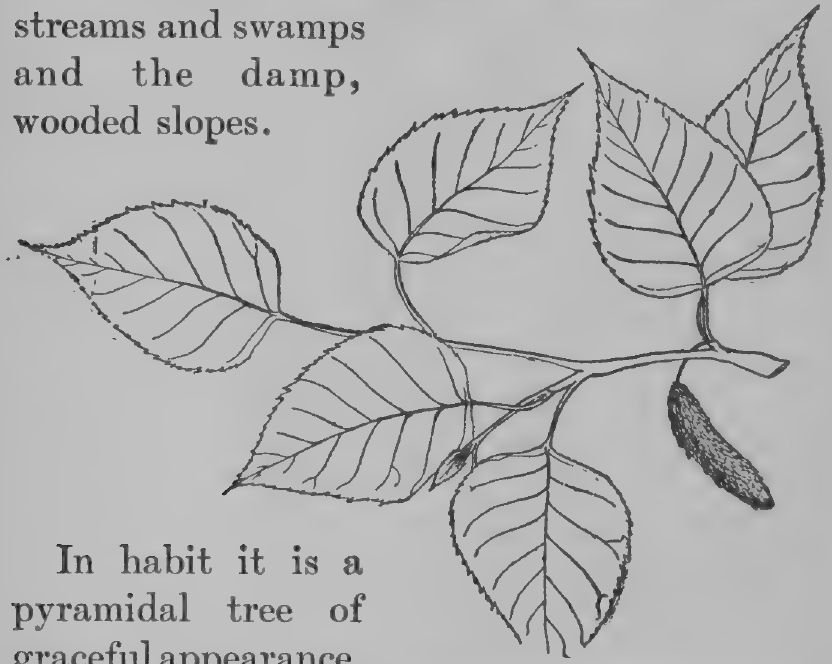
IN Massachusetts the Paper Birch, so called because of the use to which the early settlers put the bark, grows commonly in the middle and western parts of the State and is very infrequent in the eastern sections. Wherever found, its favorite home is the vicinity of streams and swamps and the damp, wooded slopes.
In habit it is a pyramidal tree of graceful appearance, commonly attaining a height of about fifty feet and a diameter of one to two feet.
The trunk is usually continuous, though it may sometimes divide, and the slender branches are horizontal or slightly pendulous. When old or crowded, the Paper Birch loses its lower branches and assumes a small, round head. The bark on the trunk is white and lustrous on the outer surface and orange on the inner.
It separates freely into thin, papery scales. The leaves are simple, alternate, egg-shaped, apex not long-pointed, three to four inches long, doubly toothed and dark, lustreless green on the upper surface. The flowers are borne in catkins. The sterile catkins which appear in the fall are mostly in clusters of three. The wood is light, strong and hard. It is used for spools, shoe lasts, pegs, in the making of paper pulp and for fuel.
Text and line illustrations: Forest Trees of Massachusetts, 7th edition (2016), Massachusetts Department of Conservation and Recreation, Bureau of Forest Fire Control and Forestry, funded by the USDA Forest Service. Drawings, 1925 descriptions and the “How to know” keys: The Commercial Forest Trees of Massachusetts (1925), Massachusetts Department of Conservation, Division of Forestry. Forest shares before settlement and today: Harvard Forest data archive (Cogbill, Burk and Motzkin 2002; Thompson and others 2013). Insects and disease: USDA Forest Service Insect and Disease Survey, Region 9, with DCR. Photographs: observations on iNaturalist (inaturalist.org), each credited to its photographer under its Creative Commons licence; the list is under “Where the pictures come from” on the guide page. Species ranges by county are as the 2016 manual maps them. Transcribed by script and proofread in part; the manuals govern where they differ.