Black Tupelo
Leaves alternate, simple · Family Nyssaceae · Also called Black Gum, Tupelo
In the inventory · Live trees about 1 tree in 85 (1.1%) · Volume under 1% · Growth and mortality too few to estimate. USDA Forest Service, Forest Inventory and Analysis, 2019–2025; live trees an inch or more across, volume of trees five inches or more. Shares quoted only where the sampling error is 30% or less.

What to look for
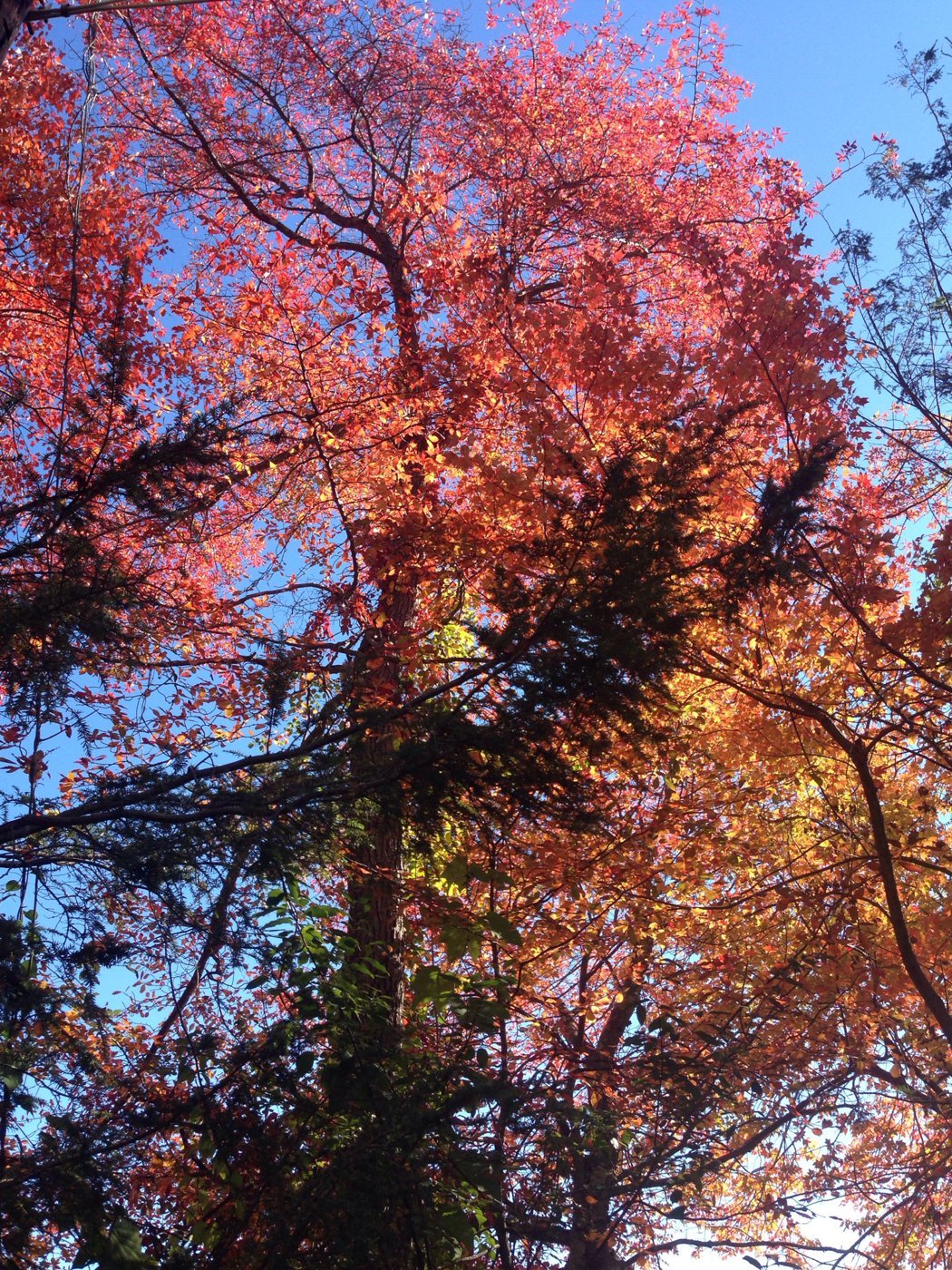
BLACK Tupelo occurs rather commonly throughout Massachusetts, typically inhabiting the borders of swamps and streams. It is a small or medium-sized, slow-growing tree, ranging in height from twenty-five to sixty feet and up to two feet in diameter. Black Tupelo are believed to be some of the oldest trees in New England, with several isolated “gum swamps” in northwest Worcester and eastern Franklin counties harboring trees believed to be 600 to 800+ years old! The trunks are commonly hollow in such swamps, so their true ages will ever remain a mystery.
Branches are slender, with numerous short perpendicular branchlets. The lower branches are horizontal or slightly drooping, and the upper ones horizontal or slightly rising.
Bark on young trees is smooth to scaly. It breaks into squarish gray-brown to black blocks on older stems.
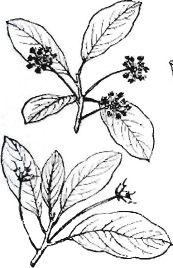
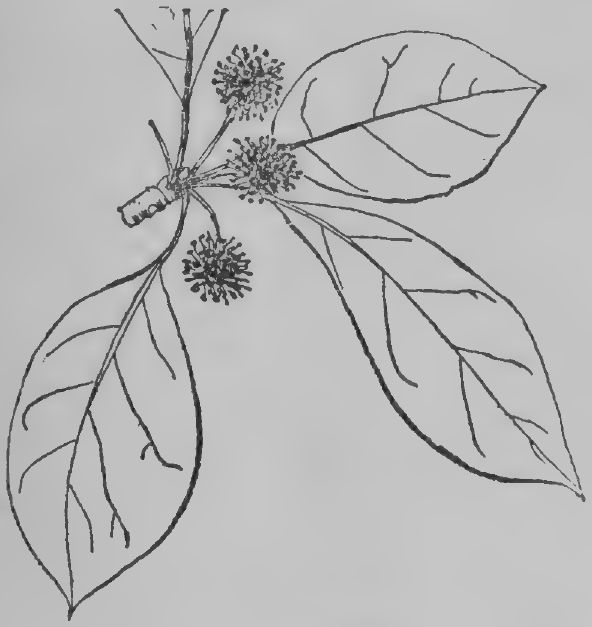
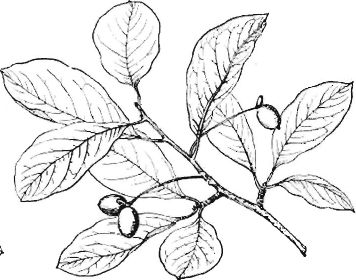
Leaves are simple, alternate, entire and from two to five inches long, oval, blunt-pointed, wedge-shaped at the base and smooth along the margin. In the summer, the leaves are dark green and lustrous on the upper surface. In the autumn, the foliage takes on brilliant hues of scarlet and crimson mixed with green.
Twigs are smooth, grayish-brown and dotted with crescent-shaped leaf scars, each marked with three distinct bundle-scars. Buds are reddish-brown and scattered alternately along the twigs.
The fruit, which ripens in October, is about one-half inch long, blue-black, and sour. They are an important food source for birds and wildlife.
Since Black Tupelo’s wood is very tough and cross-grained. It is hard to work and warps easily. It is used for the hubs of wheels, and for rollers and piles. It is difficult to split, so whole logs are used for firewood.
Where it grows
Mapped in all fourteen counties.
As described in 1925
Show
Listed as Black Gum or Tupelo (Nyssa sylvatica Marsh.).
THE Black Gum occurs rather commonly throughout Massachusetts, where it inhabits the borders of swamps and streams.
Here it is a small or medium-sized tree, of slow growth and of very variable habit. Its height development ranges from twenty-five to fifty feet and its diameter from one to two feet. The branches are slender and angular, the lower ones horizontal or slightly drooping and the upper horizontal or slightly rising. The head is of varying form, cylindrical, conical, pyramidal, often flat-topped and usually picturesque.
The bark on the trunk is dark gray.
On the old trunk it is divided into many small scales. The leaves are simple, alternate, entire and from two to five inches long. In summer the leaves are dark green and lustrous on the upper surface. In the autumn the foliage takes on brilliant hues of scarlet and crimson.
The fruit, which ripens in October, is about one-half inch long, blue-black and sour.
Its wood is heavy, soft, strong and not very durable. It is used for the hubs of wheels, for rollers and piles. It is difficult to split; hence, when it is made to serve for fuel, the logs are usually employed.
Text and line illustrations: Forest Trees of Massachusetts, 7th edition (2016), Massachusetts Department of Conservation and Recreation, Bureau of Forest Fire Control and Forestry, funded by the USDA Forest Service. Drawings, 1925 descriptions and the “How to know” keys: The Commercial Forest Trees of Massachusetts (1925), Massachusetts Department of Conservation, Division of Forestry. Forest shares before settlement and today: Harvard Forest data archive (Cogbill, Burk and Motzkin 2002; Thompson and others 2013). Insects and disease: USDA Forest Service Insect and Disease Survey, Region 9, with DCR. Photographs: observations on iNaturalist (inaturalist.org), each credited to its photographer under its Creative Commons licence; the list is under “Where the pictures come from” on the guide page. Species ranges by county are as the 2016 manual maps them. Transcribed by script and proofread in part; the manuals govern where they differ.