Black Birch
Leaves alternate, simple · Family Betulaceae · Also called Sweet Birch and Cherry Birch
In the inventory · Live trees about 1 tree in 15 (7.6%) · Volume 4% · Growth and mortality too few to estimate. USDA Forest Service, Forest Inventory and Analysis, 2019–2025; live trees an inch or more across, volume of trees five inches or more. Shares quoted only where the sampling error is 30% or less.
What to look for
BLACK Birch favors moist, protected northerly or easterly slopes with well-drained soils. It is also found on a variety of less favorable sites with rocky coarse-textured or shallow soils. Black Birch is shade intolerant. A long, fairly clean trunk is developed in dense stands, while low, thick branches are produced on open-grown trees. Black Birch is one of the species that has replaced American Chestnut in stands where chestnut was once a major component.
It is a tall, straight, brown or black barked tree, growing to a height of fifty to seventy feet and a diameter of two to three feet.
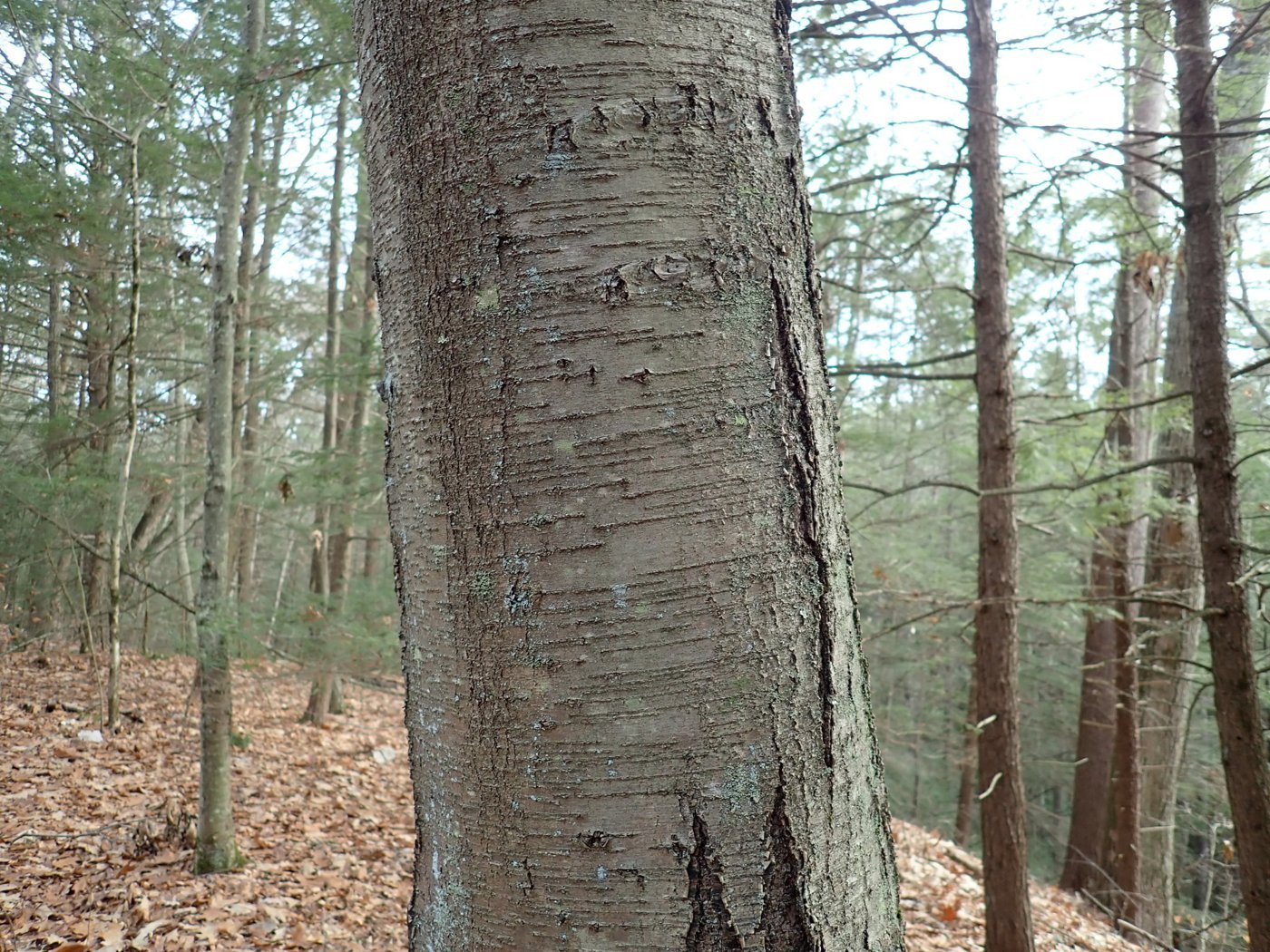
The bark on a young trunk is tight and marked by thin horizontal stripes. As it gets older, the bark cracks into small plate-like pieces.
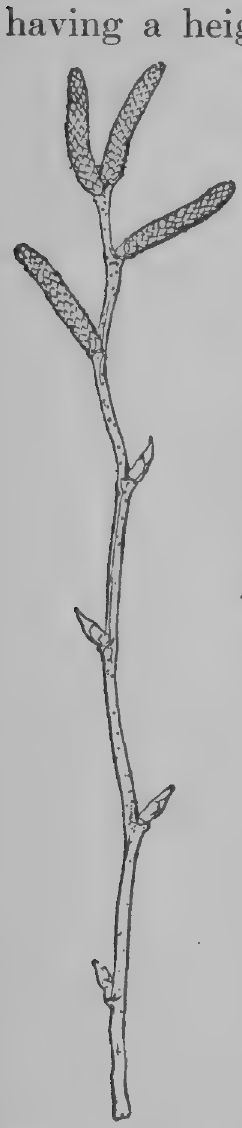
Its specific name, lenta, is derived from the tough yet flexible hairless twigs and branches that characterize the species. The aroma of wintergreen, emanating from crushed leaves and broken twigs, gives this birch one of its common name, Sweet Birch.
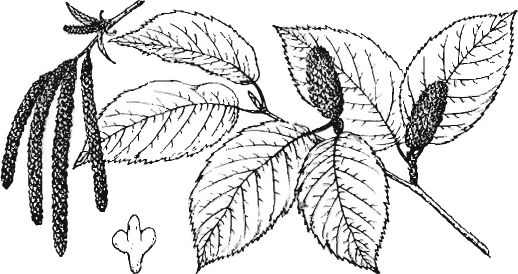
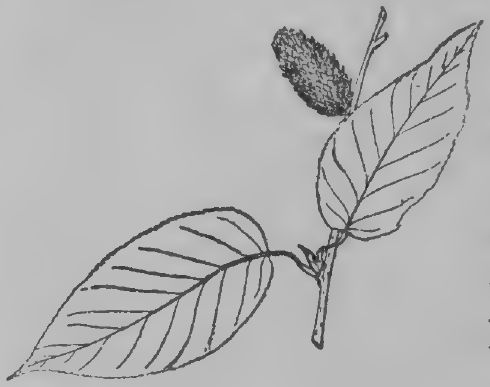
Leaves are alternate with double toothed edges. The leaf bases are even, and mostly wide or heart shaped. They are short and pointed and the main side veins may be branched. Buds are hairless, except the lower scales, which have a few sparse hairs.
Flowers bloom from April to May in the form of catkins, which dry into cylindrical erect fruit from August- October.
The wood is also unique, being similar to Yellow Birch. Lumber and veneer of the two species often are not separated in the market, although production of Yellow Birch far exceeds that of Black Birch. Black Birch is used for furniture, cabinets, boxes, woodenware, handles, and millwork, such as interior finish and flush doors. Paper pulp made from Black Birch is used in various amounts with other pulps to produce such products as boxboards, book and newsprint paper, paper toweling, and corrugated paper. Birch oil has been produced commercially from Black Birch bark, but its use has declined with the introduction of synthetic products.
Where it grows
Mapped in 12 of fourteen counties: Barnstable, Berkshire, Bristol, Essex, Franklin, Hampden, Hampshire, Middlesex, Norfolk, Plymouth, Suffolk, Worcester.
Forest types where the 2016 manual places it: Transition Hardwoods.
In the forest record
Trees of this group (birch) were 3% of the trees surveyors recorded at lot corners before settlement and are 11% of trees on inventory plots today, statewide.
Each town’s own numbers are on its habitat, forest and water page.
The birch group is among the three most common kinds of tree in the surveyors’ record of 12 of the 164 towns with a surviving record, and the largest share of that record is in Middlefield (30%), Dalton (18%), Blandford (16%). The record is by group of trees, not by species, and covers towns with at least 50 recorded trees for the “largest share” list.
Insects and disease on the record
| Agent | Years seen | Worst year | Acres that year | Last seen |
|---|---|---|---|---|
| Spongy moth | 21 | 2017 | 1,049,099 | 2025 |
| Birch leafminer | 1 | 2005 | 63 | 2005 |
Acres are of mapped damage, which can include other trees and non-forest; some agents attack several hosts.
As described in 1925
Show
Listed as Sweet or Black Birch (Betula lenta L.).
How to know the Birches (1925): Bark — Dark, almost black and without lustre. Broken into large, irregular plates. On young branches aromatic. Leaves — Egg-shaped to oblong. Sharply toothed. Flowers — Winter catkins not clustered. Three to four on a shoot. Compare the birches ›
THE Sweet Birch is of frequent occurrence throughout the State, though it rarely grows in the vicinity of the coast. Its favorite habitat is the rich, moist soil of woods or the banks of streams.
As commonly found, it is a medium-sized tree, a height of about fifty feet and a trunk diameter of one to two feet, although specimens may exceed these dimensions.
The trunk is upright and the branches are slender, extending almost horizontally, with the lower ones often somewhat pendulous.
In the open the tree develops a symmetrical, round head.
The bark on the trunk is dark, almost black, dull and broken into large, irregular plates. On old trunks it very much resembles that of the Sweet Cherry, wherefore the term Cherry Birch is often applied to the tree. The young shoots are dark brown, lustrous and very aromatic.
It is this last characteristic which justifies the name Sweet Birch.
The leaves are simple, alternate, egg-shaped or approaching oblong, three to four inches long, sharply toothed and dark green and dull on the upper surface. The flowers are in catkins. Of the winter ones there are three or four on a shoot.
The wood is heavy, very strong, hard, durable and easily wrought. It is used largely in the making of furniture and is highly esteemed for fuel.
Text and line illustrations: Forest Trees of Massachusetts, 7th edition (2016), Massachusetts Department of Conservation and Recreation, Bureau of Forest Fire Control and Forestry, funded by the USDA Forest Service. Drawings, 1925 descriptions and the “How to know” keys: The Commercial Forest Trees of Massachusetts (1925), Massachusetts Department of Conservation, Division of Forestry. Forest shares before settlement and today: Harvard Forest data archive (Cogbill, Burk and Motzkin 2002; Thompson and others 2013). Insects and disease: USDA Forest Service Insect and Disease Survey, Region 9, with DCR. Photographs: observations on iNaturalist (inaturalist.org), each credited to its photographer under its Creative Commons licence; the list is under “Where the pictures come from” on the guide page. Species ranges by county are as the 2016 manual maps them. Transcribed by script and proofread in part; the manuals govern where they differ.