Crabapple
Leaves alternate, simple · Family Rosaceae
In the inventory (genus figures) · Live trees fewer than 1 in 100 · Volume under 1% · Growth and mortality too few to estimate. USDA Forest Service, Forest Inventory and Analysis, 2019–2025; live trees an inch or more across, volume of trees five inches or more. Shares quoted only where the sampling error is 30% or less. Genus-level: FIA records Malus spp. as one group.
What to look for
In forest fragments, forest edges, roadsides, and other areas of human habitation, it is not uncommon to come upon apple trees. New England is without a native crabapple, but with the widespread planting of a variety of species and cultivars of crabapples as ornamentals and as aids for pollination in orchards, they have hybridized and spread with the aid of animals who eat the often tasty fruit and disperse the seeds. We will consider crabapples generally here because of the tendency to hybridize, making species identification difficult in natural areas.
Crabapples are small trees or shrubs, reaching heights of twenty-five feet at maturity. The forms can vary and they may be low and rounded or more upright. Leaves are alternate, toothed, and elliptical in shape, with an acute or acuminate tip.
Twigs are moderately thick and gray-brown in color, though this can vary somewhat. Spur shoots are common.
Bark is variable, but on mature trees it may be scaly, while younger trees it may be smooth. Color may vary from reddish-brown to gray.
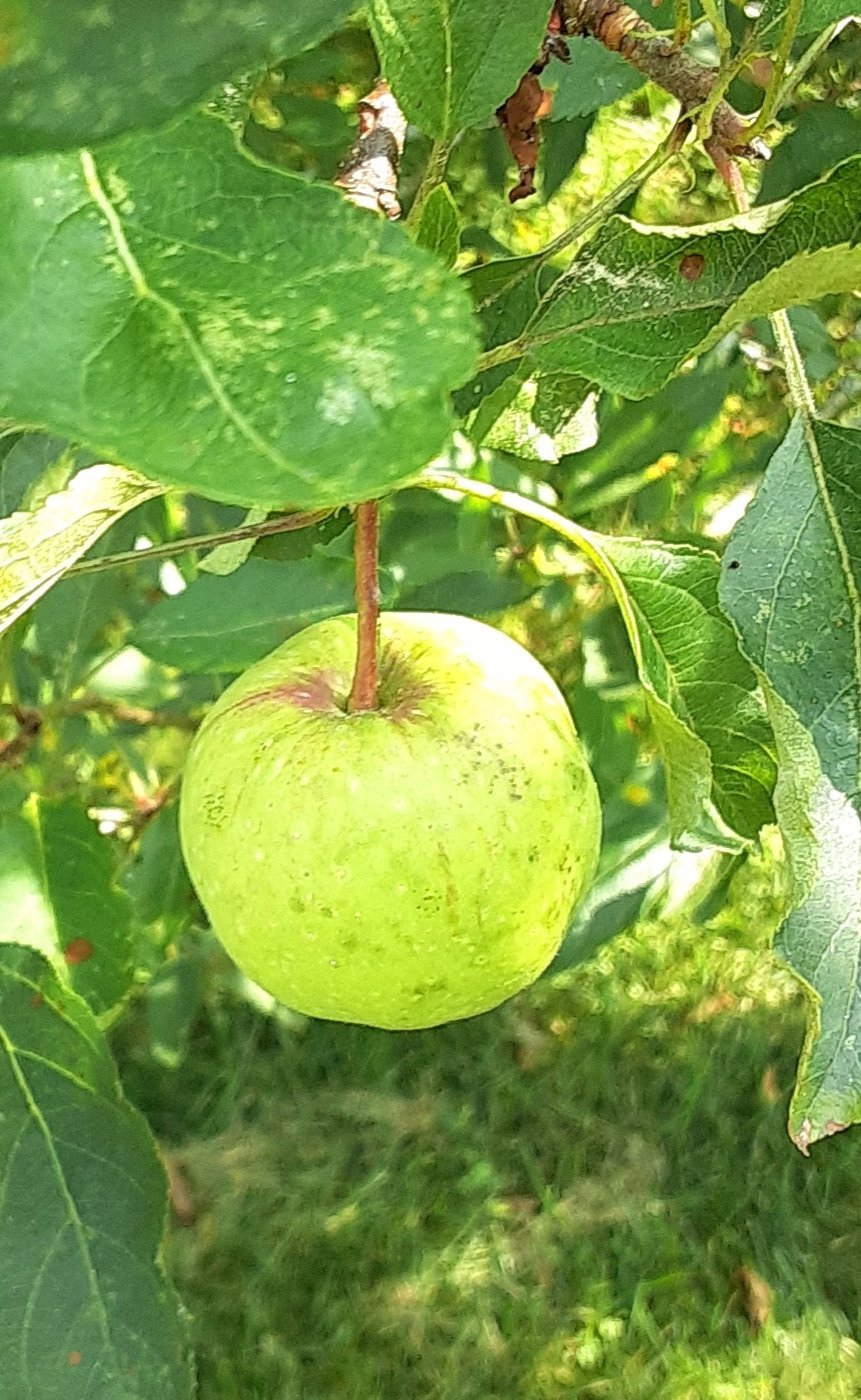
Flowers range from white to red and have five petals. They occur in umbels in early spring. The fruit is a pome that varies in color from red to yellow. To be considered a crabapple, the fruit has to be less than two inches in diameter. Fruit ripens in the fall and often persists in the winter.
Where it grows
Mapped in all fourteen counties.
Text and line illustrations: Forest Trees of Massachusetts, 7th edition (2016), Massachusetts Department of Conservation and Recreation, Bureau of Forest Fire Control and Forestry, funded by the USDA Forest Service. Drawings, 1925 descriptions and the “How to know” keys: The Commercial Forest Trees of Massachusetts (1925), Massachusetts Department of Conservation, Division of Forestry. Forest shares before settlement and today: Harvard Forest data archive (Cogbill, Burk and Motzkin 2002; Thompson and others 2013). Insects and disease: USDA Forest Service Insect and Disease Survey, Region 9, with DCR. Photographs: observations on iNaturalist (inaturalist.org), each credited to its photographer under its Creative Commons licence; the list is under “Where the pictures come from” on the guide page. Species ranges by county are as the 2016 manual maps them. Transcribed by script and proofread in part; the manuals govern where they differ.