1 · Nature
29
state-listed species on record
21 of the 29 have been recorded since 2001. Great Barrington has 55, Lenox 42 and Stockbridge 60; the other 3 range from 15 to 22; Lee is 66th most of 351.
Berkshire County · Lee
Town · 5,719 residents · 26.1 square miles
Lee’s forest changed by −1.2% from 1971 to 1999, 34th of 351 (1 = most gained); Great Barrington −2.6% and Lenox −3.7%.
For five years I served on a select board, including as its chair. Every budget season brought the same question: what do we appropriate, and how much should we raise? It struck me that the data needed to make good decisions, and how it all related, was often lacking. I set out to create a space where, for every town in the Commonwealth, we could weave these threads together into a narrative that informs good decision-making. That’s what Massanomics provides: not just information on budgets, land, water, climate and disasters, but a coherent story drawn from the many public sources available.
For Lee, that means 29 state-listed species on record (66th most of 351), $1,292 per resident in competitive grants over ten years and six town-owned bridges rated poor.
Patrick White, former Chair, Stockbridge Select Board
Nature and money, in turn
1 · Nature
29
state-listed species on record
21 of the 29 have been recorded since 2001. Great Barrington has 55, Lenox 42 and Stockbridge 60; the other 3 range from 15 to 22; Lee is 66th most of 351.
2 · Money
$125,000
in local earmarks, ten state budgets
In ten enacted state budgets, FY2017 to FY2026, that is $21.86 per resident, 269th of 351. Great Barrington had $1.3 million, Lenox $75,000 and Stockbridge $288,000 placed in them; Becket had none; the other 2 range from none to $50,000.
3 · Nature
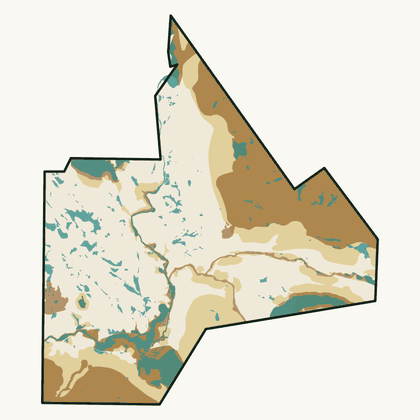
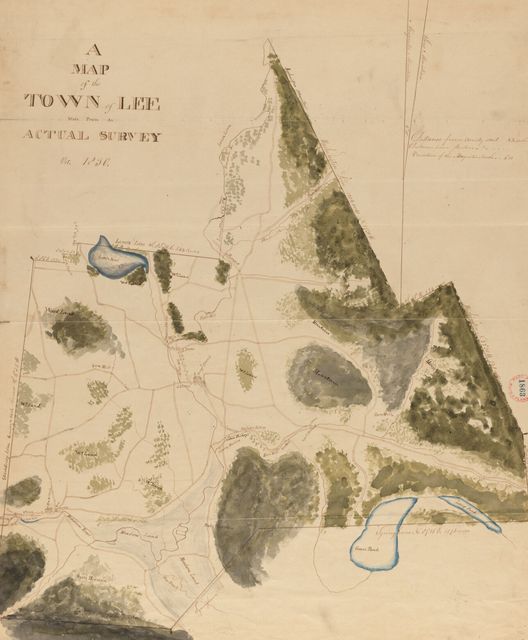
Woodland was 46% of the town in 1830 and is 68% now.
The 1830 figure is traced from the town’s plan, which under-records small woodlots; 68% is DCR’s 2021 satellite estimate.
Forest, 1971 to 1999: Lee −1.2%, Great Barrington −2.6%, Lenox −3.7% and Stockbridge −1.5%; the other 3 range from −4.0% to −1.9%. Lee is 34th of 351 (1 = most gained).
4 · Money
17.1%
of spending covered by state aid
The median town’s share is 11.5%. Great Barrington is at 3.8%, Lenox 13.7% and Stockbridge 1.8%; the other 3 range from 3.3% to 13.2%; Lee’s is 109th highest of 346.
FY2025.
5 · Nature
33%
of the land is core habitat
That is 5,474 acres, 116th of 351 by share of land; the median town has 25%. Great Barrington has 44%, Lenox 45% and Stockbridge 46%; the other 3 range from 18% to 56%.
Lee is a town of 5,719 people on 26.1 square miles of Berkshire County, 219 to the square mile, less densely settled than most of the state. Median household income is $84,000, below the median town’s $114,000. State aid covered 17.1% of its general-fund spending in FY2025; the median town’s share was 11.5%. On the Fairness Index it scores 39 for all state aid and 86 for discretionary money — below its share on all state aid, above its share on the money legislators and agencies choose to give. Its Land and Water Index is 77, 45th of 351. The state owns 16% of its land, on which it paid $114,000 in lieu of taxes in FY2026, $43.38 an acre against $117 statewide. On the strong side: measured against what it maintains, it received 2.91 times its proportional share of competitive grants; its Fairness score of 86 for discretionary money is among the higher in the state (59th of 351); it held 98.8% of its 1971 forest through 1999, more than nine towns in ten; the forest now covers about 65% of the town, up from the 46% the surveyors drew in 1830.
Where it comes up short: 66% of its assessed lake acres and river miles are on the state’s impaired list — milfoil, low oxygen; a 16% state-owned share of its land brings in $43.38 an acre in lieu of taxes, below the $117 statewide.
The openings are specific: $314,000 of its Chapter 90 road money is apportioned and not yet drawn. The risks are equally specific: six of its bridges are rated poor and it owns one high- or significant-hazard dam; emerald ash borer, hemlock woolly adelgid have been mapped in town by the aerial survey since 2019; state aid’s share of its spending has fallen from 25.9% in FY2006 to 17.1%, so a larger part of every cost rise falls on the levy.
The money
Lee’s town government and school districts received $44.5 million in formula aid and $7.4 million in competitive grants over ten years.
Fairness Index · all state aid
39 / 100
233rd of 351
Fairness Index · discretionary money
86 / 100
59th of 351
The land
Lee has 5,474 acres of mapped core habitat, 33% of its land area; 1,228 of those acres are outside any protected land.
Habitat, forest and water ›To pass along
Nature
Lee has 29 state-listed species on record, 66th most of 351; Great Barrington has 55 and Lenox 42.
Money
Lee had $125,000 in local earmarks placed in it over ten enacted state budgets, $21.86 per resident, 269th of 351; Great Barrington had $1.3 million and Lenox $75,000.
History
Lee’s town plan of 1830 is online at Digital Commonwealth, as are those of Great Barrington and Lenox; 291 of 351 towns have one.
This is your town, your city, the place you will spend these days of your life. The quality of that life depends on good decisions. I am a lifelong resident of Massachusetts and care deeply about this place. If we can be of service, write hello@parcenomics.com, or ask me to present to your board.
Sources: MassWildlife NHESP rare-species records by town, to 2025; MassWildlife BioMap 2022; MassGIS land use 1971–1999, USGS land cover 2001–2023 and DCR forest 2021; 1830 town plans, Massachusetts Archives, via Digital Commonwealth; Comptroller, Division of Local Services and DESE records through FY2026. Land layers as published 1 November 2026; money figures as built 3 November 2026. Every figure links to Lee’s money page or Lee’s land page.