Rare species of Massachusetts · Dragonflies and damselflies
Spine-Crowned Clubtail
Status Special Concern · Group Dragonflies and damselflies · Recorded in 50 towns, 47 since 2001 · State sightings records: most recent 2025
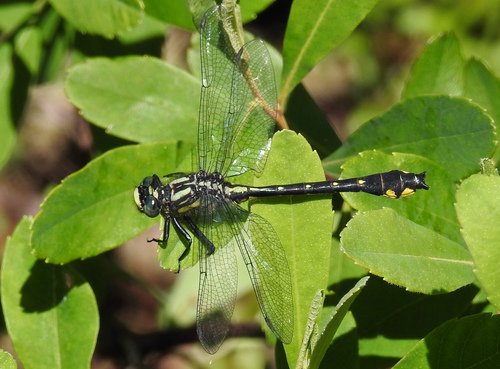
Where NHESP has recorded it
last recorded since 2001 last recorded earlier
- Greenfield 2025
- Agawam 2024
- Amherst 2024
- Concord 2024
- Hatfield 2024
- Huntington 2024
- Palmer 2024
- South Hadley 2024
- Ware 2024
- West Brookfield 2024
- Westfield 2024
- Brimfield 2023
- Hardwick 2023
- Northbridge 2023
- Warren 2023
- Winchendon 2023
- Wendell 2018
- Royalston 2017
- Athol 2016
- Barre 2016
- Deerfield 2016
- Holden 2016
- New Braintree 2016
- Pepperell 2016
- Petersham 2016
- Sterling 2016
- Sturbridge 2016
- Dunstable 2015
- Groton 2015
- Norwood 2015
- Erving 2014
- Montague 2011
- Gill 2008
- Great Barrington 2008
- Northfield 2008
- Pittsfield 2008
- Sheffield 2008
- Sandisfield 2006
- Tolland 2006
- Buckland 2004
- Hanover 2004
- Orange 2004
- Pembroke 2004
- Princeton 2004
- Hanson 2001
- Holyoke 2001
- Northampton 2001
- Sunderland 1999
- North Reading 1904
- Provincetown Historic
Town-level documented observations from NHESP’s Rare Species Viewer, read 4 November 2026; the year is the last documented record, as NHESP prints it, not evidence of absence. NHESP does not publish locations.
More about this species
In Massachusetts
Records span river basins throughout the state, including drainages in the western, central, and southeastern parts of Massachusetts. Numbers at any single location tend to be modest, though a handful of mid-sized rivers hold notably higher concentrations.
Source: Massachusetts state rare-species fact sheet, Spine-Crowned Clubtail (published April 2025).
Threats
Water-quality degradation, changes to stream hydrology, loss of surrounding upland cover, sewage discharges, road-salt runoff, and sediment loading all pose risks to this dragonfly. Wakes generated by motorized watercraft during the early-summer emergence window add further pressure. Climate-related risks appear less acute here than for certain other uncommon river dragonflies.
Source: Massachusetts state rare-species fact sheet, Spine-Crowned Clubtail (published April 2025).
Protections
Listed as Special Concern in Massachusetts, the spine-crowned clubtail receives legal protection against killing and commercial trade. It also appears on the state's list of taxa requiring priority conservation attention.
Source: Massachusetts state rare-species fact sheet, Spine-Crowned Clubtail (published April 2025).
One fact
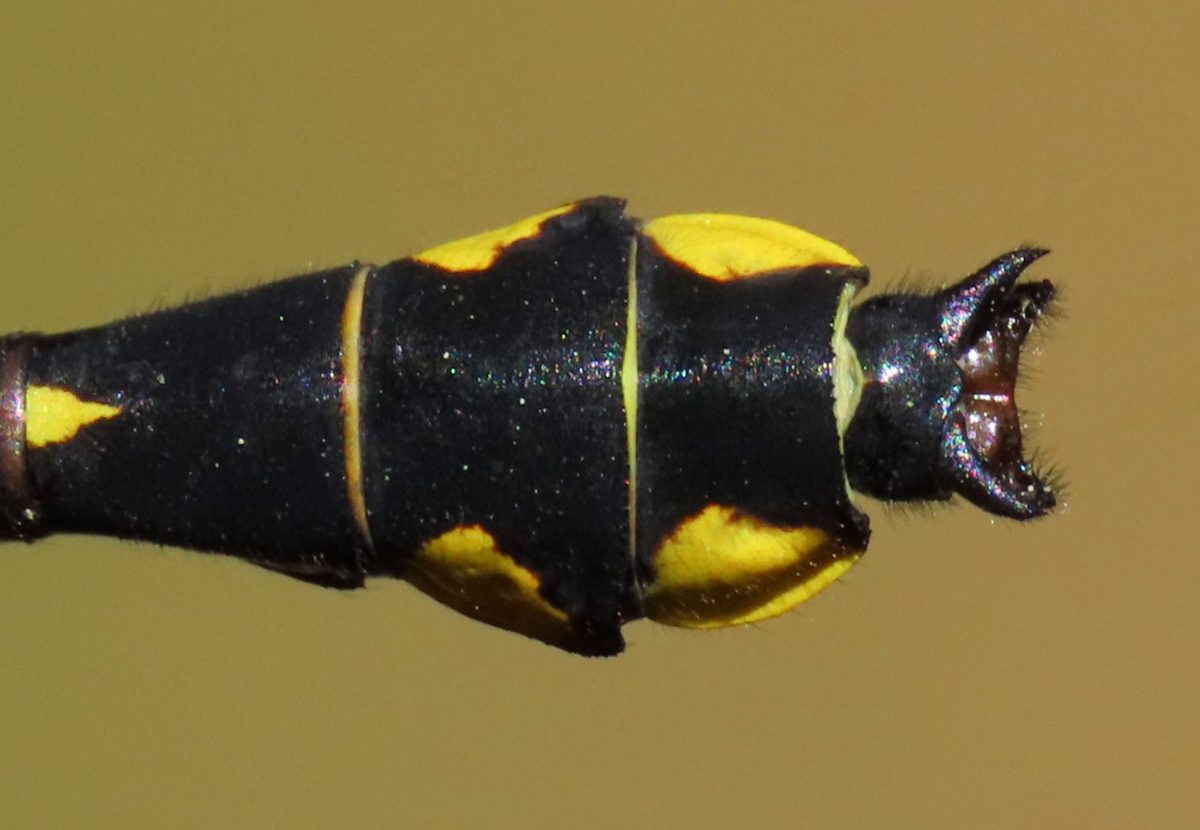
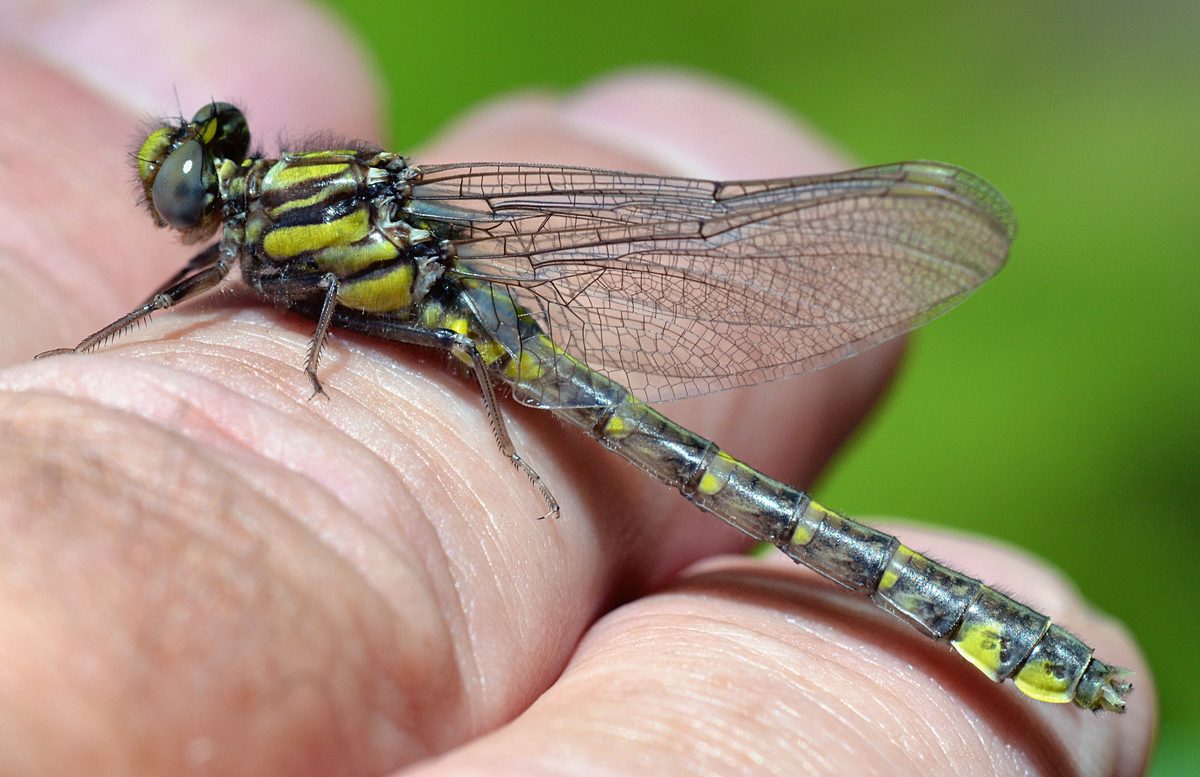
Because flying adults are seldom spotted, the shed larval cases left behind after emergence — known as exuviae — offer a more dependable way to document that this dragonfly has used a site.
Source: Massachusetts state rare-species fact sheet, Spine-Crowned Clubtail (published April 2025).
State list: 321 CMR 10.90, as of 16 August 2024. Rare species of Massachusetts · Trees of Massachusetts