Rare species of Massachusetts · Plants
Shining Wedgegrass
Status Threatened · Group Plants · Recorded in 22 towns, 10 since 2001 · State sightings records: most recent 2022
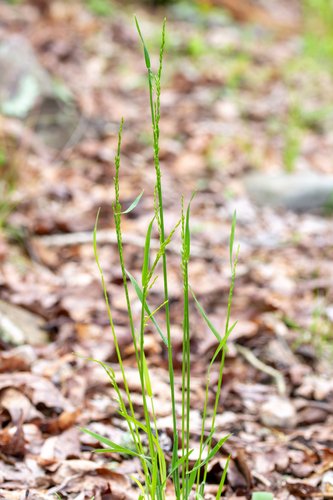
A member of the grass family (Poaceae), shining wedgegrass (Sphenopholis nitida) forms compact tufts 31 to 80 cm tall, with shiny spikelets 2.5 to 5 mm long. It grows on rocky wooded slopes, forested ledges, and talus under dry to moist conditions. In Massachusetts the species is threatened and has been recorded across seven counties; active sites include Dudley in Worcester County (2022), Holyoke in Hampden County (2020), and locations in Franklin, Berkshire, and Hampshire counties. Development has pushed populations out of the more densely settled eastern parts of the state over the past century.
Where NHESP has recorded it
last recorded since 2001 last recorded earlier
- Dudley 2022
- Holyoke 2020
- Sunderland 2018
- Leverett 2016
- Westfield 2016
- West Springfield 2015
- Great Barrington 2010
- Sheffield 2010
- Granby 2009
- Southbridge 2002
- Sharon 1923
- Quincy 1921
- Natick 1915
- New Marlborough 1912
- Springfield 1911
- Wellesley 1908
- Milton 1900
- Randolph 1897
- Needham 1884
- Melrose 1879
- Medford 1864
- Malden 1853
Town-level documented observations from NHESP’s Rare Species Viewer, read 4 November 2026; the year is the last documented record, as NHESP prints it, not evidence of absence. NHESP does not publish locations.
State list: 321 CMR 10.90, as of 16 August 2024. Rare species of Massachusetts · Trees of Massachusetts