Rare species of Massachusetts · Plants
American Twinflower
Status Special Concern · Group Plants · Recorded in 17 towns, 11 since 2001 · State sightings records: most recent 2025
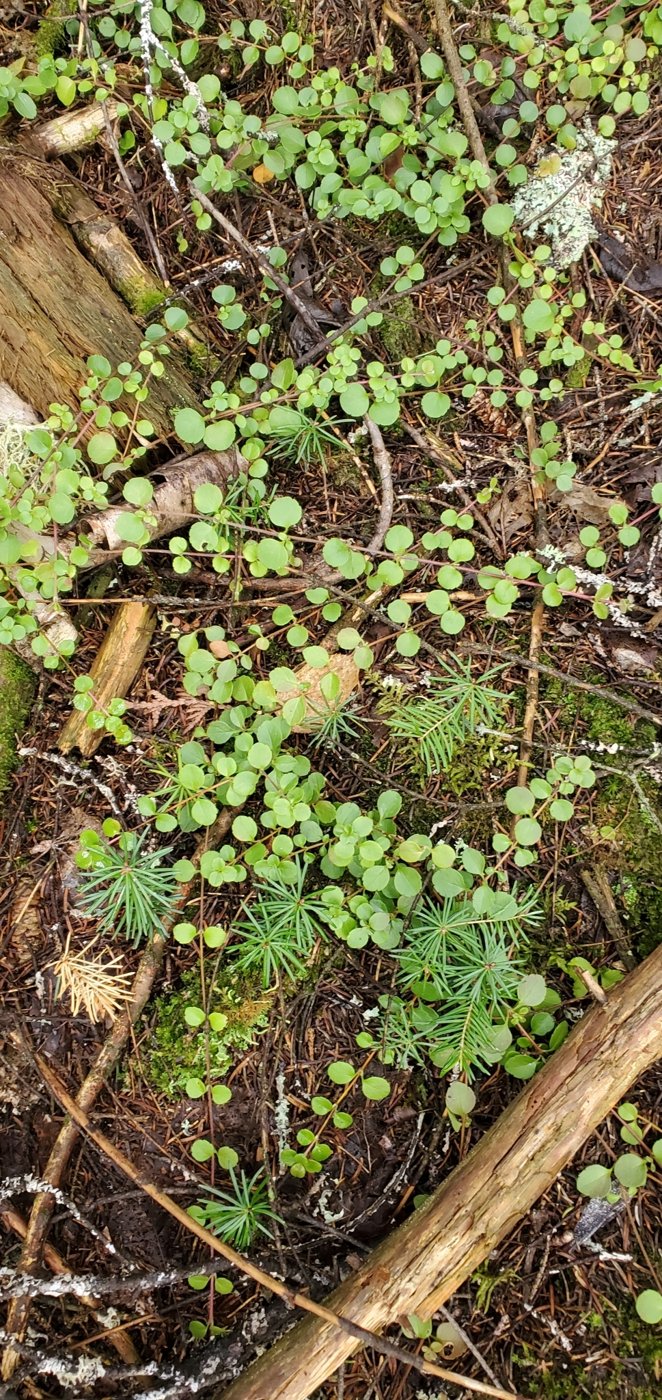
American twinflower is a trailing, evergreen subshrub of the honeysuckle family, bearing pairs of small pink bell-shaped flowers that hang from slender forked stalks. It grows in cool, mixed or coniferous forest understories, often on rocky slopes or in mossy settings. In Massachusetts, confirmed occurrences since 1999 number 19, all in the western and north-central counties — Berkshire, Franklin, and Worcester. The species depends on cross-pollination with genetically distinct individuals, so isolated patches produce few viable seeds. Road salt runoff, off-road vehicle trails, and the inherently low vigor of small populations are the main documented threats.
Where NHESP has recorded it
last recorded since 2001 last recorded earlier
- Ashburnham 2025
- Windsor 2024
- Savoy 2020
- Rowe 2018
- Heath 2017
- Warwick 2017
- Winchendon 2015
- Dalton 2009
- Royalston 2009
- Adams 2007
- Orange 2003
- Yarmouth 1946
- Bolton 1980s
- Mount Washington Historic
- New Marlborough Historic
- Peru Historic
- Washington Historic
Town-level documented observations from NHESP’s Rare Species Viewer, read 4 November 2026; the year is the last documented record, as NHESP prints it, not evidence of absence. NHESP does not publish locations.
State list: 321 CMR 10.90, as of 16 August 2024. Rare species of Massachusetts · Trees of Massachusetts