Windsor · National Register
Coleman Bridge
Structure · listed 2000
- Type
- Structure
- Town
- Windsor
- Listed
- 2000
- Location
- Windsor Bush Rd. over Phelps Brook
- Areas of significance
- Engineering; Transportation
- Reference number
- 00000112
About this listing
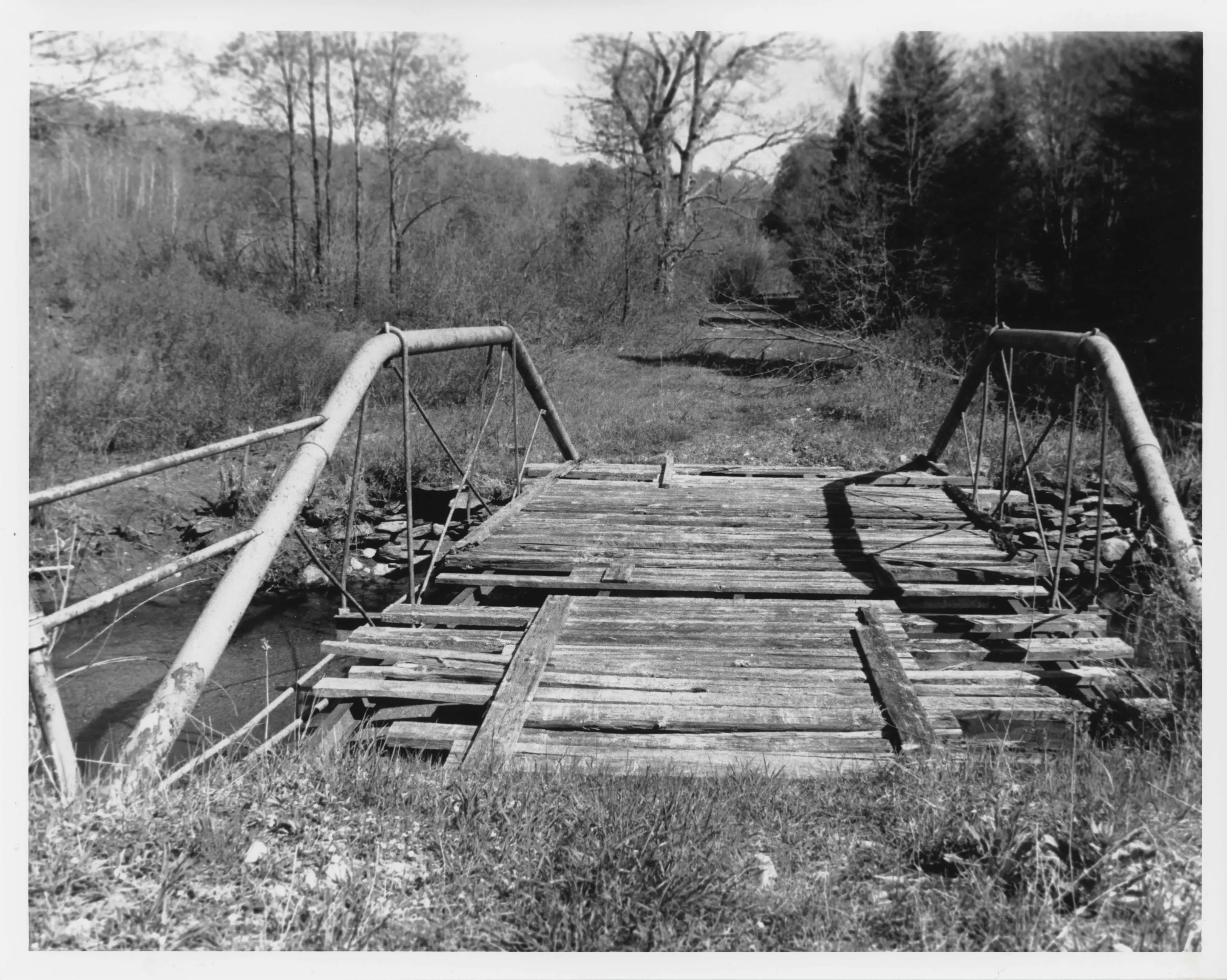
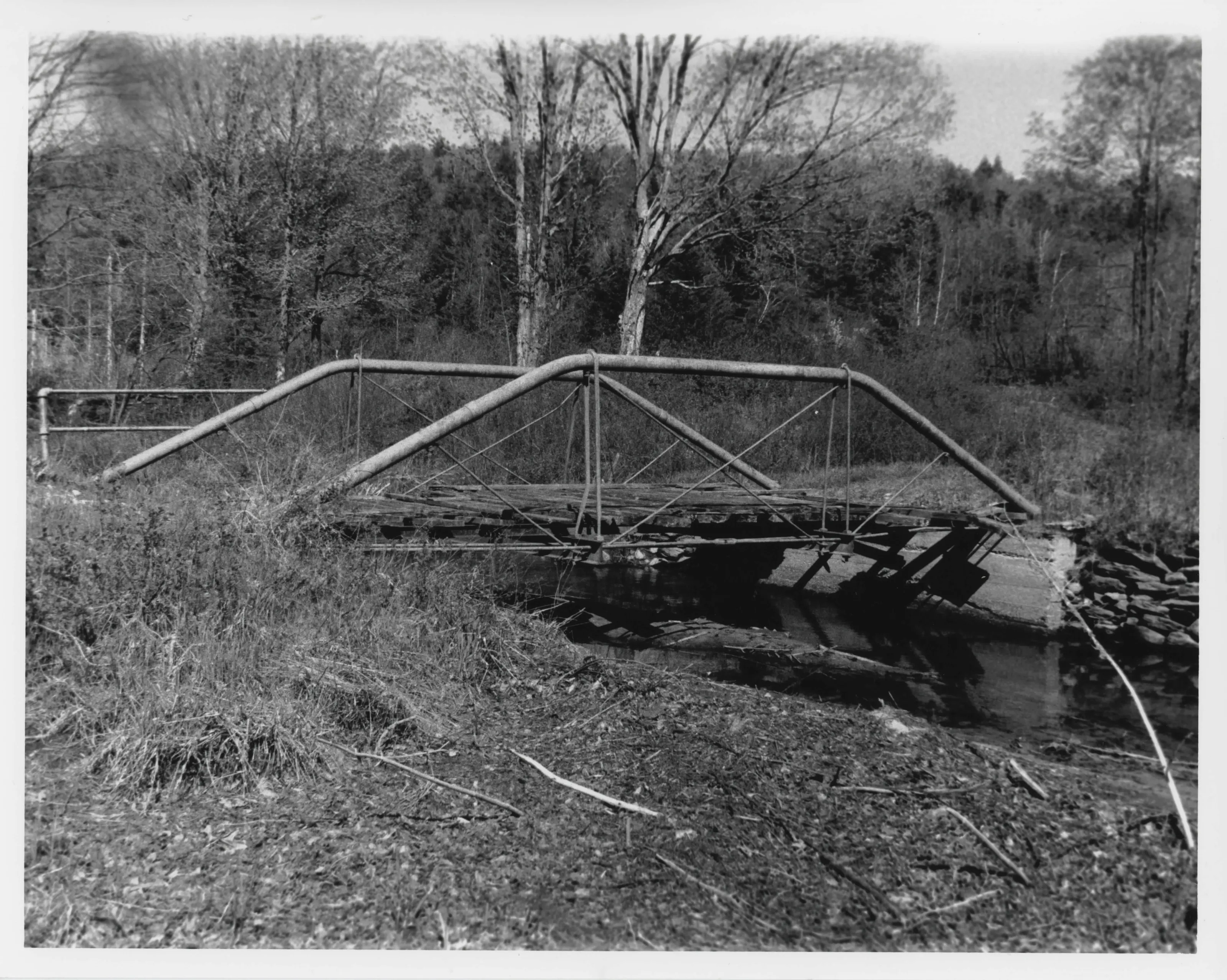
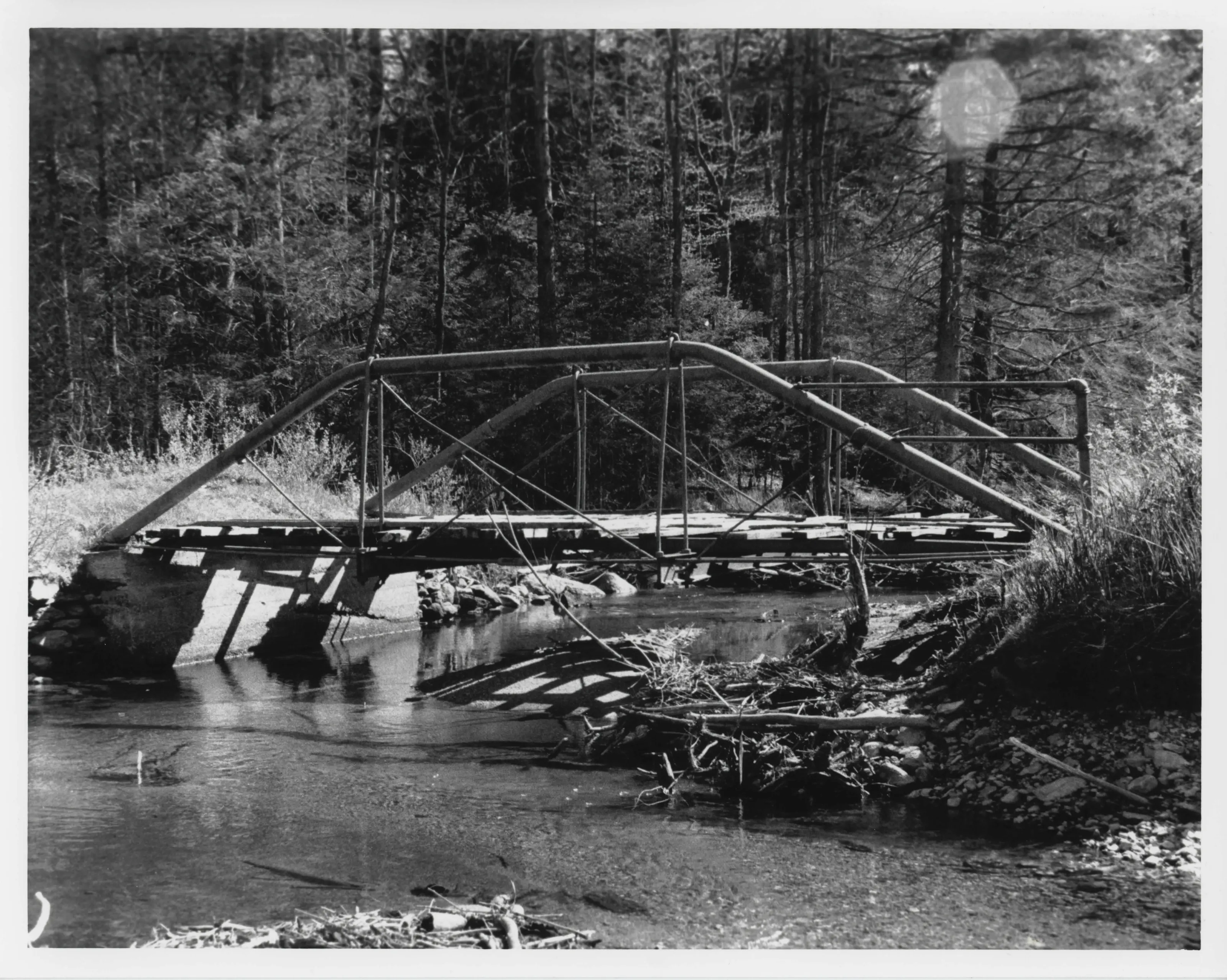
Iron truss bridge of about 1894 on an abandoned section of Windsor Bush Road, patented by Windsor machinist Charles H. Ball. The nomination calls it the last intact example of the Ball Pipe Truss Bridge in Massachusetts.
- Built
- c. 1894
- Architect / builder
- Charles H. Ball (designer and patentee)
- Style
- Ball Pipe Truss
- Significance and period
- Engineering; Transportation (c. 1894-1949)
- People named
- Charles H. Ball
The form lists two other Ball bridges, the Holiday Road Bridge (1895) in Dalton and the Stage Road Bridge (1890) in Cummington, removed from their sites in 1990 and stored; it says all three are materially intact.
“the last intact example of Ball's invention to survive in Massachusetts”
National Register nomination
Summary paraphrased from the nomination text; the form is linked below.
What the nomination says it is
The bridge lies on an abandoned section of Windsor Bush Road, a rugged secondary road that once connected mountain communities along Phelps Brook, an eastern tributary ofthe Westfield River. The road is named for the abandoned community of Windsor Bush, an old farming community that once existed In view of the bridge of which only one dwelling remains.
From the National Register nomination, 2000.
Why it is on the Register
The Coleman Bridge, built c. 1894, is significant as a rare and distinctive example of a late 19"^-century Iron truss bridge type, patented by Windsor machinist and entrepreneur Charles H. Ball, and known as the Ball Pipe Truss Bridge. The bridge Is the last intact example of Ball's invention to survive in Massachusetts (two others have been dismantled and warehoused). The bridge's characteristic use of iron pipes In the fabrication of the top chords of Its trusses, as well as its sparing use of rods for lower chords, vertical members and tension rods, distinguishes It In the context of iron truss types in the period.
From the National Register nomination, 2000.
Quoted from the scanned form as the National Archives’ text layer reads it. Line breaks are joined; reading errors are left as they are.
Sources, rights and limits
- Listing facts. National Park Service, National Register of Historic Places spatial data, queried 6 November 2026: type, year listed, landmark status, map location. U.S. government work, public domain.
- Nomination text and areas of significance. National Archives catalog record 63794366, “Massachusetts SP Coleman Bridge”. National Register nomination forms are U.S. government records and public domain. The quoted text is the catalog’s text layer (machine reading of the scan, 2025-07-29), not a transcription.
- Photographs. Photographs are reproduced from the nomination file at the National Archives with the photographer’s credit as typed on the print; rights may remain with the photographer. Write to hello@parcenomics.com to have one removed.
- Location line. Address as in the Park Service layer.
- Outline. Town boundary from the Commonwealth’s town layer, generalized. Not a survey.